GKS Scholarship Program Success Stories That Inspire
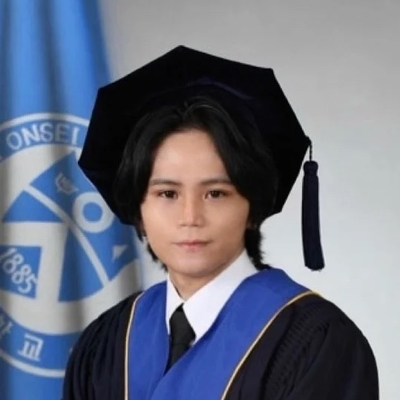 Ace Apolonio
 Every year, hundreds of students send in GKS applications that look nearly identical on paper — and most of them don’t make it. The ones who do? They made very deliberate choices, and those choices are worth studying. The GKS scholarship program success stories we’ve seen up close at Scholars Academie aren’t tales of luck. They’re patterns you can replicate.
What GKS Scholarship Program Success Stories Actually Have in Common
When you read enough winning GKS applications — and I’ve read dozens through our mentorship program — a few things become unmistakably clear. The students who succeed don’t just have strong GPAs or impressive résumés. They have coherence. Every part of their application tells the same story from a different angle.
Take Fatima, a civil engineering graduate from Nigeria who applied to KAIST. Her GPA wasn’t exceptional — 3.4. But her personal statement, study plan, and professor recommendations all pointed to one specific problem she wanted to solve: inadequate drainage infrastructure in urban West Africa. Her professors wrote about this. Her study plan referenced Korean research labs working in exactly that area. Her personal statement opened with a flood she witnessed at age twelve. The committee didn’t have to guess what she cared about. That clarity is what coherence looks like in practice.
The lesson here is simple but hard to execute: before you write a single word of your application, you need to know your one thread — the through-line that connects your past experience, your chosen field of study in Korea, and the impact you intend to have afterward. Most applicants skip this step entirely.
How Winners Approach the GKS Personal Statement
The personal statement is where most GKS applications either win or die. I’ve seen students spend three weeks on their transcripts and two days on their personal statement. That’s exactly backwards.
What separates the best personal statements in the GKS scholarship program success stories we’ve collected isn’t flowery writing. It’s specificity. Successful applicants don’t say “I am passionate about environmental science.” They say “I want to study urban heat island mitigation at Seoul National University because Professor Kim’s 2021 paper on cool-roof coating materials directly addresses the thermal stress patterns I documented in Lahore’s low-income districts.”
If you’re still in the drafting phase, Scholarship Essay Writing Tips That Actually Win Funding breaks down the structural approach in more detail — it’s worth reading before you write your first draft.
One practical exercise that works: write your personal statement last. Fill in every other section of your application first — study plan, research interests, university choices. Then write the personal statement as a synthesis of all those pieces. Students who do this tend to produce dramatically more cohesive narratives.
The Study Plan Mistakes That Cost Students the GKS
The study plan is the section applicants underestimate most. It feels mechanical — just list your courses, right? Wrong. A weak study plan is one of the most common reasons strong candidates get filtered out.
Winning study plans in the GKS program do three things clearly:
First, they show genuine familiarity with the Korean university system and the specific department’s research focus. Mentioning a lab by name, citing a faculty member’s recent publication, or referencing a specific dual-degree track signals that you’re serious and prepared — not just hoping Korea sounds good on a CV.
Second, they connect the academic plan to a post-graduation goal that loops back to the applicant’s home country. GKS is explicitly designed to build bridges between Korea and recipient countries. Applications that articulate a clear returnee plan — even a rough one — perform better.
Third, they’re realistic. A study plan that promises publications, two certifications, language mastery, and a startup in two years reads as naive. Committees want to see that you understand what graduate study actually demands.
Letters of Recommendation: Who to Ask and What to Tell Them
Nearly every GKS success story I’ve been part of includes at least one recommendation letter that was genuinely specific — not the kind of letter that says “this student performed well in my class” and then stops. Those letters hurt more than they help.
The applicants who win tend to do something proactive: they brief their recommenders. They share their personal statement draft. They remind the professor of specific projects or conversations. They explain exactly what the GKS committee is looking for.
If you’re not sure how to have that conversation without it being awkward, How to Ask a Professor for a Recommendation Letter walks through the full approach — including what to send, when to follow up, and how to make the process easy for your recommender.
The goal is to give your professor the raw material to write something that adds to your narrative rather than repeating it. One strong letter that mentions a specific research moment, a challenge you overcame, or a professional quality the committee couldn’t see in your documents is worth more than three generic endorsements.
Why Language Preparation Is More Strategic Than Most Applicants Realize
Here’s something that doesn’t appear in the official GKS guidelines but shows up consistently in success stories: early, intentional language preparation signals long-term commitment.
Most applicants treat the TOPIK requirement as a bureaucratic checkbox. The ones who stand out treat Korean language learning as part of their identity as an applicant. Mentioning in your personal statement that you’ve been studying Korean for eight months — and why — tells the committee something about your character that a score alone cannot.
This doesn’t mean you need TOPIK II before applying. It means you should start earlier than required, document that you’ve started, and weave it into your narrative where it genuinely fits.
Building an Application That Works as a Whole, Not in Parts
The final pattern across GKS scholarship program success stories is this: winners treat their application as a portfolio, not a checklist. Each document needs to stand alone and reinforce the others.
A good way to audit your own application before submitting: read every document back-to-back and ask whether they sound like they came from the same person with the same goals. If your personal statement mentions renewable energy but your study plan lists a general engineering curriculum with no specialization, that’s a gap. If your recommendation letter describes you as a collaborative team player but your research proposal describes entirely solo work, that’s a gap.
Gaps signal to reviewers that you assembled your application in pieces without thinking about how it reads end to end. Coherence, again, is what wins.
Frequently Asked Questions
Q: What GPA do I need to win the GKS scholarship? A: There’s no universal cutoff, but most successful applicants have a GPA of 3.0 or higher on a 4.0 scale. More importantly, GKS reviewers look at the full application — a 3.4 with a cohesive narrative and strong recommendations regularly outperforms a 3.8 with a generic study plan. GPA matters, but it’s rarely the deciding factor.
Q: Can I apply to GKS without Korean language skills? A: Yes. Korean language proficiency is not required at the time of application for most graduate GKS tracks — you’ll complete language training after arrival. However, demonstrating that you’ve already begun studying Korean (even at a beginner level) can strengthen your application by showing genuine interest in integrating into Korean academic life.
Q: How many universities should I list on my GKS application? A: GKS allows you to list up to three universities in order of preference. Most successful applicants choose universities strategically — at least one where their target professor’s research is a strong match, rather than simply listing the most famous schools. Research fit almost always outweighs institutional prestige in the GKS review process.
If you’re building your GKS application right now and want real feedback — not a checklist, but someone who’s read winning applications and knows what the gaps usually look like — start your free 7-day mentorship with the Scholars Academie team. We work with you on every section, from your personal statement to your study plan, until your application tells a story worth saying yes to.
Written by
Ace Apolonio
2016 GKS awardee, Chemical Engineering graduate from Yonsei University, and founder of Scholars Academie. Since 2019, he has helped thousands of students win prestigious scholarships in South Korea and Europe.
Apply What You've Learned
Get your documents reviewed
by a scholarship winner.
Reading guides is one thing. Having a verified awardee read your actual application — line by line — is another.
Free to start · No credit card required