How to Win a Scholarship Abroad: A Step-by-Step Guide
 Ace Apolonio
 How to Win a Scholarship Abroad: What Nobody Tells You Until It’s Too Late
Most students who fail to win a scholarship abroad don’t fail because they weren’t smart enough — they fail because they treated the application like a form to fill out rather than a case to build. After working with hundreds of scholarship applicants, I can tell you the difference between funded and rejected almost always comes down to a handful of decisions made weeks before the deadline.
Understand What Scholarship Committees Are Actually Looking For
Here’s the uncomfortable truth about how to win a scholarship abroad: committees are not looking for the most impressive CV. They are looking for the most convincing story of why this person, why this program, why now. Whether you’re applying for the Korean Government Scholarship (GKS), Erasmus Mundus Joint Master (EMJM), or any other fully-funded program, the evaluators want to see coherence. Your past, your proposed study, and your future goals should connect so naturally that funding you feels like an obvious decision.
Before you write a single word, ask yourself: what is the through-line of my application? If you can’t answer that in two sentences, your application isn’t ready.
Research Your Target Scholarship as a Subject, Not a Checkbox
The single biggest mistake applicants make is spending three hours on their personal statement and thirty minutes researching the scholarship itself. Flip that ratio. Read the official guidelines twice. Find the evaluation criteria — most programs publish them. For Erasmus Mundus, for example, academic excellence and the fit between your profile and the consortium’s research focus are weighted heavily. For GKS, your study plan and your connection to Korea-related academic goals matter enormously.
Once you understand what a committee rewards, you can reverse-engineer a stronger application. You’re not guessing anymore — you’re responding to a brief.
Also research your specific professors or host universities if the scholarship allows you to list preferences. A motivation letter that references a professor’s recent publication or a university’s specific lab infrastructure will always outperform one that says “your prestigious institution.”
Build Your Application Around One Central Argument
Every strong scholarship application has a spine — one clear argument that everything else supports. That argument is not “I am a hard-working student.” It is something more like: “I have spent five years working on X problem, this program is the only place that will let me go deeper in Y direction, and within ten years I intend to bring that expertise back to Z context.”
Your personal statement, your study plan, your letters of recommendation, and even your certificate selection should all reinforce that argument. If something in your application doesn’t support the central claim, cut it or reframe it.
For GKS applicants, this means your study plan needs to be a strategic document, not a semester-by-semester course list. Show the committee that you understand what you’re going to study, why Korea is the right place to study it, and what you’ll do with it afterward.
Make Your Personal Statement Do the Heavy Lifting
Your personal statement or motivation letter is the part of the application that can move a borderline candidate into the funded column. It is also the part most applicants write too quickly, too generically, or too late.
A few things that consistently separate winning statements from rejected ones:
- Specificity over grandeur. “I have always been passionate about development” loses to “In 2021, while working with a rural health NGO in northern Ghana, I realized that the data infrastructure problem was bigger than the funding problem — and that redirected my entire research focus.”
- Honest voice over polished formality. Committees read hundreds of applications. A statement that sounds like a real person thinking through real decisions is memorable. One that sounds like it was written by a committee is not.
- A clear answer to the “why us” question. Don’t be vague. Name the program elements, faculty, or research clusters that genuinely align with your work.
If you’re applying to an Erasmus Mundus program, read our deep dive on The EMJM Motivation Letter: What Actually Gets You Funded before you write your first draft.
Get Your Letters of Recommendation Right
Weak letters of recommendation sink otherwise strong applications more often than people realize. A letter that says “This student received an A in my class and was always punctual” tells a committee nothing useful. A strong letter speaks to specific intellectual qualities, describes a moment where the applicant demonstrated independent thinking, and directly connects their potential to the scholarship’s goals.
You cannot control what your recommenders write — but you can make it easy for them to write something powerful. Give them your personal statement draft, a short summary of why you’re applying, the evaluation criteria, and two or three specific experiences you’d like them to reference if possible. Most professors are busy and grateful for that kind of scaffolding.
For GKS-specific guidance, this post on How to Get Strong Letters of Recommendation for GKS walks through exactly how to brief your recommenders and what to watch out for.
Apply Strategically, Not Broadly
Spending 60 hours on three targeted, well-researched applications will almost always outperform spending the same time on ten rushed ones. Scholarship applications are not a numbers game — quality and fit matter far more than volume.
Make a shortlist of scholarships where your profile is genuinely strong. Consider your GPA trajectory, your language proficiency, your research or work experience, and whether your stated goals align with the program’s mission. If the fit isn’t there, move on. A committee can tell when someone applied because the scholarship sounded good, and it costs you credibility.
Also pay attention to timing. Most competitive scholarships — GKS, EMJM, Chevening, and others — have deadlines between October and February. Start your preparation in September at the latest if you want to submit a polished application rather than a frantic one.
Frequently Asked Questions
Q: What GPA do you need to win a scholarship abroad? A: There’s no universal cutoff, but most highly competitive programs like GKS and Erasmus Mundus expect applicants in the top 20–30% of their graduating class. More important than the raw number is the trajectory — a GPA that improved significantly over time, combined with strong research experience, can outweigh a slightly lower overall average. Some scholarships explicitly weight other factors like leadership, publications, or national relevance more heavily than GPA.
Q: How early should I start preparing my scholarship application? A: For any scholarship with a January or February deadline, start no later than September of the previous year. That gives you time to contact recommenders early, research programs thoroughly, write multiple drafts of your personal statement, and gather documents that take longer than you expect — like certified transcripts, language certificates, or notarized translations. Starting in December for a January deadline almost always produces a weaker application.
Q: Is it possible to win a fully-funded scholarship abroad without research experience? A: Yes, but it depends on the program and how you position your application. Many taught master’s scholarships, including some Erasmus Mundus programs and the GKS undergraduate track, do not require formal research experience. What matters is that your statement and documents demonstrate intellectual curiosity, clear goals, and genuine fit with the program. If you lack research experience, lean harder into professional experience, relevant projects, or coursework that demonstrates the same analytical and independent thinking qualities.
If you’re serious about learning how to win a scholarship abroad and you want expert eyes on your actual application — not just generic advice — Scholars Academie offers a 7-day free mentorship trial designed specifically for GKS and Erasmus Mundus applicants. You’ll work directly with mentors who have been through these processes and helped students get funded. Start your free trial at programs and see what a focused, strategic approach actually looks like.
Written by
Ace Apolonio
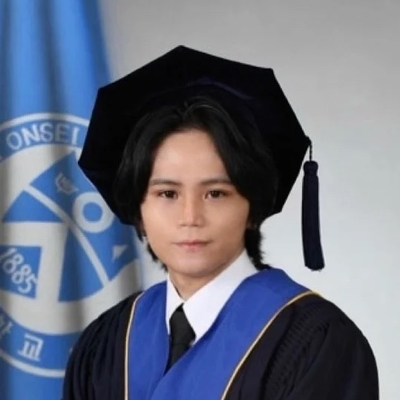
2016 GKS awardee, Chemical Engineering graduate from Yonsei University, and founder of Scholars Academie. Since 2019, he has helped thousands of students win prestigious scholarships in South Korea and Europe.
Apply What You've Learned
Get your documents reviewed
by a scholarship winner.
Reading guides is one thing. Having a verified awardee read your actual application — line by line — is another.
Free to start · No credit card required