How to Write a Good Scholarship Essay That Wins
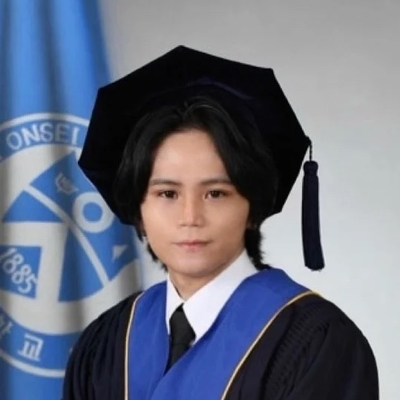 Ace Apolonio
 Most scholarship essays fail before the committee reads the second paragraph. Not because the applicant lacks merit — but because the writing doesn’t give the reader a reason to keep going. If you want to know how to write a good scholarship essay, the answer starts long before you open a blank document.
Why Most Scholarship Essays Don’t Work
Here’s something that surprises a lot of applicants: scholarship committees don’t reject essays because the writer had weak grades or an unimpressive background. They reject essays that feel interchangeable — the kind where you could swap out the name at the top and it would still make sense for a hundred other applicants.
The most common mistake is writing what you think the committee wants to hear instead of what is actually true and specific about you. Phrases like “I have always been passionate about development” or “this scholarship will help me achieve my dreams” appear in thousands of essays every cycle. They signal nothing. They tell the reader nothing about who you are or why you, specifically, deserve this funding.
What works instead is specificity. A real moment. A genuine tension. Something that couldn’t have been written by anyone else.
How to Write a Good Scholarship Essay: Start With the Right Story
Before you write a single sentence, ask yourself: what is the one thing I want this committee to understand about me after reading this? Not a list of achievements. One thing.
Then find the story that proves it.
Good scholarship essays are structured around a central narrative — a moment, a decision, a failure, a realization — that anchors everything else. Your academic background, your goals, your interest in the program: all of it should radiate outward from that core story.
If you grew up in a region with limited access to quality education and that shaped your commitment to educational policy, lead with a scene from that experience. Make it specific enough that the reader can picture it. Then connect it, clearly and directly, to what you’re doing now and what you intend to do next.
The through-line — from your past to your present to your future plans — is what separates a compelling essay from a résumé in paragraph form.
Structure Your Essay So It’s Easy to Read and Hard to Forget
Even a powerful story will fall flat if it’s buried in a wall of text with no clear shape. Here’s a structure that works consistently:
Opening (1–2 paragraphs): Start in the middle of something. A scene, a question, a contradiction. Avoid “My name is…” or “I am applying because…” Give the reader something to hold onto immediately.
Context and background (1–2 paragraphs): Once you’ve hooked the reader, zoom out. Where did this story come from? What shaped the person writing this essay? Keep it tight — the committee doesn’t need your full biography, just enough to understand what formed your perspective.
Your academic and professional trajectory (1–2 paragraphs): Connect your past to your present work. What have you studied, researched, or built? How does it connect to the scholarship’s focus? This is where you demonstrate that you have the foundation to do what you’re claiming you’ll do.
Future goals and how this scholarship fits (1–2 paragraphs): Be specific about what you want to accomplish and why this particular scholarship — not any scholarship — makes that possible. Committees can tell when you’ve written a generic “goals” paragraph and pasted it across five applications.
Closing: Return to where you started, or land on a forward-looking image that leaves the reader with a clear sense of who you are. Skip the summary. You’ve already made your case.
Match Your Tone to the Scholarship’s Values
A GKS personal statement and an Erasmus Mundus motivation letter are not the same document, even if they cover similar ground. Each scholarship has a distinct culture, and your essay should reflect that you understand it.
GKS essays tend to reward clarity, structure, and a sincere articulation of how your studies will connect to development in your home country. Erasmus Mundus motivation letters — especially for competitive joint programs — need to demonstrate sharp academic focus and a genuine alignment with the consortium’s research priorities.
Before you write, read the program’s website carefully. Read what past fellows have said about why they chose it. Notice the language the program uses to describe its mission, and let that inform your tone — not by mimicking it, but by showing you share the same values.
For a deeper look at the Erasmus Mundus application specifically, the Erasmus Mundus Common Application Mistakes to Avoid is worth reading before you start drafting.
Edit Like a Scholarship Mentor, Not Like the Person Who Wrote It
The first draft of your scholarship essay is almost never the draft you submit. Most winning essays go through five to eight revisions — not light grammar checks, but substantive rethinking of what’s included, what’s cut, and how each paragraph earns its place.
When you edit, ask these questions sentence by sentence:
- Does this sentence add something the previous one didn’t?
- Is this specific to me, or could any applicant have written it?
- Am I telling the reader something, or showing them?
Read your essay out loud. If you stumble over a sentence, the committee will too. If a paragraph makes you cringe slightly, that’s your instinct telling you it isn’t ready.
Have someone else read it — ideally someone who will tell you the truth, not just that it’s good. A mentor who has reviewed successful applications is worth more than ten well-meaning friends here. For more detailed revision strategies, check out our guide on Scholarship Essay Writing Tips That Actually Win Funding.
The Details That Actually Matter on the Day You Submit
A few practical things that make a real difference:
Word count: Stay within the limit. Going 10% over signals that you don’t follow instructions. Going 30% under signals that you didn’t have enough to say.
Formatting: Use clean, readable formatting. Avoid unusual fonts or heavy formatting in documents where plain text is expected. If submitting a PDF, double-check that your formatting holds.
Tailoring: If you’re applying to multiple scholarships — which most serious applicants do — build a strong master essay and tailor it for each program. Never submit an essay that references the wrong program name or a goal that doesn’t match what the program funds. It happens more than you’d think. See our advice on Managing Multiple Scholarship Applications Without Burnout if you’re juggling several deadlines.
Proofreading: Run a grammar check, then read backwards sentence by sentence to catch errors your brain skips over. Then have a human read it again.
Frequently Asked Questions
Q: How long should a scholarship essay be? A: Follow the program’s instructions exactly. If no limit is given, aim for 600–800 words for personal statements and 800–1,000 words for motivation letters. Quality matters far more than length — every sentence should earn its place.
Q: Can I use the same essay for multiple scholarships? A: You can use a strong base essay as a starting point, but you must tailor it meaningfully for each program. Committees notice generic essays. At minimum, adjust your future goals section, your reason for choosing this specific program, and any references to research focus or faculty.
Q: What makes a scholarship essay stand out to committees? A: Specificity and a clear through-line. The essays that win are the ones where the reader finishes and thinks: I understand exactly who this person is, what they’ve done, and why this scholarship is the right fit for them. That clarity comes from choosing one strong central story and building the entire essay around it — not from listing every achievement you’ve ever had.
If you’re ready to stop guessing and start writing an essay that actually gets read, our mentors at Scholars Academie can help you do exactly that. We’ve guided students through GKS and Erasmus Mundus applications, and we know what committees are looking for — because we’ve seen what works and what doesn’t. Start your free 7-day mentorship and get expert feedback on your essay before you submit.
Written by
Ace Apolonio
2016 GKS awardee, Chemical Engineering graduate from Yonsei University, and founder of Scholars Academie. Since 2019, he has helped thousands of students win prestigious scholarships in South Korea and Europe.
Apply What You've Learned
Get your documents reviewed
by a scholarship winner.
Reading guides is one thing. Having a verified awardee read your actual application — line by line — is another.
Free to start · No credit card required