Scholarship Essay Writing Tips That Actually Win Funding
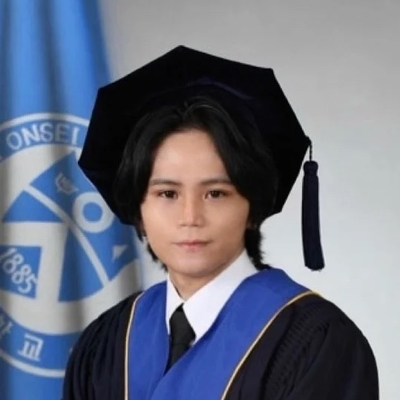 Ace Apolonio
 Scholarship Essay Writing Tips That Actually Win Funding
Most students lose scholarships not because they lack qualifications — but because their essays sound exactly like everyone else’s. If you’ve been staring at a blank page wondering how to make your application stand out, these scholarship essay writing tips will give you a real framework, not recycled advice you’ve already seen a hundred times.
Why Most Scholarship Essays Fail Before the Second Paragraph
Reviewers read hundreds — sometimes thousands — of essays. They can tell within the first three sentences whether a writer is being genuine or performing. And most essays perform.
The typical failing essay opens with something like: “Since I was a child, I have always been passionate about making a difference in the world.” That sentence tells a committee nothing. It doesn’t reveal who you are, what you’ve actually done, or why you specifically deserve this funding over the next candidate in the pile.
The fundamental problem is that most applicants write what they think the committee wants to hear instead of what is actually true. Scholarship reviewers — especially at competitive programs like GKS or Erasmus Mundus — are experienced academics and professionals. They value intellectual honesty and specificity far more than polished-sounding generalities.
Before you write a single word, ask yourself: What is the one thing about my story that no one else applying today can say? That answer is your anchor. Build from there.
Scholarship Essay Writing Tips for Your Opening Hook
Your first paragraph has one job: make the reader want to keep going. Here’s how to do it without resorting to clichés.
Start in the middle of something real. Instead of introducing yourself broadly, drop the reader into a specific moment — a problem you were solving, a question you couldn’t shake, a turning point in your research or community work. Specificity creates credibility. It signals that you have actually lived this story, not constructed it.
Make a claim your essay will prove. A strong opening often contains a thesis-level statement — not just what you want to study, but why it matters and what you uniquely bring to it. Think of it as a promise to the reader: “Keep reading and I’ll show you why this investment makes sense.”
Avoid the biography trap. Don’t begin with where you were born, where you went to school, or a list of your accomplishments. That information belongs in your CV. Your essay is where context and meaning live.
For a deeper look at how this plays out in a real application, read How to Write an Erasmus Mundus Motivation Letter — the structural principles translate across almost every competitive scholarship.
How to Build an Essay That Flows Logically and Compels Action
A scholarship essay isn’t a list of achievements. It’s an argument — and like any good argument, it needs a clear line of reasoning from beginning to end.
Use this three-part logic chain as your backbone:
-
Where have you been? Establish the context that made you who you are academically and professionally. Be selective. One or two formative experiences told with depth are worth more than ten experiences summarized in passing.
-
Where are you now? Show what you’ve built on that foundation — skills, research, leadership, a specific perspective. Connect your past to your current capabilities without overstating either.
-
Where are you going, and why does this scholarship get you there? This is where most essays collapse. Students describe their goals in abstract terms (“I want to contribute to sustainable development”) without ever explaining the mechanism — how this specific program, in this specific country, gets them to that specific outcome. Be precise. Name professors whose work aligns with yours. Reference program modules. Show you’ve done the research.
This logical chain is especially critical for GKS applicants. If you’re applying to a Korean university program, check out How to Write a Winning GKS Study Plan — the structural advice there directly reinforces what makes scholarship essays persuasive at a granular level.
The Language Mistakes That Quietly Kill Strong Applications
You can have a genuinely compelling story and still lose points through writing habits that undermine your credibility. Here are the most common ones I see:
Vague superlatives. Phrases like “highly motivated,” “deeply passionate,” and “extensive experience” mean nothing without evidence. Every time you use an adjective, ask yourself: where’s the proof? Replace the adjective with the proof and cut the adjective entirely.
Passive constructions that hide agency. “A research project was completed” tells the committee far less than “I designed and led a six-month survey on urban food insecurity across three districts.” Own your verbs.
Over-explaining the obvious. If you mention that you volunteered in a hospital, you don’t need to explain that hospitals help sick people. Trust your reader’s intelligence and use that space to say something only you can say.
Repetition without development. Many essays say the same thing three different ways across three paragraphs and call it structure. Each paragraph should advance your argument, not restate it.
Ending weakly. Your conclusion should feel like an arrival, not a fade-out. Tie back to your opening, reinforce your core argument, and leave the reader with a sense of momentum — a feeling that you are ready and this scholarship is the logical next step.
How to Tailor Every Essay to Its Specific Program
A generic essay — one you’ve sent to twelve programs with only the program name swapped out — is almost always detectable. And it almost always loses.
Tailoring doesn’t mean rewriting from scratch every time. It means identifying the three or four places where a program’s specific identity should show up in your essay: its pedagogical approach, its faculty strengths, its geographic or institutional context, its alumni outcomes.
Do the research. Read the program’s website thoroughly. If possible, speak to current students or alumni. Understand not just what the program offers, but what kind of student thrives there — and then show evidence that you are that student.
This matters just as much for the logistical details as for the intellectual framing. If a program values interdisciplinary thinking, demonstrate that you’ve already worked across disciplines. If it emphasizes fieldwork, highlight your practical experience. Mirror the program’s language where it’s genuine — not where it’s forced.
For a complete look at how this applies to one of the world’s most competitive scholarship ecosystems, How to Win a Scholarship Abroad: A Step-by-Step Guide walks through the full preparation process from application strategy to essay execution.
Editing Your Essay: The Step Most Applicants Skip
First drafts are for getting ideas down. Second drafts are for making them true. Third drafts are for making them clear. Most people stop at draft one.
Read your essay aloud. If you stumble over a sentence, a committee member will too. Awkward rhythm is one of the fastest ways to break the immersive quality your writing needs.
Cut by 20%. If your essay is within the word limit but feels dense, forcing yourself to cut 20% of it will almost always make it stronger. Ruthless editing is a sign of respect for the reader’s time.
Get feedback from someone who will challenge you. Not someone who will tell you it’s great. Someone who will ask: “What do you mean by this? Can you prove this? Why should I care?” That kind of pressure is exactly what a real scholarship reviewer will bring.
Check for consistency. Your essay, your CV, and your letters of recommendation should tell the same story from different angles — not contradict each other or leave unexplained gaps.
Frequently Asked Questions
Q: How long should a scholarship essay be? A: Follow the program’s stated limit precisely — exceeding it signals poor judgment, and being significantly under it suggests you didn’t take the opportunity seriously. If no limit is given, aim for 600–800 words for most personal statements and 800–1,000 for research-heavy essays. Quality always outweighs length.
Q: Should I write about personal hardship in my scholarship essay? A: Only if the hardship is directly relevant to your academic or professional trajectory — and only if you frame it around what you learned or built as a result, not around the difficulty itself. Scholarship committees aren’t looking for sympathy; they’re looking for resilience, agency, and growth. If your hardship genuinely shaped your path, include it with specificity and forward momentum.
Q: How early should I start writing my scholarship essay? A: At least six to eight weeks before the deadline. This gives you time to write a rough draft, step away from it, return with fresh eyes, gather feedback, and go through multiple revision cycles. The essays that win are almost never written in a weekend — they’re the product of iteration. If you’re applying to multiple programs, build a master essay and adapt it, but still give each version enough time to breathe.
If you want personalized guidance on any stage of this process — from brainstorming your central narrative to polishing your final draft — Scholars Academie’s mentorship programs are built exactly for this. We offer a 7-day free mentorship trial where you can work directly with advisors who have helped students win GKS and Erasmus Mundus scholarships. Visit programs to get started and see what focused, expert feedback can do for your application.
Written by
Ace Apolonio
2016 GKS awardee, Chemical Engineering graduate from Yonsei University, and founder of Scholars Academie. Since 2019, he has helped thousands of students win prestigious scholarships in South Korea and Europe.
Apply What You've Learned
Get your documents reviewed
by a scholarship winner.
Reading guides is one thing. Having a verified awardee read your actual application — line by line — is another.
Free to start · No credit card required