Scholarship Interview Preparation Tips That Win Offers
 Ace Apolonio
 Most scholarship applicants spend months perfecting their essays and then walk into the interview completely underprepared. The interview is where funding decisions get made — and it’s the one stage you can rehearse almost perfectly if you know what you’re actually preparing for.
Why Scholarship Interview Preparation Tips Matter More Than You Think
Here’s what most guides won’t tell you: scholarship panels are not trying to trick you. They already believe you’re academically capable — your grades and essays proved that. What they’re trying to figure out in that 20–40 minute conversation is whether you can clearly articulate why you, why this program, and why now. If your answers sound rehearsed but hollow, or impressive but vague, you’ll lose to someone who speaks with genuine clarity and conviction.
I’ve worked with students applying for GKS, Erasmus Mundus, Chevening, and other competitive programs. The candidates who get offers aren’t always the most brilliant in the room — they’re the ones who’ve done the work to understand their own story and can deliver it without hesitation.
This is the interview preparation framework we use at Scholars Academie, and it works.
Know Your Application Inside and Out
Your first job before any mock interview is to re-read every single thing you submitted — your motivation letter, personal statement, CV, research proposal, everything. Panels are trained to find inconsistencies. If your essay says you want to work in renewable energy policy and you can’t explain a recent development in that space, that’s a red flag.
Go line by line through your documents and ask yourself: Can I speak to this confidently for two minutes if asked? If the answer is no, that’s your preparation list.
Pay special attention to anything that might invite a follow-up question — a gap year, a career pivot, a low semester GPA, a research project that didn’t go as planned. Don’t hide from those details. Prepare an honest, forward-looking answer for each one. Panels respect self-awareness far more than they respect a perfect-looking record.
If you’re applying for Erasmus Mundus, review your program choice logic carefully — interviewers frequently ask why you chose specific partner universities in a specific order. If you haven’t thought through that deeply, check out Erasmus Mundus Application Tips That Actually Work to sharpen your reasoning before your interview.
The Five Questions You Must Prepare For
There’s no way to predict every interview question, but these five appear in some form in nearly every scholarship interview. Prepare them properly and you’ll handle most of what comes your way.
1. “Tell me about yourself.” This is not an invitation to recite your CV. It’s a 90-second narrative that connects your background to your goals to this program. Practice it until it flows naturally — not robotically.
2. “Why do you need this scholarship?” Don’t just talk about finances. Talk about what this specific opportunity unlocks that nothing else can. Be precise.
3. “What will you do after this program?” They want to know their investment will matter. Give a concrete, believable plan — not “I want to make the world better.” Where specifically? Doing what? With whom?
4. “What are your weaknesses or challenges?” Pick something real and show what you’ve done about it. This question is a test of maturity, not an invitation to self-sabotage.
5. “Why not study in your home country?” This one catches people off guard. Have a specific, intellectually honest answer ready.
Scholarship Interview Preparation Tips for Technical and Research Questions
If you’re applying for a research-based award or a STEM-focused program, expect to defend your academic interests in depth. Panels may include faculty members who will probe your understanding of your proposed field.
You don’t need to be a world expert, but you do need to demonstrate that you’re a serious thinker. Read two or three recent papers in your field. Know the names of one or two researchers whose work you genuinely find compelling. Be ready to explain your research interest in plain language — if you can only describe your topic in jargon, that’s a sign you don’t understand it well enough yet.
For GKS applicants specifically, panels sometimes ask questions that overlap with your study plan. Make sure your written materials and your spoken answers are aligned. How to Write a Winning GKS Personal Statement walks through how to build that document in a way that sets you up for exactly this kind of interview consistency.
How to Practice Without Wasting Your Time
Generic practice is almost useless. Answering questions in your head while commuting does almost nothing. What actually works:
Record yourself. Use your phone. Watch it back. It’s uncomfortable, but it shows you things you simply cannot feel from the inside — filler words, eye contact habits, pacing, whether you actually sound confident or just think you do.
Do structured mock interviews. Have someone ask you questions you haven’t seen in advance. Real-time pressure is different from scripted responses.
Practice in the language of the interview. If your interview will be in English and it’s not your first language, you need more reps, not better notes. Fluency under pressure only comes from volume.
Time your answers. Most interview answers should be 60–120 seconds. Anything longer risks losing the panel. Anything shorter signals underprepared. Use a timer when you practice.
The week before your interview, do at least three full mock sessions with feedback. Rest the night before. Nerves will be present regardless — the goal is to make your preparation so thorough that your answers can carry you even when your anxiety is high.
On the Day: Presence, Logistics, and the Details That Trip People Up
Log in 10–15 minutes early for virtual interviews. Test your camera, microphone, and internet connection the evening before — not the morning of. Have your application documents on the desk in front of you in case you need to reference something.
For in-person panels, bring printed copies of your documents, arrive early enough to sit quietly and breathe, and wear something that feels professional but doesn’t distract you with discomfort.
One thing candidates consistently underestimate: the panel remembers how you made them feel, not just what you said. Make eye contact. Speak at a measured pace. When you don’t know something, say so clearly and pivot to what you do know. Confidence isn’t about having every answer — it’s about being genuinely present and engaged.
Close the interview with a brief, natural thank-you and, if it feels appropriate, one thoughtful question for the panel. It signals that you’re serious, not just going through motions.
Frequently Asked Questions
Q: How long should my answers be during a scholarship interview? A: Most answers should fall between 60 and 120 seconds. Aim for the lower end for straightforward questions and up to two minutes for complex ones like “tell me about yourself” or questions about your research. Going over two minutes regularly is a sign you need to edit your preparation, not add more to it.
Q: What should I do if I don’t know the answer to an interview question? A: Be honest and stay calm. Say something like, “I don’t have a confident answer on that specific point, but here’s how I’d think through it…” Panels value intellectual honesty and reasoning ability. Trying to bluff through a question you don’t know is far more damaging than admitting a knowledge gap.
Q: How far in advance should I start preparing for a scholarship interview? A: Start as soon as you receive the interview invitation — ideally three to four weeks out if possible. Use the first week to audit your application materials and build your answer bank, the second and third weeks for active practice and mock sessions, and the final days for refinement and rest. Cramming the night before is the least effective strategy.
If you want to walk into your scholarship interview with the kind of clarity and confidence that panels remember, you don’t have to figure this out alone. At Scholars Academie, we work directly with applicants to prepare for GKS, Erasmus Mundus, and other competitive interviews through structured mock sessions and personalized feedback. Start your free 7-day mentorship and let’s get you ready.
Written by
Ace Apolonio
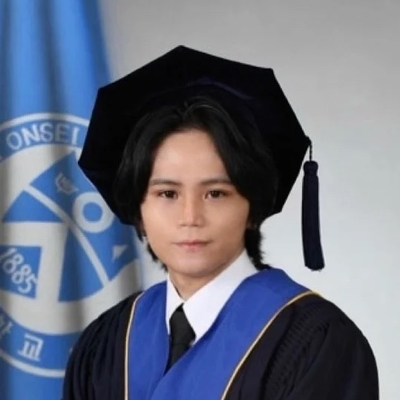
2016 GKS awardee, Chemical Engineering graduate from Yonsei University, and founder of Scholars Academie. Since 2019, he has helped thousands of students win prestigious scholarships in South Korea and Europe.
Apply What You've Learned
Get your documents reviewed
by a scholarship winner.
Reading guides is one thing. Having a verified awardee read your actual application — line by line — is another.
Free to start · No credit card required