About GKS Scholarship: What You Must Know to Win
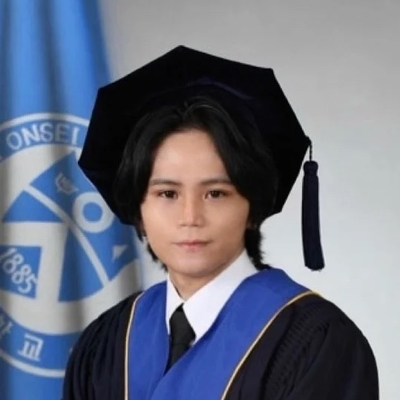 Ace Apolonio
 Every year, thousands of students apply for the GKS scholarship — and most of them fail not because they weren’t qualified, but because they didn’t truly understand what the program demands. If you’re serious about studying in South Korea on a full government scholarship, you need to go beyond surface-level information and understand what the selection committee is actually looking for.
What Is the GKS Scholarship, Really?
The Global Korea Scholarship (GKS), also known as KGSP (Korean Government Scholarship Program), is a fully funded scholarship offered by the Korean government through the National Institute for International Education (NIIED). It covers tuition, living allowance, round-trip airfare, medical insurance, Korean language training, and a settlement allowance. In short, it’s one of the most comprehensive scholarships in the world.
But here’s what most guides don’t tell you: the GKS is not just a financial award. It’s a program designed to build long-term ties between Korea and the world. The selection committee is looking for students who are genuinely interested in Korean culture, who have a clear academic direction, and who will be ambassadors for Korea after they return home. If your application doesn’t reflect that, no amount of polish will save it.
The GKS operates at two levels: undergraduate (for students who have completed high school) and graduate (for students pursuing a master’s or doctoral degree). Both tracks are highly competitive, but the graduate program tends to attract more applicants and requires a stronger academic and research profile.
Who Is Eligible — and Who Actually Gets Selected
The eligibility requirements for the GKS scholarship are straightforward on paper. You must be a citizen of a country other than South Korea, be in good health, meet the GPA requirements (typically 80% or above for undergraduates, and a strong academic record for graduate applicants), and be under the age limits (under 25 for undergrad, under 40 for graduate). You also cannot hold Korean citizenship or be a permanent resident.
But eligibility is just the entry ticket. What actually determines who gets selected is an entirely different conversation.
The students who win GKS scholarships tend to share a few things in common. First, they have a clear and specific reason for choosing Korea — not “I love K-pop” but a genuine connection between their research interests and Korean academic institutions. Second, their personal statement tells a coherent story that connects their past, their current ambitions, and why Korea specifically makes sense for their future. Third, they have professors or mentors at Korean universities who have responded positively to their outreach before they even submit an application.
That last point surprises many applicants. In the graduate track especially, having a professor who knows your name and your research proposal before the committee sees your application is a significant advantage.
The Application Components — And Where People Go Wrong
The GKS application is made up of several components: the personal statement, the study plan, letters of recommendation, academic transcripts, language certificates, and in many cases, a research proposal. Each piece matters, and the committee looks at the whole package, not just individual parts.
The personal statement is where most applicants lose ground. They write a biography instead of an argument. They list accomplishments instead of demonstrating self-awareness. The strongest personal statements I’ve seen are focused, specific, and show genuine intellectual curiosity — not just a desire to live in Seoul. If you want to understand what evaluators are actually looking for in these documents, this post on what scholarship evaluators look for breaks it down in practical terms.
The study plan is another common weak point. Vague plans that say “I hope to conduct research and contribute to my field” are immediately forgettable. A strong study plan names specific professors, references specific labs or departments, explains a clear research question, and shows that you’ve already done serious homework on the institution you’re applying to.
Letters of recommendation also carry more weight than applicants expect. A generic letter from a famous professor is far less valuable than a specific, personal letter from a faculty member who genuinely knows your work. Choose your recommenders carefully and give them the context they need to write something meaningful.
Two Routes Into the Program: Embassy Track vs. University Track
One thing that confuses many applicants is that there are two pathways to apply for the GKS scholarship. The embassy track means you apply through the Korean embassy in your home country. The university track means you apply directly to a Korean university that participates in the GKS program.
Each track has its own timeline, quota, and selection process. The embassy track typically opens earlier in the year (around March) and allows you to list multiple university preferences. The university track opens later and is run by individual universities — meaning the selection criteria can vary.
Most successful applicants I’ve worked with recommend applying through the embassy track if your home country’s embassy is active and has a reasonable quota. The university track is a strong backup, but it’s also more competitive at specific schools since you’re competing with a global pool of applicants who specifically want that institution.
Whichever route you take, start your application materials early. Waiting until two weeks before the deadline to write your study plan is how people end up submitting weak, rushed documents. I’d suggest starting your personal statement and study plan at least three months before the submission window opens. If you’re managing multiple applications at the same time, this guide on managing multiple scholarship applications without burnout is worth reading.
What Makes a GKS Application Stand Out
After working with students across dozens of GKS applications, I can tell you that the difference between a rejected application and a winning one is almost never about grades or language scores. It’s about clarity and conviction.
The best applications have a specific, defensible “why Korea” that connects to the applicant’s research or career goals. They show cultural awareness without being performative about it. They demonstrate that the applicant has done real research into the program, the institution, and the faculty. And they communicate all of this in language that is clear, confident, and specific — not vague aspirational statements.
Your study plan should feel like it was written by someone who has already mentally begun their degree. Your personal statement should make the reader feel like rejecting you would be a missed opportunity. That level of intentionality doesn’t happen by accident — it comes from genuine preparation and often from someone who can give you honest feedback before you submit.
Frequently Asked Questions
Q: What does GKS scholarship cover? A: The GKS scholarship covers full tuition, a monthly living allowance (approximately 900,000–1,000,000 KRW for graduate students), round-trip airfare, medical insurance, a settlement allowance upon arrival, and a Korean language training program before your degree begins.
Q: Is the GKS scholarship hard to get? A: It is competitive, but not impossible if you understand what the selection committee values. Acceptance rates vary by country and track, but applicants who submit specific, well-researched personal statements and study plans — and who have made contact with potential Korean professors beforehand — significantly improve their odds.
Q: Can I apply for GKS through both the embassy and university track? A: No. NIIED requires you to choose one track per application cycle. Applying through both in the same year is grounds for disqualification. Research which track gives you the better opportunity based on your home country’s quota and your target universities.
If you’re serious about applying for the GKS scholarship and want expert guidance on every part of your application — from your study plan to your personal statement to professor outreach — our mentors at Scholars Academie have helped students win GKS placements at top Korean universities. Start your free 7-day mentorship and find out exactly what your application needs to compete at the highest level.
Written by
Ace Apolonio
2016 GKS awardee, Chemical Engineering graduate from Yonsei University, and founder of Scholars Academie. Since 2019, he has helped thousands of students win prestigious scholarships in South Korea and Europe.
Apply What You've Learned
Get your documents reviewed
by a scholarship winner.
Reading guides is one thing. Having a verified awardee read your actual application — line by line — is another.
Free to start · No credit card required