After Getting GKS Scholarship: Your Complete Next Steps
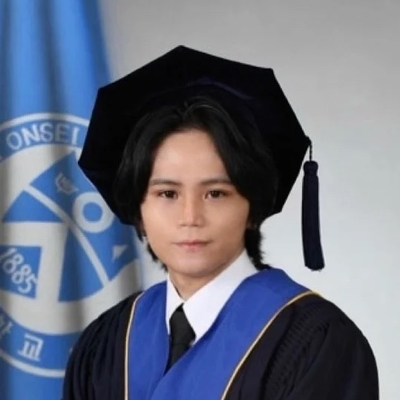 Ace Apolonio
 You worked for months on your application — the personal statement, the study plan, the recommendation letters — and now the acceptance email is sitting in your inbox. But after getting the GKS scholarship, what next? This is the moment most guides forget to cover, and it’s the moment that determines whether your scholarship experience goes smoothly or turns into a logistical nightmare before you even board the plane.
This guide walks you through every critical step between receiving your GKS award letter and your first week on Korean soil — with real timelines, exact figures, and the specific mistakes that trip up even the most prepared scholars.
After Getting GKS Scholarship: Understanding Your Award Letter and Acceptance Deadline
Your award letter from NIIED is not just a congratulations document — it’s a conditional contract. Read it like one.
The letter will specify:
- Your designated university (if you applied through the embassy route, this may still be subject to matching)
- Your program start date (typically early September for the fall intake)
- Your acceptance deadline — usually 2–3 weeks from the date of issue
- Any outstanding conditions — such as submitting original transcripts, a medical certificate, or proof of language proficiency
The single most common mistake at this stage is treating the award letter as a formality. Scholars miss their acceptance deadline because they assume “I’ll sort the paperwork next week.” NIIED does not chase you. If you miss the deadline without communication, your seat can be reallocated.
What to do immediately:
- Reply to the official NIIED or embassy contact confirming your acceptance in writing
- Flag any conditions you cannot meet and request guidance in the same email — don’t wait
- Save all correspondence with timestamps
If you applied through the university track rather than the embassy track, your designated institution’s international office will also send a separate admission package. You’ll need to respond to both. These are two separate bureaucratic chains and they do not automatically communicate with each other.
The NIIED Medical Certificate: Do Not Underestimate This Step
One of the most overlooked requirements after getting the GKS scholarship is the NIIED medical examination. NIIED requires scholars to submit a physical examination form completed by a licensed physician — their own form, not a generic health certificate from your country.
The form covers:
- General physical examination
- Chest X-ray (TB screening is taken seriously)
- HIV test
- Hepatitis B surface antigen test
- Drug screening
Timeline pressure is real here. If you are applying for your D-2 student visa (which you must do before arrival), some Korean embassies require your medical certificate as part of the visa package. That means you need your physician to complete the NIIED form, not a general fitness-to-travel letter, and you need it done within weeks of your acceptance, not days before departure.
Practical step: Download the NIIED medical form from the official NIIED GKS portal the day you receive your award letter. Book your medical appointment that same week. Processing labs for some tests (particularly Hepatitis B) can take 5–10 business days depending on your country.
After Getting GKS Scholarship: Navigating the D-2 Student Visa Application
The D-2 visa is your legal gateway into Korea as a degree-seeking student. Without it, you cannot enroll, cannot receive your monthly stipend, and cannot access university housing as a GKS scholar.
You will apply at the Korean embassy or consulate in your home country. Required documents typically include:
- Valid passport (minimum 6 months validity beyond your intended stay)
- Completed visa application form
- GKS award letter or NIIED acceptance confirmation
- University admission letter
- NIIED medical certificate
- Passport-sized photographs (Korean embassy specifications — check these carefully, they are stricter than most)
- Application fee (varies by country, typically USD $60–90 equivalent)
For more practical guidance on navigating student visa requirements, read our detailed post on Study Abroad Student Visa Tips That Actually Work.
Processing time varies significantly. Some embassies return the visa in 5 business days. Others take 4–6 weeks. Do not book a non-refundable flight until your visa is in hand or you have received written confirmation from the embassy of your processing timeline.
One underappreciated tip: call the Korean embassy after submitting your application and ask specifically whether your D-2 application is complete. Embassy staff will often catch a missing document over the phone that would otherwise sit in a pile for two weeks before generating a rejection letter.
Korean Language Training: What the One-Year Course Actually Involves
If you are enrolling as a master’s or PhD student through GKS, NIIED requires most scholars to complete a one-year Korean language training program before their degree program begins. This is not optional, and it is not a formality.
Here’s what the year looks like in practice:
- Duration: Approximately 10 months (typically March to December, or September to June depending on your intake)
- Institution: Assigned by your university — you do not choose this
- Living allowance during language training: ₩800,000 per month (as of the current NIIED stipend structure)
- Tuition: Covered by NIIED — you pay nothing
- Housing: Typically university dormitory, subsidized
Once your degree program begins, your monthly allowance increases:
- Master’s students: ₩900,000 per month
- PhD students: ₩1,000,000 per month
- Research students: ₩900,000 per month
The language year serves a dual purpose: it builds your Korean proficiency, but it also serves as your cultural orientation period. Use it strategically. Scholars who treat it as a waiting room before their “real” program begins consistently underperform in their first semester. Scholars who build relationships with professors, visit their department, and begin reading in their field during this year hit the ground running.
Housing, Banking, and the First 30 Days in Korea
Arrival logistics are where the GKS experience can feel overwhelming if you haven’t prepared. Here is a sequenced breakdown of your first 30 days:
Week 1:
- Arrive and complete university check-in (bring physical copies of every document — originals and copies)
- Register at the district office (gu-cheong) for your Alien Registration Card (ARC) — this must be done within 90 days of arrival, but do it in week one so everything else can follow
- Open a Korean bank account (most scholars use KEB Hana Bank or Shinhan Bank, which have international student desks on many campuses)
Week 2:
- Your ARC should be ready for pickup (typically 2–3 weeks after application — confirm the timeline with your university’s international office)
- Set up your bank account to receive the NIIED stipend — your university’s scholarship office will require your Korean account number to process payments
- Register for your National Health Insurance — GKS covers 60% of your premium; you pay the remaining 40%, which is automatically deducted from your stipend
Week 3–4:
- Begin Korean language placement testing
- Attend any mandatory orientation sessions from your university
- Connect with your academic department and identify your future advisor if applicable
Academic Planning: What Winning GKS Scholars Do Differently
Getting the scholarship was the first competition. Thriving academically in Korea is the second one — and it catches many scholars off guard.
A few specific patterns separate scholars who excel from those who struggle:
They contact their future professor before language training ends. If you are a master’s or PhD student, your research relationship with your Korean professor (지도교수 / jido gyosu) is the axis around which your entire academic experience turns. Scholars who wait until formal enrollment to introduce themselves lose an entire year of relationship-building.
They build their academic portfolio continuously. Attending conferences, submitting to journals, and engaging in collaborative research are not things you do at the end of your degree — they are things you do from semester one. For deeper guidance on structuring your academic portfolio beyond the scholarship itself, see our guide on Scholarship Portfolio Building Tips That Get Results.
They manage the financial reality honestly. The ₩900,000–₩1,000,000 monthly stipend is livable in Korean university cities, but it requires genuine budgeting. Seoul is more expensive than Daejeon or Gwangju. Scholars who arrive without a realistic budget for the first month (before their stipend activates) sometimes find themselves in cash-flow trouble. Bring the equivalent of ₩1,500,000–₩2,000,000 in accessible funds to cover your first month before your stipend kicks in.
Maintaining Your GKS Status: What Can Get Your Scholarship Revoked
This section exists because NIIED scholarship agreements are binding, and violations — even unintentional ones — can result in suspension or cancellation of your award.
Conditions that can trigger review or revocation:
- GPA falling below 80/100 (B average equivalent) — NIIED requires scholars to maintain this threshold each semester
- Unauthorized part-time employment — GKS scholars on a D-2 visa are legally restricted in their work permissions; unauthorized work violates your visa conditions, not just your scholarship agreement
- Extended absences from Korea without prior NIIED approval — leaving for more than 60 days without notification can trigger a review
- Changing universities without NIIED approval — this requires a formal application process; you cannot simply transfer
If you experience health issues, family emergencies, or academic difficulties, contact both your university’s international affairs office and your NIIED coordinator proactively. NIIED has formal procedures for leaves of absence and extensions. Silence is always the wrong response to a problem.
Key Takeaways
- Act immediately on your award letter — your acceptance deadline is real, and missed deadlines result in forfeited seats, not extensions
- The NIIED medical certificate is time-sensitive — book your medical appointment the same week you receive your award letter, and confirm which tests your local labs can process quickly
- Your D-2 visa application requires the medical certificate — sequence these steps correctly or you will delay your visa
- The one-year Korean language program is an opportunity, not an obstacle — scholars who use it to build department relationships and begin reading in their field consistently outperform those who treat it as a waiting period
- Maintaining your GKS requires active management — GPA minimums, employment restrictions, and absence limits are enforced; when problems arise, communicate proactively rather than hoping they resolve themselves
Frequently Asked Questions
Q: How long after getting the GKS scholarship do I need to respond to my award letter? A: NIIED typically gives scholars 2–3 weeks to formally accept their award. The exact deadline will be stated in your award letter. Missing this deadline without prior communication to NIIED or your embassy can result in your scholarship being reallocated to a waitlisted candidate.
Q: When does the GKS monthly stipend start being paid? A: Your stipend generally begins after you complete formal enrollment at your designated Korean university and submit your Korean bank account details to the university scholarship office. During the Korean language training year, the stipend is ₩800,000 per month; this increases to ₩900,000 (master’s) or ₩1,000,000 (PhD) once your degree program begins.
Q: Can I change my university after receiving the GKS scholarship? A: Not without formal approval. Changing universities requires a written application to NIIED with documented justification. Transferring without approval constitutes a violation of your scholarship agreement and can result in revocation. Contact your NIIED coordinator before taking any steps toward a transfer.
Q: Do I need to speak Korean before arriving in Korea as a GKS scholar? A: No prior Korean language proficiency is required for most GKS applicants. NIIED provides a mandatory one-year Korean language training program before your degree begins. However, arriving with basic Korean (greetings, numbers, basic transactions) will make your first weeks significantly less stressful.
Q: What happens if my GPA drops below the GKS requirement during my program? A: NIIED requires scholars to maintain a minimum GPA of 80/100 (or equivalent) each semester. If your GPA falls below this threshold, you will receive a formal warning. Continued underperformance can lead to suspension of your stipend or cancellation of the scholarship. If you are struggling academically, contact your university’s international office and your department advisor immediately — early intervention matters.
The transition from GKS applicant to GKS scholar is exciting, but it demands the same level of precision and preparation that got you the award in the first place. If you want expert guidance navigating your post-acceptance steps, building your academic profile in Korea, or preparing for future scholarship opportunities, explore our GKS and Erasmus Mundus mentorship programs — including a 7-day free mentorship trial that gives you direct access to coaches who have guided scholars through every stage of this process, from application to graduation.
Written by
Ace Apolonio
2016 GKS awardee, Chemical Engineering graduate from Yonsei University, and founder of Scholars Academie. Since 2019, he has helped thousands of students win prestigious scholarships in South Korea and Europe.
Apply What You've Learned
Get your documents reviewed
by a scholarship winner.
Reading guides is one thing. Having a verified awardee read your actual application — line by line — is another.
Free to start · No credit card required