GKS Application Mistakes That Cost Students the Scholarship
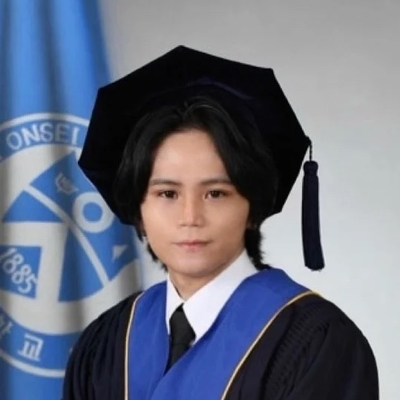 Ace Apolonio
 Every year, thousands of qualified students apply for the Global Korea Scholarship — and thousands of them make the same preventable mistakes.
These are not the mistakes you’d expect. They’re not “my grades were too low” or “my English wasn’t good enough.” The students we’re talking about are capable, motivated, and genuinely deserving of the scholarship.
They lose because of errors that could have been fixed in an afternoon.
After reviewing hundreds of GKS applications and working with scholars across dozens of countries, here are the mistakes that cost students the most — and exactly how to avoid them.
1. Writing Generic Application Essays
This is the number one reason strong candidates get rejected.
The GKS receives applications from students all over the world. Reviewers read hundreds — sometimes thousands — of documents. Generic essays disappear immediately.
“I want to study in Korea because Korean universities are world-class and I am passionate about contributing to my country’s development after graduation.”
This sentence tells reviewers nothing. It could belong to any applicant, for any scholarship, in any country.
The fix: Every sentence in your Personal Statement and Study Plan should be specific to you. Name the exact professor you want to work with. Describe the specific problem in your home country that your research will address. Explain why this Korean university and not another. Specificity is what makes reviewers remember you.
2. Not Tailoring the Application to the Scholarship’s Purpose
The GKS is a government scholarship funded by the Korean Ministry of Education. Its purpose is to build long-term relationships between Korea and other nations by educating future leaders from those countries.
That means reviewers are looking for applicants who will:
- Use their Korean education to address meaningful challenges in their field
- Contribute to Korea-country relations through their career — wherever they end up
- Become genuine ambassadors who bridge Korea and their home country
Many applicants write as if the GKS is just free tuition. They focus entirely on what they will gain, without addressing what Korea will gain by funding them.
The fix: Make sure your application clearly articulates how you will contribute to Korea-country relations — specifically and concretely. What role will you take? What problem will you work on? How does your Korean education make you uniquely positioned to contribute? You don’t have to commit to returning home permanently, but you do need to show that Korea’s investment in you will create lasting value.
3. Submitting the Wrong or Outdated Documents
GKS application requirements change slightly each year. The required documents, formats, and deadlines vary by embassy track and university track.
A surprising number of applications are disqualified not because the content is weak — but because the wrong document was submitted, a signature was missing, or a form was outdated.
The fix: Download the official GKS application guidelines for the current year directly from the National Institute for International Education (NIIED) website or your local embassy. Read it carefully. Create a checklist. Have someone else verify your documents before submission.
4. Listing Certificates and Awards That Don’t Add Value
Many applicants believe that submitting more documents is always better. So they attach every certificate they’ve ever received — online courses, participation awards, unrelated training programs.
Reviewers are not impressed by volume. They are evaluating quality and relevance.
Low-value documents — especially generic online certificates or awards that have no credibility — can actually hurt your application by signaling that you don’t know the difference between what matters and what doesn’t.
The fix: Be selective. Only include certificates and awards that are credibly issued, internationally recognized, or directly relevant to your field of study. A research award from your university department is stronger than a hundred online course certificates.
5. Treating the Study Plan as a Formality
Many applicants write a vague, two-page Study Plan that describes their general interest in their field without any real specificity about what they will study in Korea or why.
This is a critical mistake. The Study Plan (also called the Statement of Purpose) is the most heavily weighted essay in the GKS evaluation. It is your opportunity to show reviewers exactly what you will do with four or five years of Korean education.
The fix: Name your target university and program. Research the faculty, labs, and research centers at that institution. Describe specific courses, research projects, or collaborations you hope to pursue. Show that you’ve thought deeply about your time in Korea — not just that you want to go.
6. Getting Weak or Generic Letters of Recommendation
“[Name] is a good student and I recommend them for this scholarship.” This is a real letter of recommendation. It is also one of the weakest things a recommender can write.
Letters that don’t give specific examples, don’t establish the depth of the relationship, or clearly feel like boilerplate text damage your application.
The fix: Choose recommenders who genuinely know your work, not just your name. Brief them thoroughly — share your essays, explain the scholarship, and tell them specifically what you hope they’ll highlight. Give them at least 4–6 weeks to write.
7. Missing the Internal University Deadline
The embassy-track GKS deadline is set by your local Korean embassy. The university-track deadline is set by the university you’re applying to. But many universities have internal deadlines — for faculty nomination, official document preparation, or language certification — that are weeks before the final submission date.
Missing an internal deadline can disqualify you even if the official deadline hasn’t passed.
The fix: Confirm all internal deadlines with your university’s international office or scholarship coordinator immediately. Mark them in your calendar. Don’t assume the official NIIED deadline is the only one that matters.
8. Not Preparing for the Interview
For the embassy track, the GKS interview is a formal evaluation. Many applicants under-prepare because they feel confident talking about themselves.
Interviewers ask specific questions about your research plans, your reasons for choosing Korea, your intended field, and your plans after graduation. They also assess your professionalism, poise, and communication ability.
The fix: Practice out loud. Record yourself. Do mock interviews with a mentor or peer who will give you honest feedback. Know your application inside and out — you may be asked to elaborate on anything you wrote.
9. Starting Too Late
The GKS application window is often 4–6 weeks. That sounds like enough time. It isn’t — not if you’re writing strong essays, gathering high-quality recommendation letters, translating and notarizing documents, and requesting official transcripts.
Many applicants start the process two weeks before the deadline and submit something they’re not proud of.
The fix: Start the moment the application period opens — ideally earlier. Research the requirements before the window even begins. Draft your essays in advance. Contact your recommenders months ahead of time.
The GKS is competitive, but it is not a lottery. The scholars who win are the ones who prepare seriously, revise obsessively, and submit applications that feel like a specific, real person put genuine thought into every page.
Want us to review your application before you submit? Start your free 7-day mentorship →
Written by
Ace Apolonio
2016 GKS awardee, Chemical Engineering graduate from Yonsei University, and founder of Scholars Academie. Since 2019, he has helped thousands of students win prestigious scholarships in South Korea and Europe.
Apply What You've Learned
Get your documents reviewed
by a scholarship winner.
Reading guides is one thing. Having a verified awardee read your actual application — line by line — is another.
Free to start · No credit card required