GKS Personal Statement Sample: Write One That Wins
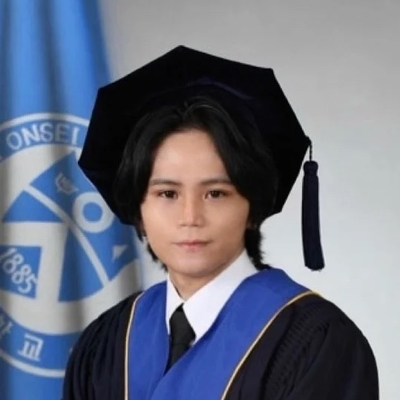 Ace Apolonio
 Your GKS personal statement is the one document in your application that no checklist can complete for you — and it’s the one most applicants get catastrophically wrong. If you’ve been searching for a GKS personal statement sample, what you actually need is to understand why strong statements work, so you can write one that sounds like you, not like a template.
What NIIED Is Actually Looking For in a GKS Personal Statement
Before you write a single sentence, understand who is reading it. NIIED reviewers assess hundreds — sometimes thousands — of applications per cycle. They are looking for three things: academic seriousness, a genuine connection to Korea, and a realistic, specific research or study plan.
What they are not looking for is a motivational speech about how much you love K-dramas and kimchi. That kind of statement gets filed in the rejection pile fast.
The GKS personal statement (officially called the “Personal Statement” in the NIIED application form) has four required sections:
- Family background — Keep this factual and brief. Reviewers want context, not a sob story.
- Study plans — This is where most applications win or lose. Be specific about what you will study, at which institution, and why Korea is the right place for that research.
- Plans after completing the program — Describe how you will use your Korean education in your home country. NIIED prioritizes applicants who will return home and contribute.
- Reason for applying to Korea — This must go beyond cultural curiosity. Connect it to your academic field, your supervisor, or Korea’s specific research capacity.
Each section has a word limit. Use every word. Leaving space on the page signals you don’t have enough to say.
GKS Personal Statement Sample: Strong vs. Weak Side by Side
Nothing teaches faster than contrast. Here’s what a weak opening looks like versus a strong one.
Weak opening: “I am a passionate student who has always been interested in learning. Korea is a beautiful country with a rich culture, and I believe studying there will help me grow as a person.”
This tells the reviewer nothing. It could have been written by anyone, about any country, for any scholarship.
Strong opening (Study Plans section): “My proposed research investigates the efficiency of perovskite solar cells under low-irradiance conditions — a critical gap in renewable energy literature with direct implications for sub-Saharan electrification. Professor Kim Jae-won at KAIST’s Energy Lab has published three peer-reviewed papers on this exact problem since 2021, and his work on carrier recombination rates directly complements my undergraduate thesis at the University of Lagos.”
Notice what the strong version does:
- Names a specific research gap
- References a specific professor by name
- Connects the Korean institution’s expertise to the applicant’s existing work
- Grounds the research in a real-world problem relevant to their home country
This is the level of specificity that wins GKS scholarships. If you haven’t identified your target professor before writing your personal statement, stop and do that first.
How to Write Your GKS Personal Statement: A Section-by-Section Breakdown
Use this process. Don’t skip steps.
1. Research your Korean university before you write anything. Go to your target department’s website. Read your potential supervisor’s recent publications. Find the specific lab or research center you want to join. Write down three specific reasons why that university and that professor are the right fit for your research. These go directly into your Study Plans section.
2. Draft the Study Plans section first. This is the most important section. Write 300–400 words explaining: what you will study, what methods you will use, what gap in the literature you are addressing, and why Korea — specifically your target university — is the right place for this work. If you’re applying for a language program rather than a research degree, describe the linguistic and cultural competencies you aim to develop and how they serve your career.
3. Write the “After Graduation” section as if you’re writing a letter to your home government. NIIED’s mandate is to develop global leaders who return home. Write about a concrete position, institution, or policy area you intend to work in. Saying “I will contribute to my country’s development” is meaningless. Saying “I will join the Nigeria Electricity Regulatory Commission’s renewable energy division, where I will apply the grid-integration research I complete at KAIST” is specific enough to be credible.
4. Keep the Family Background section short and purposeful. Two to three sentences maximum. Only include information that is genuinely relevant — for example, if a family member’s profession shaped your research interest, or if your socioeconomic background demonstrates resilience. Do not narrate your entire childhood.
5. Write the Reason for Applying to Korea section last. By this point, you’ve already explained your research fit. Now layer in Korea-specific reasons: the country’s investment in your field (Korea ranks among the top 5 globally in R&D expenditure as a percentage of GDP), any prior Korean language study, or professional connections you’ve already built with Korean institutions.
6. Edit for specificity, not length. Every sentence that could appear in anyone else’s personal statement should be cut or rewritten. Read each sentence and ask: could a student applying to a completely different field at a completely different university have written this? If yes, revise it.
7. Get feedback from someone who knows the GKS process. Not just a friend with good English. Someone who understands what NIIED values. Generic feedback (“this sounds good!”) will not help you.
The Most Common GKS Personal Statement Mistakes (and What They Cost You)
I’ve reviewed hundreds of GKS applications. These are the mistakes I see most often, and they are all avoidable.
Mistake 1: Writing about Korea’s culture instead of Korea’s academic capacity. Consequence: Reviewers see this as superficial motivation. Your connection to Korea must be intellectual and professional, not touristic.
Mistake 2: Being vague about post-graduation plans. Consequence: NIIED’s scholarship is an investment in bilateral relationships. If you can’t articulate how you’ll serve your home country, you look like a flight risk — someone who will stay in Korea rather than return. This directly affects your selection score.
Mistake 3: Not mentioning a specific professor. Consequence: It signals you haven’t done real research. It also means you’ve missed the chance to demonstrate that your work is a genuine fit for the department’s current research agenda.
Mistake 4: Treating the personal statement like a CV narrative. Consequence: The personal statement is not the place to list your achievements chronologically. Your transcripts and CV do that. The personal statement is where you make an argument — for why you, why this field, why Korea, why now.
Mistake 5: Submitting without checking NIIED’s official format requirements. Consequence: NIIED provides a specific personal statement form. Using a different format — or exceeding the field limits — can result in disqualification. Always download the current year’s application form from the official NIIED website before you write.
How Your Personal Statement Connects to the Rest of Your GKS Application
Your personal statement doesn’t exist in isolation. NIIED reviewers read it alongside your study plan, your recommendation letters, and your transcripts. Inconsistencies across these documents are red flags.
If your personal statement says your research focus is urban water sanitation but your study plan discusses machine learning, reviewers will notice. If you claim a close academic relationship with your recommender but your recommendation letter sounds generic and impersonal, that inconsistency damages your credibility.
For guidance on writing a study plan that aligns with your personal statement, read our post on How to Write a Winning GKS Study Plan. And if you’re unsure about language requirements for your application, our guide Does GKS Scholarship Require IELTS? Full 2025 Guide covers exactly what NIIED expects.
One more thing worth noting: the GKS scholarship covers full tuition, a monthly living allowance (₩900,000 for master’s students, ₩1,000,000 for PhD students), round-trip airfare, medical insurance, and a settlement allowance upon arrival. The stakes of a strong application are high — this is a package worth over ₩50,000,000 for a full master’s program. Write accordingly.
GKS Personal Statement Sample: The Structural Template That Works
Here is a clean structural template you can adapt. Do not copy this — use it as scaffolding, then fill it with your specific details.
Family Background (50–80 words): State your parents’ professions, your hometown, and one formative experience that shaped your academic direction. Keep it factual.
Study Plans (350–450 words):
- Opening sentence: name your research topic and the specific problem it addresses
- Paragraph 2: explain your methodology and theoretical framework
- Paragraph 3: explain why your target university — and specifically your target professor or lab — is the right fit
- Closing sentence: state your expected degree completion timeline
Plans After Completing the Program (200–300 words):
- Name a specific institution, sector, or policy area you will work in
- Explain how your Korean research will be applied in your home country context
- If relevant, mention any existing professional connections or job offers that make this plan credible
Reason for Applying to Korea (150–200 words):
- Korea-specific academic reason (professor, lab, research infrastructure)
- Korea-specific professional reason (bilateral relationship in your sector, Korean industry leadership in your field)
- Any personal connection to Korea that is academically relevant (language study, prior collaboration, etc.)
Key Takeaways
- Specificity is the single most important quality in a winning GKS personal statement. Name professors, labs, research gaps, and home-country institutions.
- NIIED wants scholars who return home. Your post-graduation section must describe a concrete, credible plan for contributing to your country — not a vague aspiration.
- Cultural affinity for Korea is not a reason. Your connection to Korea must be grounded in academic or professional logic.
- Consistency across documents matters. Your personal statement, study plan, and recommendation letters must tell the same story.
- Use the official NIIED form. Formatting errors or field overruns can disqualify you before a reviewer reads a single sentence.
Frequently Asked Questions
Q: How long should a GKS personal statement be? A: NIIED provides a structured form with fixed fields for each section — you don’t choose the overall length. However, each section typically allows 200–500 words, and you should aim to use the full space available. Leaving sections partially empty suggests you lack sufficient motivation or preparation.
Q: Can I use the same personal statement for multiple GKS university applications? A: You should never submit identical personal statements to different universities. The Study Plans section must reference your specific target professor, department, and research fit at each institution. A generic statement that could apply to any Korean university will read as exactly that to every reviewer who sees it.
Q: Should I mention my CGPA or academic awards in my GKS personal statement? A: Briefly, if they are directly relevant to your research credibility — for example, if you graduated top of your department in a field directly related to your proposed study. But do not use the personal statement as a transcript summary. Your academic record is already visible to reviewers in your application documents.
Q: What’s the difference between the GKS personal statement and the study plan? A: The personal statement covers your background, motivations, study intentions, and post-graduation plans in a holistic narrative. The study plan is a more detailed academic document focused specifically on your research agenda, methodology, and timeline in Korea. Both must be consistent and specific, but they serve different purposes. For more on the study plan, see our GKS Study Plan Tips That Actually Get You Accepted.
Q: Is it acceptable to write my GKS personal statement in Korean? A: NIIED accepts applications in English or Korean. If your Korean is at a high academic level, writing in Korean can signal genuine language commitment — but only if the quality is native or near-native. A poorly written Korean personal statement will hurt you more than a well-written English one. When in doubt, write in the language in which you can be most precise and persuasive.
Writing a GKS personal statement that actually gets you selected isn’t about finding the perfect template — it’s about understanding what NIIED is investing in and making a clear, specific argument that you are that investment. If you want expert eyes on your statement before you submit, our GKS and Erasmus Mundus mentorship programs include a 7-day free mentorship trial where you can get direct, document-level feedback from coaches who have guided applicants through successful GKS applications. Don’t guess at what works — get feedback from people who already know.
Written by
Ace Apolonio
2016 GKS awardee, Chemical Engineering graduate from Yonsei University, and founder of Scholars Academie. Since 2019, he has helped thousands of students win prestigious scholarships in South Korea and Europe.
Apply What You've Learned
Get your documents reviewed
by a scholarship winner.
Reading guides is one thing. Having a verified awardee read your actual application — line by line — is another.
Free to start · No credit card required