GKS Scholarship Application Documents: Complete Guide
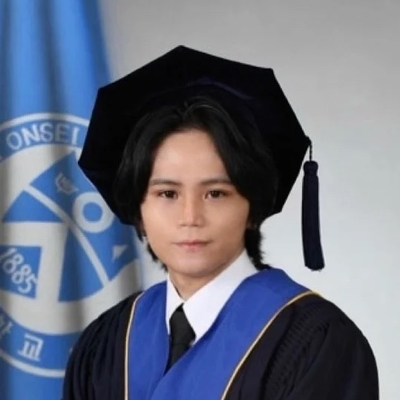 Ace Apolonio
 Most GKS applicants don’t lose because they’re unqualified — they lose because their documents are incomplete, misformatted, or fail to tell a coherent story. After coaching hundreds of applicants through the Government of Korea Scholarship process, I can tell you that the difference between a funded offer and a rejection letter almost always lives in the details of the application package. This guide breaks down every GKS scholarship application document you need, what NIIED actually expects to see, and the specific errors that quietly sink strong candidates.
What GKS Scholarship Application Documents Are Actually Required
NIIED publishes an official checklist every cycle, and while the core requirements are stable, missing even one document — or submitting a version that doesn’t meet their format standards — results in automatic disqualification. No appeals, no second chances. Here’s the complete list for graduate applicants (Embassy Track and University Track share most requirements, with minor differences):
- GKS Application Form — Downloaded from the NIIED website for the current cycle. Do not use a form from a previous year. Fill it out in English.
- Personal Statement — Maximum 2 pages, typed, 11pt font minimum. This is not optional formatting — reviewers are instructed to flag non-compliant documents.
- Study Plan — Maximum 3 pages. Must include your proposed research area, target Korean university, and how your goals connect to Korea’s academic strengths.
- Two Letters of Recommendation — Must come from professors or supervisors who know your academic or professional work directly. Generic letters are identified immediately.
- Official Academic Transcripts — All degrees completed or in progress. Must be official (sealed or with verification), translated into English or Korean if issued in another language.
- Degree Certificate(s) — Apostilled or notarized copy of your highest completed degree. If you’re applying while completing your degree, an enrollment certificate is accepted.
- Language Proficiency Certificates — TOPIK score if you’re applying for Korean-medium programs; IELTS or TOEFL for English-medium programs. Some universities waive this if your prior education was in English — verify per your target institution.
- Medical Certificate — The NIIED-specific medical form, completed and signed by a licensed physician. Do not use a general health certificate.
- Passport Copy — Valid for the full duration of your proposed study period.
- Confirmation of Nationality — To confirm you hold citizenship from a country with diplomatic relations with Korea and that neither parent holds Korean citizenship.
For University Track applicants: you’ll also need a Letter of Admission or Preliminary Acceptance from your target Korean university before submitting to NIIED.
How to Prepare Your GKS Personal Statement and Study Plan (The Right Way)
These two documents carry the most weight in the evaluation process — and they’re where most applicants either win or lose the scholarship. The personal statement and study plan together account for a significant portion of your qualitative score, and weak versions of either will drag down an otherwise competitive application.
Personal Statement — what evaluators want to see:
A strong personal statement opens with a specific moment or problem that shaped your academic direction. Not “I have always been passionate about engineering.” But rather: “When the water system in my city failed for the third consecutive year, I realized that the gap wasn’t technical knowledge — it was environmental policy infrastructure, and I wanted to be part of fixing it.”
Evaluators read hundreds of these. They’re looking for:
- A clear, logical arc from your background to your current goals
- Genuine engagement with Korean academia — not just “Korea is a great country”
- Evidence that you understand what you’re committing to (five or more years of academic study in a competitive system)
Study Plan — precision matters here:
Your study plan should name a specific professor at your target university whose research aligns with yours, reference their published work if possible, and explain why their methodology or lab is the right environment for your goals. NIIED scores this document partly on academic specificity. Vague plans like “I want to study computer science and contribute to Korea’s tech industry” score poorly. Specific plans that demonstrate you’ve done real research into Korean academia score well.
For more on writing documents that actually move evaluators, read our guide on what scholarship evaluators look for and how to deliver it.
GKS Scholarship Application Documents: The Apostille and Notarization Trap
This is the section most guides skip — and it’s responsible for a large number of disqualifications every cycle.
NIIED requires that certain documents be apostilled (for countries that are signatories to the Hague Convention) or notarized through the Korean embassy (for non-Hague countries). The specific documents that require this treatment include:
- Your degree certificate(s)
- Sometimes your transcripts, depending on the issuing institution’s country
The trap: Many applicants submit notarized copies when apostilles are required, or vice versa. Some submit photocopies certified by a local notary, which is not the same as an apostille. Here’s how to get this right:
- Check whether your country is a Hague Convention signatory (the official list is at hcch.net).
- If yes: Obtain an apostille from the competent authority in your country — usually the Ministry of Foreign Affairs, Ministry of Education, or a designated government office depending on your document type.
- If no: Contact the Korean Embassy in your country and ask specifically what authentication process they accept for academic documents.
- Start this process at least 6–8 weeks before the application deadline. Government authentication offices are slow, and expedited processing isn’t always available.
- Keep certified copies of everything — NIIED retains originals.
Letters of Recommendation: What “Strong” Actually Means
GKS requires two letters of recommendation, and the quality threshold is higher than most applicants expect. I’ve reviewed letters that were disqualifying not because they were negative — but because they were generic.
A weak letter sounds like this: “I have known [Name] for two years. She is a hardworking and dedicated student who performs well in class. I recommend her for this scholarship.”
That tells the evaluator nothing actionable. It could apply to any student.
A strong letter sounds like this: “[Name] completed an independent research project under my supervision examining the role of microfinance institutions in rural credit access in Ghana. She identified a methodological gap in existing literature and designed a mixed-methods study to address it — work that I am currently encouraging her to submit for peer review. Her analytical rigor and intellectual independence make her precisely the kind of researcher who will thrive in Korea’s graduate environment.”
The difference is specificity. Evaluators are looking for evidence that the recommender actually knows the applicant’s work — not just their name.
Practical steps:
- Brief your recommenders before they write. Share your personal statement and study plan so the letters reinforce your narrative.
- Ask them to reference specific projects, papers, or experiences — not general character traits.
- Confirm that letters are submitted on official institutional letterhead, signed, and sealed if required by your target university or embassy.
Language Documents and Medical Certificates: Don’t Leave These to the Last Minute
Two documents that applicants consistently underestimate in terms of preparation time:
Language Proficiency:
- If you’re applying to a Korean-language program, TOPIK Level 3 is the minimum, but Level 4 or above significantly strengthens your application. TOPIK test dates are limited — check the schedule for your country and register at least three months in advance.
- If applying to an English-medium program, a minimum IELTS score of 5.5 or TOEFL iBT of 80 is commonly accepted, though individual universities may set higher thresholds. Always verify with your target institution.
- Some countries and programs accept a letter from your previous institution confirming English as the medium of instruction — but this is the exception, not the rule.
Medical Certificate:
- NIIED provides its own medical examination form. Do not substitute it with a general health certificate, hospital discharge summary, or any other document.
- The form must be completed by a licensed physician and must cover specific categories including vision, hearing, cardiovascular health, and mental health status.
- Schedule this appointment at least four weeks before your deadline. Some physicians are unfamiliar with the form and need time to complete it accurately.
Common GKS Document Mistakes That Lead to Rejection
I want to be direct here: these are mistakes I’ve seen derail strong candidates with excellent GPAs and solid research backgrounds.
- Using last year’s application form. NIIED updates forms each cycle. An outdated form means automatic disqualification.
- Submitting transcripts without official translation. If your transcripts are not in English or Korean, they must be translated by a certified translator. A bilingual friend’s translation will not be accepted.
- Exceeding page limits. Two pages means two pages. A 2.5-page personal statement will be penalized or dismissed.
- Recommendation letters from family members or unrelated professional contacts. Both letters must come from academic supervisors or direct professional supervisors — not personal references.
- Missing the Confirmation of Nationality requirement. This document must confirm that neither parent holds Korean citizenship. If you’re uncertain about what qualifies as proof, contact the Korean embassy in your country before the deadline.
If you’re building your application portfolio from scratch, our scholarship portfolio building tips guide will help you structure everything strategically before you start filling out forms.
Key Takeaways
- Completeness is non-negotiable. Missing a single required document — regardless of your academic qualifications — results in disqualification without appeal.
- Apostilles and notarization are not interchangeable. Verify the correct authentication method for your country at least six to eight weeks before the deadline.
- Your Personal Statement and Study Plan are your competitive edge. Generic language scores poorly; specific, evidence-based writing distinguishes funded applicants from rejected ones.
- Brief your recommenders thoroughly. Strong letters name specific projects and demonstrate that the recommender knows your work — not just your name.
- Download the current cycle’s documents from NIIED directly. Forms, medical certificates, and application guidelines change annually.
Frequently Asked Questions
Q: What are the required GKS scholarship application documents for graduate applicants? A: Graduate applicants need the GKS application form, personal statement, study plan, two letters of recommendation, official academic transcripts, degree certificates, language proficiency scores, the NIIED medical certificate, a passport copy, and a Confirmation of Nationality document. University Track applicants must also provide a letter of preliminary acceptance from their target Korean institution before submitting to NIIED.
Q: Do GKS application documents need to be apostilled? A: Yes, degree certificates and sometimes transcripts must be apostilled if your country is a Hague Convention signatory, or authenticated through the Korean Embassy if it is not. Submitting a notarized copy instead of a proper apostille is one of the most common reasons otherwise strong applications are disqualified.
Q: What TOPIK score do I need for the GKS scholarship? A: For Korean-language programs, TOPIK Level 3 is the stated minimum, but competitive applicants typically hold Level 4 or higher. For English-medium programs, TOPIK is not required — IELTS (minimum 5.5) or TOEFL iBT (minimum 80) are accepted instead, though individual universities may set higher thresholds.
Q: Can I submit a general health certificate instead of the NIIED medical form? A: No. NIIED requires its own specific medical examination form completed and signed by a licensed physician. General health certificates, hospital discharge summaries, or any other document will not be accepted as a substitute, and missing or non-compliant medical documentation will disqualify your application.
Q: How many letters of recommendation does the GKS scholarship require? A: GKS requires exactly two letters of recommendation. Both must come from academic supervisors (professors, thesis advisors) or direct professional supervisors who can speak specifically to your academic or professional capabilities. Personal references or letters from family members are not accepted, and generic letters that do not reference specific work or projects score significantly lower in evaluation.
If you’re serious about building a GKS application that stands out — not just one that meets the minimum checklist — mentorship makes a measurable difference. At Scholars Academie, we work with applicants one-on-one to review every document in your package, sharpen your personal statement and study plan, and help you avoid the quiet errors that cost strong candidates their offers. Explore our GKS and scholarship mentorship programs to get started with a 7-day free mentorship trial and see exactly how we can help you put together an application that wins.
Written by
Ace Apolonio
2016 GKS awardee, Chemical Engineering graduate from Yonsei University, and founder of Scholars Academie. Since 2019, he has helped thousands of students win prestigious scholarships in South Korea and Europe.
Apply What You've Learned
Get your documents reviewed
by a scholarship winner.
Reading guides is one thing. Having a verified awardee read your actual application — line by line — is another.
Free to start · No credit card required