GKS Scholarship Extracurricular Activities: What Counts
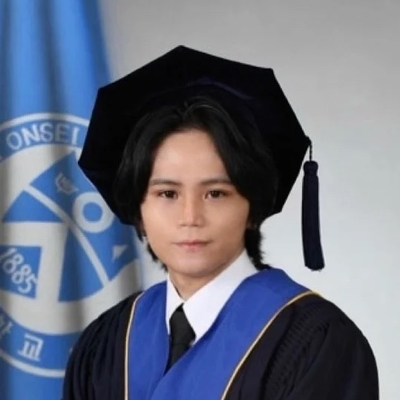 Ace Apolonio
 Most GKS applicants spend months perfecting their GPA and language scores — then submit a single line about “volunteering” and wonder why they didn’t advance. Here’s the truth: GKS scholarship extracurricular activities aren’t just a checkbox on your application. For competitive applicants sitting in the same GPA band, they are often the deciding factor.
NIIED’s selection rubric evaluates candidates on academic excellence, but also on “character and social engagement.” That second category is where extracurriculars live — and where underprepared applicants leave significant points on the table. This guide tells you exactly how to identify, frame, and present your activities so they work for your application, not against it.
Why GKS Scholarship Extracurricular Activities Actually Matter to NIIED
Let’s be precise about what NIIED is looking for. The GKS (Global Korea Scholarship) selection process has two major stages: an embassy or university recommendation round, and in some cases, a final interview. At both stages, reviewers are assessing whether you are the kind of person who will represent their country well in Korea — academically, socially, and culturally.
NIIED’s official evaluation criteria award points across multiple dimensions. While exact internal weightings aren’t publicly disclosed per category, the overall selection process is designed to surface candidates who demonstrate initiative, leadership, and cultural openness — qualities that extracurricular activities directly evidence.
Extracurriculars are not evaluated as a separate scored section like your GPA or language certificate. Instead, they feed into two key documents: your Personal Statement and your Study Plan. They also come up in interviews. If your activities aren’t visible in those documents, they don’t exist for the reviewer.
What Actually Qualifies as a Relevant Extracurricular for GKS
This is where applicants make their first mistake: they either oversell activities that aren’t relevant, or they undersell genuinely impressive ones because they don’t see the connection to Korea or their field.
Here’s a framework. NIIED reviewers respond well to activities in four categories:
- Korea-related engagement — Korean language classes (even informal ones), K-culture clubs, Korean film festivals you organized, Korean exchange student buddy programs. These signal genuine interest, not opportunism.
- Leadership in community organizations — being a club president, founding an NGO, leading a university committee. Not just “member.”
- Research or academic initiatives outside coursework — independent research projects, science fairs, published papers, conference presentations.
- Service and development work — teaching underprivileged students, health outreach, environmental campaigns. Especially strong when tied to your intended field of study in Korea.
What doesn’t count well: attending events, being a passive member of a club, or listing things that happened before high school with no arc of development.
A weak application says: “I am a member of the English drama club and participated in several events.”
A strong application says: “As co-founder of my university’s Korean Cultural Exchange Society, I organized three annual events connecting 200+ students with Korean exchange students, and coordinated a 6-week Korean language learning series that I personally facilitated.”
Same type of activity. Completely different impact.
How to Weave Extracurriculars Into Your GKS Personal Statement
Your Personal Statement is a 1–2 page narrative (NIIED doesn’t specify a word count, but most universities cap it at 800–1,000 words). It is not a list. It is a story — and extracurriculars are the texture of that story.
Here’s how to integrate them effectively:
-
Lead with an outcome, not a title. Instead of “I was president of the biology club,” write: “Leading a team of 12 students to design and execute our university’s first water-quality monitoring project taught me that environmental science doesn’t end in the lab.”
-
Connect to your Korea motivation. If you ran a literacy program in your community, connect it to your study plan in Korean education policy. The bridge matters more than the activity itself.
-
Use specifics that reviewers can’t invent. Numbers of participants, duration of programs, measurable outcomes. Reviewers read hundreds of applications. Generic descriptions evaporate.
-
Avoid stacking. Listing 12 clubs in your personal statement signals breadth without depth. Pick 2–3 activities and develop them fully. Depth wins over breadth every time.
-
Show progression. A reviewer wants to see that you’ve grown. Start as a member, become a leader, then a founder — that arc is compelling. A single semester activity from five years ago, mentioned in passing, is not.
GKS Scholarship Extracurricular Activities in the Study Plan — A Missed Opportunity
Most applicants treat their Study Plan as a purely academic document — research goals, professor contacts, timeline. That’s incomplete. Your Study Plan should also explain why you are ready for Korea right now, and relevant extracurriculars are part of that readiness case.
For example: if you’ve been studying Korean independently for two years, include your TOPIK level (even TOPIK I counts), mention how many hours you’ve invested, and reference how that experience shaped your understanding of Korean academic culture. This belongs in the Study Plan’s introductory context section.
If you’ve done any Korea-related research, even a term paper on Korean industrial policy or Korean cinema aesthetics, cite it. It shows intellectual engagement beyond the application form.
One concrete addition: if you completed any fieldwork, internships, or community projects related to your proposed research area in Korea, describe them in a short paragraph before your research timeline. It frames you as someone who doesn’t just read about problems — you work on them.
Common Mistakes That Undermine Strong Extracurricular Profiles
I’ve reviewed hundreds of GKS applications through Scholars Academie, and the same errors come up repeatedly:
Mistake 1: Listing without narrating. Your application form has a section for extracurricular activities. Don’t just fill it in and leave it there. If you don’t reference those activities in your Personal Statement or Study Plan, reviewers won’t connect the dots for you.
Mistake 2: Claiming Korea interest without evidence. Writing “I have always been fascinated by Korean culture” while having zero Korea-related activities in your profile is a red flag, not a strength. Reviewers notice the contradiction.
Mistake 3: Ignoring recent activities. NIIED is interested in who you are now, not who you were four years ago. If your most recent extracurricular was in your first year of university and you’re now applying in your fourth, your profile reads as stagnant. Fill the gap — even recent activities count.
Mistake 4: Not verifying activities with documentation. Some embassies and universities ask for supporting documents during the verification stage. If you can’t produce a certificate, letter, or photo evidence for a key activity you’ve claimed, don’t make it central to your narrative.
Mistake 5: Confusing extracurriculars with work experience. Paid internships and part-time jobs belong in your work/employment section, not extracurriculars. Mixing them up looks careless and can raise integrity concerns during verification.
How to Build Your Extracurricular Profile If You’re Applying Next Cycle
If your current extracurricular profile feels thin, here’s a realistic 6-to-12-month action plan:
- Join or found a Korea-related campus group. Even a small Korean language study circle of 5 people you lead counts if you document it properly.
- Register for TOPIK. TOPIK II Level 2 or above is a meaningful signal. Even TOPIK I shows effort and cultural seriousness. The test is offered multiple times a year globally.
- Volunteer in your field. If you’re applying for environmental science, spend one semester with a local environmental NGO. Two to three months of consistent engagement is documentable.
- Attend or present at a student conference. Many regional and national undergraduate conferences accept paper submissions. A presentation — even a poster — is a credible activity.
- Document everything now. Get a letter from your supervisor, save your participation certificate, take photos. Documentation collected in real time is infinitely easier to use than reconstructed proof six months later.
- Secure one strong recommendation that references your extracurriculars. Ask a professor or community leader who has witnessed your activities firsthand to speak to your character and leadership in their letter.
Key Takeaways
- GKS scholarship extracurricular activities are evaluated indirectly through your Personal Statement, Study Plan, and interview — not as a standalone scored section.
- Korea-related activities (language learning, cultural engagement, Korean community programs) carry disproportionate weight because they demonstrate genuine motivation.
- Depth beats breadth: developing 2–3 activities fully in your narrative is more compelling than listing 10 activities without context.
- Common mistakes include listing activities without narrating them, claiming Korea interest without evidence, and failing to document activities before applying.
- If your profile is thin, 6–12 months of targeted engagement — Korean language study, community leadership in your field, conference participation — can meaningfully strengthen your application before the next cycle.
Frequently Asked Questions
Q: Do GKS reviewers actually check extracurricular activities listed on the application? A: Yes — particularly during the university track, where academic departments review your full file and may verify credentials. More importantly, inconsistency between your listed activities and your Personal Statement narrative will undermine your credibility with any reviewer.
Q: How many extracurricular activities should I include in my GKS application? A: Quality matters far more than quantity. Focus on 3–5 activities that you can speak to in depth, especially in your Personal Statement. A single well-developed leadership role with measurable outcomes is stronger than eight generic memberships.
Q: Can I include online courses or self-study as extracurricular activities for GKS? A: Self-study programs (like TOPIK preparation or Coursera certificates) are better placed in your academic or language credentials section. However, if you organized a study group or taught others using what you learned, that teaching/organizing role qualifies as extracurricular.
Q: What if I have no Korea-related extracurricular activities — does that disqualify me? A: It doesn’t disqualify you, but it does weaken your application, especially against candidates who have demonstrated sustained cultural interest. If you’re applying in the next cycle, start building that connection now — even 6 months of consistent Korean language study with a TOPIK score can make a visible difference.
Q: Should my GKS Personal Statement be primarily about extracurriculars or academics? A: Neither exclusively. The strongest Personal Statements integrate both — academic trajectory explaining your intellectual development, and extracurricular activities demonstrating character, leadership, and motivation. NIIED wants the full picture of who you are, not just your transcript.
If you want expert eyes on how your extracurricular profile reads to a real GKS reviewer — not just a checklist — our mentors at Scholars Academie have helped students from over 30 countries craft applications that win. Start with our GKS and scholarship mentorship programs, which include a 7-day free mentorship so you can experience the coaching before you commit. The difference between a strong profile and a winning one is usually in the framing — and that’s exactly what we help you get right.
Written by
Ace Apolonio
2016 GKS awardee, Chemical Engineering graduate from Yonsei University, and founder of Scholars Academie. Since 2019, he has helped thousands of students win prestigious scholarships in South Korea and Europe.
Apply What You've Learned
Get your documents reviewed
by a scholarship winner.
Reading guides is one thing. Having a verified awardee read your actual application — line by line — is another.
Free to start · No credit card required