GKS Scholarship Renewal Requirements: What You Must Know
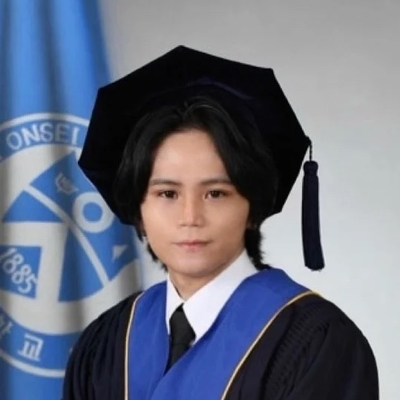 Ace Apolonio
 You worked hard to win the GKS scholarship — now the question keeping you up at night is whether you’ll keep it. Understanding the GKS scholarship renewal requirements isn’t just administrative housekeeping; it’s the difference between finishing your degree fully funded and scrambling to cover tuition mid-program. Here’s exactly what NIIED expects from you, year after year.
What the GKS Scholarship Renewal Requirements Actually Cover
Most students assume that once they’re in, they’re in. That assumption has ended more than a few GKS placements prematurely. NIIED structures the scholarship as a renewable grant — typically one year at a time — and each renewal is contingent on satisfying a specific set of academic, linguistic, and behavioral conditions.
The renewal evaluation covers four core areas:
- Academic performance — your GPA relative to the institutional minimum
- Korean language progression — completion of required TOPIK milestones
- Attendance and conduct — no unauthorized absences or disciplinary violations
- Research or course progress — alignment with your original study plan
Your host university submits a renewal recommendation to NIIED on your behalf, but that recommendation isn’t automatic. The university’s international office reviews your records first, and if anything flags — a borderline GPA, a missed TOPIK exam, an incomplete course load — the recommendation can be withheld or sent with caveats that trigger a NIIED review.
GPA Requirements: The Numbers That Actually Matter
The GPA floor for GKS renewal is B or above — equivalent to 80/100 or 3.0/4.5 on most Korean university grading scales. This applies to both master’s and PhD students. Falling below this threshold in any given semester doesn’t automatically terminate your scholarship, but it does trigger a formal warning from your university.
Here’s what the warning system looks like in practice:
- First offense (one semester below threshold): Written warning from the university. You’re required to submit an academic improvement plan.
- Second consecutive semester below threshold: NIIED is notified. Your renewal is flagged for review, and you may be required to appear before an academic committee.
- Third consecutive semester or cumulative failure: Scholarship termination, with possible repayment obligations for the most recent semester’s funding.
One detail many students overlook: the GPA calculation in Korean universities often includes language courses taken during your first year. If you struggled in Korean language classes, those grades follow you. I’ve worked with students who earned A’s in their major coursework but were surprised to find their cumulative GPA dragged down by a rough first semester in Korean.
The fix is straightforward but requires foresight — in your first semester, treat your Korean language courses with the same seriousness as your research seminars. They count, and they compound.
Korean Language Requirements: TOPIK Milestones by Year
The Korean language component of GKS renewal is one of the most misunderstood requirements. NIIED doesn’t just want you to study Korean — it expects measurable proof of progression through the TOPIK (Test of Proficiency in Korean) system.
Here’s the standard progression expected of GKS scholars:
- End of Year 1 (after language training): TOPIK Level 2 minimum
- End of Year 2: TOPIK Level 3 recommended for continued funding in most programs
- By graduation (for programs conducted in Korean): TOPIK Level 4 or above
Students in English-medium programs face slightly different expectations, but NIIED still requires evidence of Korean language engagement. Failing to sit the TOPIK exam entirely — even if your program is in English — can be flagged as non-compliance during renewal review.
A common mistake: students register for the TOPIK exam but don’t prepare seriously, assuming a low score is better than no score. In practice, consistently low scores with no upward trajectory raise questions during renewal. NIIED and host universities want to see improvement, not stagnation.
If you’re sitting TOPIK and struggling, document your study hours, tutoring sessions, and language exchange participation. A learning diary isn’t required, but having one means that if your renewal is questioned, you can demonstrate genuine effort — which carries real weight in committee reviews.
Attendance, Conduct, and the Rules Most Students Ignore
The GKS scholarship terms include a code of conduct that covers more ground than most recipients read carefully. Here are the specific rules with real consequences:
Unauthorized absence from Korea: Leaving Korea for more than 30 consecutive days without NIIED approval can suspend your stipend for that period. Leaving for more than 90 days without approval is grounds for scholarship cancellation.
Academic misconduct: Any plagiarism finding — even one flagged by your university’s automated detection system — triggers an immediate hold on your renewal while the case is investigated. NIIED takes this seriously regardless of whether your university pursues separate disciplinary action.
Employment violations: GKS scholars are permitted to work part-time, but only up to 20 hours per week and only in roles approved under your visa category. Working beyond this limit, or working without the appropriate visa endorsement, is a scholarship violation.
Enrollment continuity: Taking a leave of absence requires advance NIIED approval. Students who take unauthorized leaves — even for legitimate medical reasons — risk having that semester’s stipend reclaimed.
The monthly stipend amounts currently stand at ₩900,000 per month for master’s students and ₩1,000,000 per month for PhD students, plus settlement allowances, tuition coverage, and medical insurance. That’s a significant package to put at risk over a paperwork oversight.
How to Prepare a Strong Renewal File
Your university’s international office typically compiles the renewal recommendation, but you should treat this process as an active task, not a passive one. Here’s a step-by-step approach:
-
Request a pre-renewal meeting with your international office at least 6 weeks before the renewal deadline. Ask explicitly what documents they need and what their internal GPA cutoff is (some universities set it slightly higher than NIIED’s minimum).
-
Pull your official transcript and review it yourself before they do. If there’s an error — a grade not updated, a course listed incorrectly — you want to catch it first.
-
Prepare a one-page academic progress summary. This isn’t always required, but submitting one proactively demonstrates professionalism and gives the committee a narrative context for your grades. Include: courses completed, research milestones reached, conference presentations or publications (if any), and your TOPIK score history.
-
Gather TOPIK certificates and study documentation. Even if your score isn’t where you’d like it to be, showing consistent registration and upward movement is far better than silence.
-
Check your visa validity. Renewal of your D-2 student visa should be coordinated with your scholarship renewal, not treated as a separate afterthought. A visa gap can create complications that delay your stipend disbursement.
-
Address any warnings in writing. If you received an academic warning the previous semester, include a brief explanation and an improvement plan. Don’t let it sit without a response on your file.
What Happens If Your Renewal Is Denied — And How to Appeal
Renewal denials are less common than warnings, but they do happen. If your renewal is denied, you have a right to appeal through both your host university and directly to NIIED. The appeal window is typically 15–30 days from the date of the denial notice — confirm the exact window with your international office immediately upon receiving any negative decision.
A successful appeal typically includes:
- A formal appeal letter addressed to NIIED, written in both English and Korean where possible
- Supporting documentation for any extenuating circumstances (medical records, family emergency documentation, correspondence with advisors)
- A concrete academic recovery plan with specific, measurable milestones
- A letter of support from your academic advisor or department head
What doesn’t work in an appeal: vague explanations, appeals that blame the university, or appeals submitted without documentation. NIIED’s scholarship management division reviews hundreds of cases. A well-organized, evidence-backed appeal with a credible improvement plan is what gets traction.
Key Takeaways
- The GPA floor is 80/100 (3.0/4.5) for both master’s and PhD students — two consecutive semesters below this threshold triggers a NIIED review, and three can result in termination.
- TOPIK progression is mandatory, not optional — even English-medium program students must demonstrate Korean language engagement each year.
- Leaving Korea for more than 30 days without NIIED approval can suspend your stipend; more than 90 days risks cancellation.
- Treat your renewal file as an active project — request your pre-renewal meeting 6 weeks early and submit a one-page progress summary proactively.
- Appeals are possible but time-sensitive — you typically have 15–30 days to file, and documentation is everything.
Frequently Asked Questions
Q: What is the minimum GPA required for GKS scholarship renewal? A: GKS scholarship renewal requires a minimum GPA of B or above, equivalent to 80/100 or approximately 3.0 on a 4.5 scale. This applies to both master’s and PhD students, and the calculation includes all enrolled courses — including Korean language classes taken during your first year.
Q: Do GKS scholars need to pass TOPIK every year to renew? A: NIIED doesn’t require a new TOPIK pass every single year, but it does expect demonstrable progression through the TOPIK levels — typically reaching Level 2 by the end of your language training year and Level 3 by the end of your second year. Failing to sit the exam at all, or showing no score improvement over multiple years, can raise red flags during renewal review.
Q: Can a GKS scholarship be renewed if I took a leave of absence? A: Yes, but only if the leave of absence was approved in advance by NIIED. Unauthorized leaves — even for legitimate medical or personal reasons — can result in reclamation of that semester’s stipend and may complicate the renewal process. Always notify your international office and request formal NIIED approval before taking any leave.
Q: How long do I have to appeal a GKS scholarship renewal denial? A: The standard appeal window is 15 to 30 days from the date of the denial notice, though the exact deadline varies by institution and circumstance. You should confirm the window with your university’s international office immediately upon receiving any denial, then prepare a formal appeal letter with supporting documentation and a concrete academic recovery plan.
Q: Does working part-time in Korea affect my GKS scholarship renewal? A: Part-time work is permitted under GKS terms, but only up to 20 hours per week and only in roles consistent with your D-2 visa conditions. Working beyond this limit, or in unauthorized employment, is a scholarship violation that can be flagged during renewal review. When in doubt, confirm with your international office before accepting any employment.
If you’re navigating GKS renewal — or preparing your initial application and want to build habits that protect your scholarship from day one — Scholars Academie’s mentorship team has helped hundreds of students not just win GKS funding but maintain it through every renewal cycle. Explore our GKS and scholarship mentorship programs to see how our 7-day free mentorship trial works and what a personalized strategy session with a former GKS recipient actually looks like. The details in your application matter. So do the details that keep your scholarship alive.
Written by
Ace Apolonio
2016 GKS awardee, Chemical Engineering graduate from Yonsei University, and founder of Scholars Academie. Since 2019, he has helped thousands of students win prestigious scholarships in South Korea and Europe.
Apply What You've Learned
Get your documents reviewed
by a scholarship winner.
Reading guides is one thing. Having a verified awardee read your actual application — line by line — is another.
Free to start · No credit card required