GKS Self-Introduction Video Tips That Actually Work
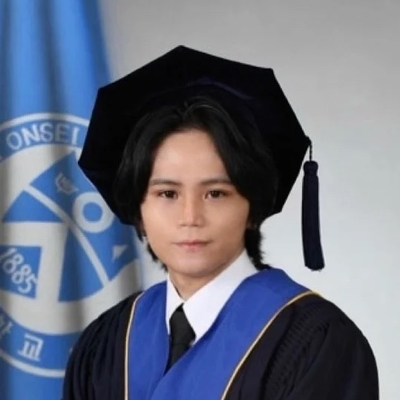 Ace Apolonio
 Most GKS applicants spend weeks perfecting their personal statement and study plan — then record their self-introduction video in one rushed afternoon. That’s a mistake, and it costs real candidates real offers. Your self-introduction video is often the first time an evaluator sees and hears you as a person, and the impression it leaves matters far more than most applicants realize.
Why the GKS Self-Introduction Video Deserves Your Full Attention
The Global Korea Scholarship requires a self-introduction video as part of the application package for many universities. It’s not a formality. Professors and admissions panels use it to assess your communication skills, your clarity of purpose, and — honestly — whether you seem like someone they’d want in their program for the next several years.
Think of it this way: your written documents tell them what you’ve done. The video tells them who you are. That’s a different kind of work entirely.
What makes this component tricky is that most applicants have never been coached on how to present themselves on camera for academic purposes. They either over-script it (and sound robotic) or wing it (and ramble). Neither works. What evaluators want is someone who is confident, coherent, and clearly passionate — without being rehearsed to the point of sounding like a press release.
Structure Your Video Before You Record a Single Second
Before you open your camera app, you need a clear structure. I recommend a four-part flow that works consistently well for GKS self-introduction videos:
- Who you are — Your name, your country, your academic background. Keep this tight: 20–30 seconds maximum.
- What you’ve done — One or two experiences that are directly relevant to your proposed field of study in Korea. Not your full CV. Choose wisely.
- Why Korea, why this university, why this program — This is the most important section. Be specific. Vague answers like “Korea is a developed country with excellent research” will not impress anyone. Name a professor whose work you admire. Reference a specific lab or research initiative. Show that you’ve done your homework.
- What you intend to contribute — Close with a forward-looking statement. What do you want to achieve, and how does studying in Korea connect to that goal?
Most successful videos run between 90 seconds and 3 minutes. Under 90 seconds often feels rushed and thin. Over 3 minutes risks losing the viewer’s attention. Aim for 2 to 2.5 minutes as your target.
GKS Self-Introduction Video Tips for Delivery and Presentation
Knowing what to say is only half the battle. How you say it matters just as much. Here are the things I see applicants get wrong most often — and how to fix them:
Don’t read off a script. Evaluators can tell immediately when someone is reading, and it creates distance. Instead, internalize your key points using bullet notes just outside the frame. You want to sound natural and conversational, not like you’re reciting a memorized essay.
Look at the camera, not the screen. This is the equivalent of eye contact in a face-to-face interview. It builds trust. Practice until it feels natural.
Control your environment. Record in a quiet, well-lit room with a neutral or tidy background. Natural daylight is your best friend. A cluttered background or echo-y audio will undermine even the best content. Use a ring light or sit facing a window. Use headphones with a built-in mic if your device’s built-in microphone picks up background noise.
Dress professionally. Smart casual at minimum — the same way you’d dress for a scholarship interview. This signals that you take the opportunity seriously.
Record multiple takes. The first take is almost never the best one. Record three to five versions and watch them back critically. Pay attention to your pacing, your filler words (“um,” “so,” “like”), and whether your energy stays consistent throughout.
For more on how evaluators assess your overall presentation and what they’re actually looking for beneath the surface, What Scholarship Evaluators Look For (And How to Deliver It) is worth reading before you finalize your video approach.
What to Say About Korea — and What to Avoid
This section matters so much that it deserves its own heading. The “Why Korea” section of your self-introduction is where most applicants either win or lose the evaluator’s confidence.
Avoid generic statements like “Korea has advanced technology” or “I want to experience Korean culture.” Every other applicant is saying some version of this. It does nothing to differentiate you.
Do your research beforehand. Visit the website of your target university and department. Find the names of professors whose research aligns with your interests. Read at least one paper or project abstract from that lab. Then mention it specifically in your video: “Professor [Name]‘s work on [specific topic] directly connects to the research question I want to pursue, which is…”
This level of specificity tells the evaluator three things: you’ve done your homework, you’re serious about this particular opportunity (not just scholarships in general), and you have genuine academic curiosity. That combination is powerful.
Also, if you’ve already started building the written components of your application, the principles in Scholarship Interview Preparation Tips That Win Offers will help you align your video message with your overall application narrative.
Technical Checklist Before You Submit
Before you upload your video, run through this checklist:
- Video length is between 90 seconds and 3 minutes
- Audio is clear — no echo, background noise, or muffled sound
- Lighting is even — no shadows across your face
- Background is clean and professional
- You are dressed appropriately
- You maintained consistent eye contact with the camera
- You mentioned a specific reason for choosing your target university or professor
- File format and size meet the university’s submission requirements
Check the specific university portal requirements carefully. Some universities specify MP4 format, file size limits, or maximum resolution. Missing a technical requirement after recording a great video is an entirely avoidable disaster.
Frequently Asked Questions
Q: How long should a GKS self-introduction video be? A: Most GKS self-introduction videos should be between 90 seconds and 3 minutes. Aim for around 2 to 2.5 minutes — long enough to cover your background, motivation, and goals substantively, but short enough to hold an evaluator’s attention throughout.
Q: Should I record my GKS self-introduction video in English or Korean? A: This depends on the language of instruction for your target program. If you’re applying to an English-taught program, record in English. If you’re applying to a Korean-taught program, recording in Korean (if you’re proficient) can be a strong signal of readiness. If you’re not yet fluent in Korean, don’t force it — a confident, clear video in English is far better than a halting one in Korean.
Q: What’s the biggest mistake applicants make in their GKS self-introduction video? A: Being too vague, especially in the “Why Korea” section. Statements like “Korea is a global leader in technology” are forgettable. Evaluators want to see that you’ve researched your specific university, department, or professor, and that your reasons for applying are grounded in genuine academic purpose — not just a general appreciation for the country.
If you want expert eyes on your self-introduction video script, delivery, and overall GKS application strategy, we’re here to help. At Scholars Academie, our mentors have guided hundreds of students through exactly this process — including the parts no one talks about publicly. Start your free 7-day mentorship and get personalized feedback on your video, your documents, and everything in between before you submit.
Written by
Ace Apolonio
2016 GKS awardee, Chemical Engineering graduate from Yonsei University, and founder of Scholars Academie. Since 2019, he has helped thousands of students win prestigious scholarships in South Korea and Europe.
Apply What You've Learned
Get your documents reviewed
by a scholarship winner.
Reading guides is one thing. Having a verified awardee read your actual application — line by line — is another.
Free to start · No credit card required