GKS Study Plan Tips That Actually Get You Accepted
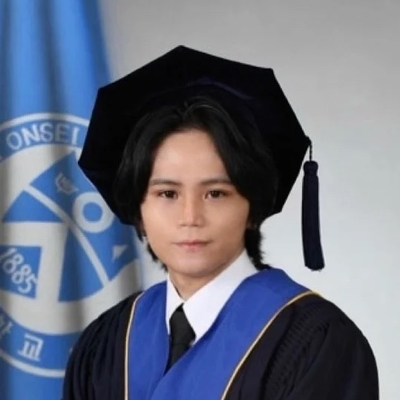 Ace Apolonio
 Most GKS applicants spend weeks perfecting their personal statement and completely overlook the document that Korean professors actually read first — the study plan. Get this wrong, and even a stellar academic record won’t save your application.
Why Your GKS Study Plan Tips Matter More Than You Think
Let me be direct: the study plan is not a formality. It is the document where Korean universities evaluate whether you are a serious researcher or someone who just wants a free trip to Seoul. Admissions committees — and the professors who will potentially supervise you — read this to understand your intellectual maturity, your grasp of Korean academic culture, and whether your research fits what their department actually does.
A weak study plan is usually one of two types. The first is vague and aspirational: “I want to study Korean culture and contribute to my home country.” The second is a copy-paste from a graduate school template that makes no reference to Korea whatsoever. Both get rejected. What works is a plan that is specific, structured, and clearly tied to a real academic problem that a real Korean department is equipped to solve.
Before you write a single word, spend time on the GKS Scholarship Program Success Stories That Inspire — not for inspiration in a fuzzy sense, but to reverse-engineer what successful applicants actually wrote about and how they framed their research direction.
How to Structure Your GKS Study Plan for Maximum Impact
The GKS study plan typically asks you to cover three things: your academic background, your proposed research or study goals, and your plans after graduation. Most applicants treat these as three separate boxes to fill. Winners treat them as one continuous narrative.
Here is the structure I recommend:
Opening paragraph — your research problem. Do not introduce yourself. Start with the problem your research addresses. One or two sentences that establish why this field matters right now. This signals immediately that you think like a researcher.
Your academic foundation. Briefly explain how your undergraduate or graduate work has prepared you for this specific research. Do not list every course you took. Pick two or three experiences — a thesis, a project, a research internship — that directly connect to your proposed study in Korea.
Your study plan by semester or year. This is where most applicants are too vague. Break it down. What will you do in your first year? Language training, orientation, coursework? In your second year, will you be collecting data, running experiments, completing coursework? What is your thesis timeline? Korean universities respond well to candidates who have thought through the academic calendar, not just the big picture.
Why Korea, why this university, why this professor. This section should name the specific lab, research center, or faculty member whose work aligns with yours. Do not write “Korea has excellent universities.” Write something like: “Professor [Name]‘s work on [specific topic] published in [journal] directly informs the gap I am addressing.” This level of specificity separates serious applicants from everyone else.
Post-graduation contribution. Connect your research to something concrete back home or in your field. Avoid sweeping statements about “building bridges between nations.” Be specific about the policy, industry, or academic gap your work will address.
Common GKS Study Plan Mistakes That Kill Applications
I have reviewed hundreds of study plans through our mentorship program, and the same mistakes appear again and again.
Writing for a general audience. Your study plan should read as if it were written for one specific professor at one specific university. If you could submit it to ten different programs without changing a word, it is not specific enough.
Ignoring Korean academic culture. Korea has a structured, hierarchical research environment. Acknowledging that you understand the advisor-student relationship — and that you are prepared to work within that structure — signals cultural awareness. Professors notice this.
Unrealistic timelines. Promising a completed literature review, two conference papers, and a drafted thesis by the end of year one is not impressive. It is a red flag. Build in time for language adjustment, cultural adaptation, and the reality that research rarely moves in a straight line.
Forgetting the language component. Unless you are already applying to an English-taught program and are a native speaker, address how you plan to develop your Korean language skills. Even for English-medium programs, showing that you intend to engage with Korean academic and social life in Korean goes a long way.
Weak transitions between sections. The study plan should feel like a coherent argument, not a checklist. Each section should logically lead to the next.
Research-Focused GKS Study Plan Tips for Graduate Applicants
If you are applying for the graduate track — either a master’s or PhD — your study plan needs to demonstrate research fluency, not just academic enthusiasm.
Start by identifying a genuine gap in your field that your proposed research addresses. Read two or three papers by the professor you are targeting. Understand their methodology. Reference their work in your plan — not to flatter them, but to show that you understand where your research fits within ongoing scholarly conversations.
Your proposed methodology matters. Even at the proposal stage, you should be able to say whether your approach is qualitative, quantitative, or mixed. Will you be conducting surveys, lab experiments, archival research, or fieldwork? Korean universities want to see that you have thought beyond the “what” to the “how.”
Also think carefully about your essay writing across all application documents — your study plan, personal statement, and any additional essays should reinforce each other without being repetitive. For help making your essays work together, the Scholarship Essay Writing Tips That Actually Win Funding post is worth reading carefully before you finalize anything.
Tailoring Your GKS Study Plan to Specific Universities
Korea has around a dozen universities that participate in the GKS program, and they are not interchangeable. KAIST and POSTECH are heavily STEM-focused with strong industry-research links. Seoul National University has breadth across disciplines. Yonsei and Korea University have strong humanities and social sciences programs alongside their science departments.
Your study plan should reflect the specific strengths and research culture of your target institution. Look at the department’s website. Read recent theses from that program. Check what research centers exist within the department. This research takes time, but it is what makes a study plan feel authored rather than assembled.
If you are applying to multiple universities — which the GKS program allows — do not submit the same study plan to all of them. Adjust the university-specific sections meaningfully. Admissions readers can tell when a document was written generically and then names were swapped in.
Frequently Asked Questions
Q: How long should a GKS study plan be? A: Most GKS applications ask for a study plan between 1,000 and 2,000 words, though this varies by university. Aim for quality over length. A focused, specific 1,200-word plan will outperform a padded 2,000-word one every time. Check your target university’s specific guidelines and stick to them precisely.
Q: Can I write a GKS study plan without prior research experience? A: Yes, but you need to work harder to establish credibility. Focus on relevant coursework, your undergraduate thesis, any independent projects, or professional experience that connects to your proposed field of study. Be honest about where you are in your academic journey, and frame your time in Korea as the environment where you will develop full research independence — with a clear plan for how that will happen.
Q: Should I contact a professor before submitting my GKS study plan? A: For the university track, yes — reaching out to a potential advisor before submitting can significantly strengthen your application. If a professor responds positively or expresses interest in supervising your work, you can reference that correspondence in your study plan. Keep your initial email short, professional, and focused on your research interests, not on asking for admission help.
Putting together a competitive GKS application is not something you should do alone, especially when the study plan carries this much weight. At Scholars Academie, we work with students one-on-one to develop study plans that are specific, credible, and tailored to the right universities and professors. If you are serious about winning a GKS scholarship, start your free 7-day mentorship and let us help you build an application that stands out from the first line.
Written by
Ace Apolonio
2016 GKS awardee, Chemical Engineering graduate from Yonsei University, and founder of Scholars Academie. Since 2019, he has helped thousands of students win prestigious scholarships in South Korea and Europe.
Apply What You've Learned
Get your documents reviewed
by a scholarship winner.
Reading guides is one thing. Having a verified awardee read your actual application — line by line — is another.
Free to start · No credit card required