How to Prepare a GKS Research Proposal That Wins
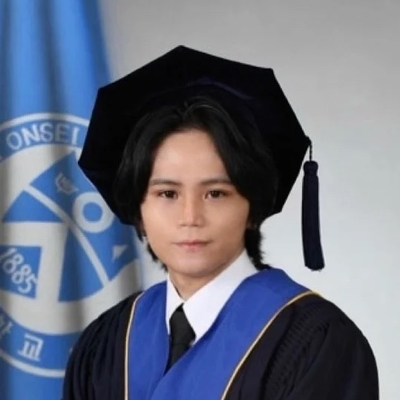 Ace Apolonio
 Most GKS applicants spend weeks perfecting their personal statement and completely ignore their research proposal — until a professor emails them back with silence. The research proposal isn’t a formality. For the Graduate track especially, it is the document that determines whether a Korean professor will accept you into their lab.
Here’s what I’ve seen after coaching hundreds of GKS applicants: a mediocre applicant with a sharp, well-targeted research proposal will outperform a brilliant candidate with a vague one every single time.
Why the GKS Research Proposal Carries So Much Weight
Before we get into the mechanics of writing one, you need to understand what this document actually does in the GKS application process.
For the Graduate Research (G-type) track, you are not just applying to a scholarship — you are applying to work under a specific professor in a specific department. Korean universities run a professor-recommendation system. This means a professor has to agree to supervise you before your application is seriously considered. Your research proposal is the pitch you send to that professor. It tells them: this is what I want to study, this is why it matters, and this is why I’m the right person to do it under your guidance.
That’s a completely different job from a personal statement. The research proposal is academic and forward-facing. It should show intellectual maturity, a clear research direction, and evidence that you’ve actually read the professor’s work.
The Six Core Components Every GKS Research Proposal Needs
When I review proposals with students, I check for six things. Miss any of these and the document loses its power.
1. A focused research title. Not “A Study on Renewable Energy in Korea” but something like “Grid Integration Challenges for Solar Microgrids in Rural South Korea: A Policy and Engineering Analysis.” Specific titles signal that you’ve done actual thinking, not keyword stuffing.
2. A clear problem statement. Open with the problem your research addresses. What gap exists in current knowledge? What real-world issue demands this inquiry? Two or three sentences, no fluff.
3. Research objectives. List two to four specific, measurable objectives. What will this research produce? Avoid vague language like “explore” or “understand.” Use verbs like “examine,” “compare,” “evaluate,” or “develop a framework.”
4. Methodology overview. You don’t need a full methods chapter, but you need to show that you know how you’ll answer your research questions. Qualitative? Quantitative? Mixed methods? Lab-based? Field research? Even a brief paragraph here separates serious candidates from hopeful ones.
5. Connection to your target professor’s work. This is the part most applicants skip entirely. Cite at least one of their publications by name. Explain how your research builds on, extends, or engages with their scholarship. This shows you chose them intentionally — not because their email was the first one you found on Google.
6. Relevance to Korea or Korean development goals. GKS is funded by the Korean government. Proposals that connect to Korean national interests — technology, sustainability, public policy, culture, Korean studies — consistently perform better than proposals with zero connection to the host country.
How to Prepare a GKS Research Proposal When You’re Just Starting Out
One of the most common things students tell me is: “I don’t have a research background. How do I even begin?”
Here’s the honest answer: you start with what you already know and what genuinely interests you. You don’t need a published paper to write a credible proposal. You need curiosity plus structure.
Start by reading two or three recent papers in your intended field — specifically papers published by Korean researchers or about Korean contexts. Use Google Scholar. Filter by the last five years. Take notes on what problems are being studied and what questions are still open. That’s your entry point.
Then find your target professors. Look at faculty pages for your shortlisted universities. Read their lab pages, recent publications, and current projects. When you find someone whose work genuinely excites you, that’s who you write the proposal for.
Draft your proposal with them as the audience — not a scholarship committee. This mindset shift changes everything about how specific and confident your writing becomes.
For tips on how to frame your academic story more broadly, What Scholarship Evaluators Look For (And How to Deliver It) is worth reading before you finalize anything.
Common Mistakes That Kill GKS Research Proposals
I’ve read proposals that were beautifully written but fundamentally broken. Here’s what trips people up most:
Being too broad. “I want to study AI in healthcare” is not a research proposal. It’s a topic area. Narrow your scope until it feels almost uncomfortably specific. That specificity is what makes it credible.
Copying proposal templates from the internet. Professors in Korea receive dozens of applications. They can spot a recycled structure instantly. The language, the examples, the connection to their work — all of it needs to be original and tailored.
Ignoring the word limit. GKS typically expects a proposal between one and two pages. Going over signals poor academic discipline. Going well under signals you haven’t thought it through.
Forgetting to link it to your study plan. Your research proposal and your study plan (the other major GKS document) should be coherent. If your proposal is about environmental policy but your study plan talks about molecular biology, reviewers will notice the disconnect. The two documents should reinforce each other.
Not addressing why Korea. If your research could be done anywhere in the world, you need to give a compelling reason why Korea is the right place to do it. University resources, specific datasets, industry access, Korean language context — find the angle that makes Korea the logical choice.
Formatting and Presentation That Makes Reviewers Take You Seriously
A well-organized proposal communicates professionalism before anyone reads a single word. Use clear section headings. Keep your paragraphs short — three to five sentences maximum. Use a readable font (Times New Roman or Arial, 11–12pt) and standard margins.
If you include citations, use a consistent referencing style (APA or MLA both work). Even one or two citations from peer-reviewed sources make the proposal look grounded rather than speculative.
Avoid using the first word “I” — not because it’s wrong, but because academic proposals read more credibly when they lead with the problem rather than the person.
Also worth reading before you submit: Scholarship Essay Writing Tips That Actually Win Funding — many of the principles around clarity, structure, and persuasion apply directly to research writing too.
Frequently Asked Questions
Q: How long should a GKS research proposal be? A: Most GKS applications expect a research proposal of one to two pages (approximately 500–800 words). Check your specific university’s requirements, as some departments set their own guidelines. Prioritize depth over length — a tight, well-argued one-page proposal will outperform a padded two-page one every time.
Q: Can I use the same research proposal for multiple GKS university choices? A: Not effectively, no. Each proposal should be tailored to the specific professor and department at each university. The problem statement and methodology can stay largely the same, but the section connecting your research to the professor’s work must be rewritten for each target. Sending identical proposals is one of the fastest ways to get no responses from faculty.
Q: Do I need a professor’s acceptance before submitting my GKS application? A: For the Graduate track, having a professor’s Letter of Acceptance (LOA) significantly strengthens your application and is required by many universities. You should reach out to professors before your application deadline, attach your research proposal, and request their supervision. Some universities list an LOA as mandatory — always check the requirements of each institution on your shortlist.
If you want expert eyes on your research proposal before you send it to a professor, that’s exactly what we do at Scholars Academie. Our mentors have guided students through the full GKS application process — from identifying the right professors to getting LOAs from top Korean universities. Start your free 7-day mentorship and get personalized feedback on your research proposal, study plan, and every other part of your GKS application before the deadline closes.
Written by
Ace Apolonio
2016 GKS awardee, Chemical Engineering graduate from Yonsei University, and founder of Scholars Academie. Since 2019, he has helped thousands of students win prestigious scholarships in South Korea and Europe.
Apply What You've Learned
Get your documents reviewed
by a scholarship winner.
Reading guides is one thing. Having a verified awardee read your actual application — line by line — is another.
Free to start · No credit card required