How to Write a College Scholarship Essay That Wins
 Ace Apolonio
 Most students lose scholarships not because they lack qualifications — but because their essay sounds exactly like every other applicant’s. If you’ve been staring at a blank page wondering how to write a college scholarship essay that actually moves a committee to action, this guide is for you.
Why Your College Scholarship Essay Is the Deciding Factor
Grades open doors. Essays walk you through them.
Scholarship committees — whether they’re reviewing GKS applications for NIIED in Korea, Erasmus Mundus consortiums in Europe, or domestic university awards — receive hundreds of applications from qualified candidates. Grade cutoffs eliminate the bottom tier, but among the finalists, transcripts start to look eerily similar. A 3.7 GPA next to another 3.7 GPA tells the committee nothing about who deserves the money more.
The college scholarship essay is the one place in your application where you are not a number. It’s where you get to say: here is why I specifically — not just any smart student — should receive this award.
Research from the National Scholarship Providers Association consistently shows that selection committees rank personal statements and essays among the top three deciding factors in competitive awards. At NIIED (the Korean government body that administers the GKS scholarship), reviewers explicitly evaluate applicants’ future plans and personal motivation as graded components of the selection rubric. Your essay is not a formality. It is scored.
The #1 Mistake Students Make in a College Scholarship Essay
They write about what they’ve done instead of why it matters.
Here’s a common weak opening I see all the time:
“My name is Aisha, and I am a third-year biochemistry student with a 3.8 GPA. I have volunteered at a hospital, interned at a research lab, and won two academic awards. I believe I am an excellent candidate for this scholarship.”
This reads like a résumé with a heartbeat. Nothing in it is memorable because none of it is specific to Aisha. Replace “Aisha” with any other applicant and the paragraph still works — which means it doesn’t actually work at all.
Compare that to a strong opening:
“The first time I pipetted a live cell sample, I dropped it. My supervisor didn’t reprimand me — she said, ‘Good. Now you know what you’re protecting.’ That moment redefined what biochemistry meant to me: not a career path, but a responsibility.”
Both applicants have lab experience. Only the second one made it unforgettable. Strong college scholarship essays trade generic claims for specific, sensory moments that carry emotional weight and intellectual meaning simultaneously.
The fix: For every achievement you list, ask yourself: What did this teach me that no one else could have learned the same way? That answer is your essay.
How to Structure a College Scholarship Essay (Step-by-Step)
There is no single correct structure, but there is a framework that works reliably across almost every scholarship type — from small community awards to fully-funded international programs like GKS or Erasmus Mundus.
-
Open with a specific scene or tension (2–4 sentences). Drop the reader into a moment that reveals something essential about you. Avoid starting with “I was born in…” or “Since I was young…”
-
Introduce the larger stakes (1–2 sentences). Connect that moment to a broader problem, field, or question that your scholarship work will address.
-
Demonstrate evidence of your readiness (2–3 sentences). This is where credentials belong — but framed as proof, not as a list. “Three years of applied research in renewable energy systems” lands better than “I have researched renewable energy.”
-
Articulate your specific goals (2–3 sentences). Committees want to fund people with direction. Vague goals like “I want to make a difference” are red flags. Strong goals name institutions, methodologies, timelines, or outcomes. For GKS applicants, this section often functions like a study plan — and if you want to develop that section further, read our guide on GKS Study Plan Tips That Actually Get You Accepted.
-
Connect your goals to the scholarship’s mission (1–2 sentences). This is where most students leave points on the table. Show that you’ve read the scholarship’s stated objectives and that your goals genuinely align.
-
Close with forward momentum (2–3 sentences). End by gesturing toward what becomes possible because of this award. Not gratitude — aspiration.
Total: 400–700 words for most scholarship essays. For major fellowships and programs like GKS, personal statements can extend to 800–1,200 words across multiple documents.
What Scholarship Committees Are Actually Evaluating
Before you write a single word, understand who is reading your college scholarship essay and what they’ve been told to look for.
Most scholarship selection rubrics — even when they aren’t published — evaluate candidates on some version of these five dimensions:
- Clarity of purpose: Do you know what you want and why?
- Evidence of achievement: Have you demonstrated the ability to succeed?
- Alignment with the scholarship’s goals: Are you a fit, not just a good candidate in general?
- Communication quality: Can you write with precision and conviction?
- Authenticity: Does this sound like a real person with a real story?
For internationally competitive scholarships, the bar is higher. GKS, for example, funds master’s students at ₩900,000 per month and PhD students at ₩1,000,000 per month — plus full tuition coverage, settlement allowances, and return airfare. With that level of investment per student, NIIED reviewers are choosing people they believe will represent both their field and their home country with distinction. The essay has to convince them you’re that person.
For a full breakdown of what GKS actually covers, see our detailed post: What Does GKS Scholarship Cover? Full 2025 Breakdown.
How to Customize Your College Scholarship Essay for Each Award
A college scholarship essay is not a template document. Writing one strong essay and submitting it everywhere is one of the fastest ways to lose multiple scholarships simultaneously.
Here’s how to customize efficiently without writing from scratch each time:
-
Create a master essay (~1,000 words) that covers your story, background, goals, and values thoroughly.
-
Build a scholarship-specific insert (100–200 words) for each award that explicitly names the program, explains why this specific scholarship fits your trajectory, and references something from the program’s stated mission or values.
-
Adjust the opening scene when needed. If you’re applying to a STEM fellowship, open with a scientific moment. If you’re applying to a leadership award, open with a decision under pressure. Your core narrative stays the same; the entry point shifts.
-
Match the tone to the committee. A government scholarship like GKS tends to reward measured, professional writing. A private foundation might reward more personal vulnerability. Research past recipients when possible.
-
Have someone who doesn’t know your field read it. If they can’t explain your goals back to you in one sentence, your essay isn’t clear enough.
Common College Scholarship Essay Mistakes (and What They Cost You)
Avoiding mistakes is often more important than adding polish. Here are the ones I see most frequently — and their real consequences:
-
Using passive voice throughout: It makes you sound like you were carried through your experiences rather than choosing them. Active voice signals agency.
-
Addressing the committee as a monolith: “I know you receive many applications…” tells the committee you’re aware of competition but haven’t done anything to stand out from it.
-
Burying the hook: Starting with biographical context before getting to your actual story. Most reviewers form their impression within the first three sentences.
-
Overpromising vague impact: “I will change the world” without any specificity about how, through what mechanism, or in what context. Committees fund plans, not dreams.
-
Ignoring word limits: Going 15% over the word limit doesn’t demonstrate that you have more to say. It demonstrates that you can’t edit. Going significantly under suggests you didn’t take the prompt seriously.
-
Skipping the proofreading step: A single typo in a scholarship essay — especially in the name of the institution or the scholarship itself — can be disqualifying in competitive rounds.
Editing Your College Scholarship Essay: A 3-Pass Method
Writing is rewriting. Here’s the specific method I recommend to every student I mentor:
Pass 1 — Content audit: Read only for substance. Does every paragraph advance your central argument? Cut anything that’s filler or that restates something you’ve already said.
Pass 2 — Sentence-level clarity: Read each sentence aloud. If you stumble, the sentence needs work. Aim for varied sentence length — short punchy statements next to more developed ideas creates rhythm.
Pass 3 — Alignment check: Go back to the scholarship prompt. Does your essay answer what was actually asked? Does it connect to the program’s stated mission? This is the pass most students skip — and it’s the most valuable one.
After your three passes, give the essay to someone outside your discipline. If they say “I didn’t know you cared so much about X,” you’re on the right track. If they say “I’m not sure what you’re trying to say,” go back to Pass 1.
Key Takeaways
- The college scholarship essay is a scored component, not a formality — treat it with the same rigor as any other graded work.
- Specific scenes and concrete details outperform lists of achievements every time.
- Strong essays demonstrate not just what you’ve done, but what it means — and where it’s going.
- Customization for each scholarship is non-negotiable; generic essays cost applicants more than they save in time.
- Editing in structured passes — content, clarity, alignment — catches the mistakes that disqualify otherwise strong candidates.
Frequently Asked Questions
Q: How long should a college scholarship essay be? A: Most college scholarship essays fall between 400 and 700 words, though major fellowships and international programs like GKS may require 800–1,200 words across one or more documents. Always follow the specific word limit in the prompt — going significantly over or under signals poor judgment to reviewers.
Q: What should I write about in a college scholarship essay? A: Write about a specific experience, challenge, or turning point that genuinely shaped your academic or professional direction — then connect it clearly to your future goals and why this scholarship specifically helps you get there. Avoid broad topics like “my passion for learning” unless you can anchor them in a concrete, memorable moment.
Q: How do I start a college scholarship essay? A: Open with a specific scene, image, or moment that immediately draws the reader in — not a biographical summary or a statement about your ambitions. The first two to three sentences should make the reviewer want to keep reading, which means starting in the middle of something real rather than at the beginning of your life story.
Q: Can I reuse the same essay for multiple scholarships? A: You can use a master essay as a foundation, but you should customize at least 150–200 words for each specific scholarship to address its mission, values, and what makes it distinct. Committees can tell when an essay wasn’t written for them — and it signals a lack of genuine interest in their program.
Q: What makes a college scholarship essay stand out to reviewers? A: Specificity, clarity of purpose, and authentic voice. Essays that name concrete goals, demonstrate self-awareness, and connect personal experience to a larger field or mission consistently outperform essays that are technically well-written but emotionally generic. The best essays make reviewers feel like they already know the applicant — and want to invest in them.
If you’re serious about turning your college scholarship essay into the document that wins you funding, mentorship makes a measurable difference. At Scholars Academie, we work one-on-one with students applying to GKS, Erasmus Mundus, and other competitive programs — helping them move from a vague draft to a submission-ready essay with a clear, compelling argument. Start with our 7-day free mentorship program and see exactly what a coached application looks like compared to what you have now.
Written by
Ace Apolonio
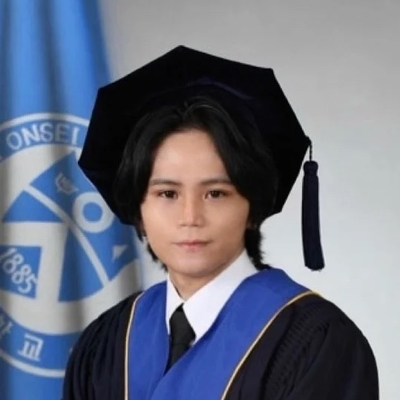
2016 GKS awardee, Chemical Engineering graduate from Yonsei University, and founder of Scholars Academie. Since 2019, he has helped thousands of students win prestigious scholarships in South Korea and Europe.
Apply What You've Learned
Get your documents reviewed
by a scholarship winner.
Reading guides is one thing. Having a verified awardee read your actual application — line by line — is another.
Free to start · No credit card required