Study Plan for Korean University: GKS Guide (2025)
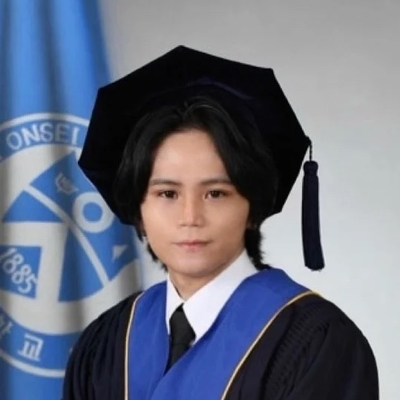 Ace Apolonio
 Your study plan for a Korean university could be the single document that separates you from 10,000 other GKS applicants — and most people write it like a college essay when it should read like a research blueprint. NIIED reviewers spend roughly two to three minutes per application, and your study plan is where they decide whether you actually know what you’re doing in Korea or you’re just hoping for the best. Get this document right, and it anchors your entire application.
What NIIED Actually Wants in a Study Plan for Korean University
Let’s cut through the vague advice you’ve probably already read. NIIED evaluates your study plan against a specific set of concerns: academic readiness, research clarity, cultural awareness, and post-graduation contribution. They’re not looking for passion — they’re looking for plausibility.
Here’s what that means in practice. A reviewer reading your study plan is asking four silent questions:
- Does this applicant understand what studying at a Korean university actually involves?
- Is the research or academic focus specific enough to succeed?
- Does this person have the background to do what they’re claiming?
- Will Korea benefit from funding this person?
Your study plan needs to answer all four — not through broad statements, but through concrete, verifiable specifics. Mentioning a professor’s name at your target university, citing their published research, and explaining how it aligns with your own academic trajectory tells a reviewer far more than writing “I am passionate about Korean culture and academic excellence.”
The Structure That Wins: A Section-by-Section Breakdown
A strong study plan for a Korean university typically runs 800–1,200 words and follows a logical arc. Here’s the structure that consistently works:
1. Academic Background (150–200 words) Open with your relevant academic history — not your whole CV, just the thread that leads to this application. What did you study? What gap or question emerged from that work? This frames everything that follows.
2. Research or Study Objectives (200–250 words) This is the heart of your document. Be specific:
- Name your intended field and sub-field (e.g., not “engineering” but “structural seismic engineering with a focus on reinforced concrete behavior”)
- Identify one or two faculty members at your target Korean university whose work aligns with yours — name them, cite a paper if you can
- State a research question or academic goal that is narrow enough to be achievable in 2–3 years
3. Study Plan by Year (200–250 words) Break your plan into semesters or academic years. Year one: coursework and language adjustment. Year two: thesis proposal or research methodology. Year three (for PhD): data collection and writing. This signals maturity — you understand the timeline is finite.
4. Relevance of Korea and the University (150–200 words) Why Korea specifically? Why this university? Mention something concrete: a lab, a research center, a faculty publication, or a unique program structure. Generic answers like “Korea is a global leader in technology” earn no points.
5. Post-Graduation Plan (150 words) GKS is explicitly a soft-power scholarship — NIIED wants funded students to return home and create linkages between Korea and their home country. State clearly what you’ll do: teach, research, work in government, build bilateral projects. Make it credible.
Common Mistakes That Get Study Plans Rejected
After coaching hundreds of GKS applicants, I’ve watched the same five mistakes appear again and again. Each one has a real consequence.
Mistake 1: Writing like a personal statement. A study plan is not about your feelings. “I have always been fascinated by Korea” is a sentence that belongs nowhere in this document. Reviewers flag emotional language as a sign the applicant doesn’t understand the assignment.
Mistake 2: No faculty alignment. Submitting a study plan to a Korean university without naming a professor or research group is a red flag. It signals you haven’t done the research. Many universities — especially embassy-track GKS applicants — will note this mismatch.
Mistake 3: Timeline with no specificity. Saying “I will complete my thesis in the second year” is vague. “I will finalize my literature review by the end of Semester 2, submit my thesis proposal in Semester 3, and begin primary data collection in Semester 4” is a plan. One signals intention; the other signals execution capacity.
Mistake 4: Ignoring the Korean language component. GKS covers one year of Korean language training before your degree program begins. Your study plan should acknowledge this. Note how you plan to use that year productively — not just to survive language class, but to build relationships, explore your lab, and prepare your research foundation.
Mistake 5: No connection to home country. The post-graduation section is often the weakest part of applications from competitive countries. NIIED favors applicants who articulate a clear, credible path to contributing to their home country after graduation. A vague “I will share what I learned” is not a plan. “I will return to work with the Ministry of Education on STEM curriculum reform, applying research from my time at KAIST” is.
Tailoring Your Study Plan by Degree Level
Your study plan should look different depending on whether you’re applying for an undergraduate, master’s, or PhD position — and the financial stakes make this worth getting right.
GKS provides ₩900,000 per month for master’s students and ₩1,000,000 per month for PhD students, plus full tuition coverage and a settlement allowance of ₩200,000 upon arrival. These are meaningful sums, and NIIED treats the scholarship accordingly — they expect graduate applicants especially to demonstrate research sophistication.
For undergraduate applicants: Your study plan should focus on academic goals, chosen major, and career trajectory. Research specificity matters less here, but you must still name the university, explain why that institution’s undergraduate program serves your goals, and connect your degree to post-graduation plans.
For master’s applicants: You need a clear research focus and at least one named faculty member. Your plan should demonstrate awareness of the thesis process and the two-to-three year structure of Korean graduate programs.
For PhD applicants: NIIED expects the most specificity at this level. Name your research question, your methodology, your target faculty supervisor, and ideally show that you’ve already been in contact with that professor. A letter of interest or informal email exchange with a Korean professor, referenced in your study plan, is a significant differentiator.
How to Research Korean Universities for Your Study Plan
This step is where most applicants cut corners — and reviewers can tell. Here’s a reliable process:
- Go to the university’s graduate school website and find the department that matches your field. Read faculty profiles, not just names.
- Use Google Scholar to find recent publications by faculty in your target area. Read at least the abstract of two or three papers before you name someone in your study plan.
- Check the lab or research center pages — many Korean universities have specialized institutes (e.g., KAIST’s Bio and Brain Engineering department, SNU’s Institute of Engineering Research) that signal concentrated expertise.
- Look at the university’s ranking within your specific field, not just overall rankings. Korea has several world-class institutions in specific domains — POSTECH in materials science, UNIST in energy engineering, Yonsei in international studies.
- Check if the program is taught in English or Korean — this affects your language strategy and should be addressed directly in your study plan.
Aligning Your Study Plan With Your Other GKS Documents
Your study plan doesn’t exist in isolation — it’s one piece of an interconnected application. The research interest you name in your study plan should echo in your personal statement. The faculty member you mention should, ideally, align with the university you’re ranking first. Your academic transcripts should provide the evidence that makes your stated research capacity believable.
Think of your application as a courtroom argument. Your transcripts and letters of recommendation are your evidence. Your personal statement is your opening statement. Your study plan is your closing argument — the document where everything comes together into a coherent, credible case.
If you’re also exploring European funding options alongside GKS, the strategic thinking involved in program selection is similar — you can see how this plays out in the Erasmus Mundus Program Selection Guide: Pick Right and in the Erasmus Mundus Common Application Mistakes to Avoid, both of which deal with the same fundamental problem: showing a selection committee that you know exactly what you want and why you’re the right person to get it.
Key Takeaways
- A study plan for a Korean university must answer four questions: readiness, research clarity, background evidence, and contribution to Korea — not demonstrate enthusiasm
- Name at least one specific faculty member at your target university, with a genuine connection to their published work
- Structure your plan by year with realistic, semester-level milestones — vague timelines signal weak preparation
- The post-graduation section is non-negotiable: NIIED expects a credible plan to contribute to your home country
- GKS provides ₩900,000/month for master’s and ₩1,000,000/month for PhD students — treat the application with the seriousness that investment deserves
Frequently Asked Questions
Q: How long should a study plan for a Korean university GKS application be? A: Most successful GKS study plans run between 800 and 1,200 words — long enough to demonstrate depth but concise enough to hold a reviewer’s attention. Prioritize specificity over length; a focused 900-word plan will outperform a vague 1,500-word one every time.
Q: Do I need to contact a professor before writing my study plan for a Korean university? A: You don’t need a formal reply, but reaching out to a potential supervisor before submitting adds significant credibility to your study plan. Even a brief email exchange you can reference shows initiative and confirms that your research interests are a genuine fit for that department.
Q: Can I apply to multiple Korean universities with the same study plan? A: You can use the same core structure, but the university-specific sections must be tailored for each institution. A study plan that names the wrong professor, the wrong lab, or uses generic university descriptions is one of the most common reasons applications fail at the screening stage.
Q: What’s the difference between a study plan and a research proposal for GKS? A: A study plan is broader — it covers your academic goals, timeline, reasons for choosing Korea, and post-graduation plans. A research proposal is a subset of this, focused specifically on your research question and methodology. For PhD applicants, your study plan should contain a strong research proposal section; for master’s and undergraduate applicants, the academic goal and trajectory matter more than formal methodology.
Q: Does NIIED penalize applicants who change their study plan after arriving in Korea? A: NIIED does not penalize you for natural academic evolution once you’re enrolled — professors change, research interests sharpen, and this is expected. However, drastic departures from your stated plan, especially changing universities or fields entirely, can complicate your scholarship continuation. Write a plan you’re genuinely committed to.
If you’re serious about writing a study plan for a Korean university that actually gets funded, you don’t have to figure this out alone. Scholars Academie offers a 7-day free mentorship trial where you work directly with coaches who have guided students through successful GKS applications — including study plan reviews, document feedback, and strategy sessions. Explore our scholarship mentorship programs and see exactly how we can help you build an application that stands out from the first line to the last.
Written by
Ace Apolonio
2016 GKS awardee, Chemical Engineering graduate from Yonsei University, and founder of Scholars Academie. Since 2019, he has helped thousands of students win prestigious scholarships in South Korea and Europe.
Apply What You've Learned
Get your documents reviewed
by a scholarship winner.
Reading guides is one thing. Having a verified awardee read your actual application — line by line — is another.
Free to start · No credit card required