What Does GKS Scholarship Cover? Full 2025 Breakdown
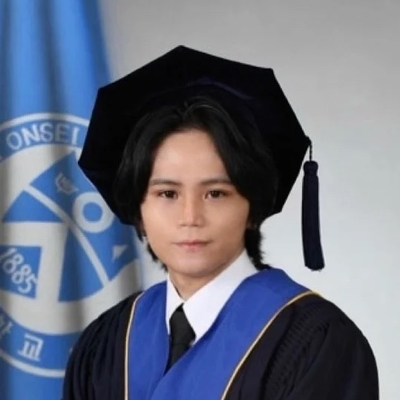 Ace Apolonio
 You’ve been accepted into a Korean university — or you’re seriously considering applying — and you need to know exactly how far this scholarship will take you financially. Not vague promises. Not “it covers living expenses.” You want numbers, specifics, and the full picture. Here’s everything GKS scholarship covers in 2025, broken down so you can plan your life around it.
What Does GKS Scholarship Cover? The Complete Financial Picture
The Global Korea Scholarship (GKS), administered by NIIED (National Institute for International Education), is one of the most comprehensive government-funded scholarships in the world. And that’s not marketing language — when you stack up what it actually covers, it’s hard to find a comparable package from any single funding body.
Here’s the full list of what GKS covers:
- Full tuition — paid directly to your university, no cap disclosed to students
- Monthly living allowance — ₩900,000/month for master’s students, ₩1,000,000/month for PhD students, and ₩800,000/month for undergraduates
- Korean language training — one full year at a Korean language institute, with tuition covered separately
- Round-trip airfare — economy class, one ticket upon arrival and one upon final departure
- Settlement allowance — ₩200,000 one-time payment when you first arrive
- Dissertation printing fee — ₩500,000–₩800,000 for graduate students submitting a thesis
- Medical insurance — covered through a group plan arranged by NIIED
- Korean Proficiency Grant — ₩100,000/month extra if you achieve TOPIK Level 5 or 6
Each of these has conditions attached. Let’s go through what actually matters in practice.
Monthly Stipend: How Far Does ₩900,000 Actually Go?
This is the question I get most often from applicants. The honest answer: it’s enough to live modestly and comfortably, but you won’t be saving much unless you’re strategic.
Here’s a rough monthly budget breakdown for a master’s student in Seoul:
- Dormitory (on-campus): ₩200,000–₩350,000/month
- Food: ₩250,000–₩400,000/month (university cafeterias help significantly)
- Transportation: ₩50,000–₩80,000/month
- Phone plan: ₩30,000–₩50,000/month
- Personal/miscellaneous: ₩100,000–₩150,000/month
That puts you at roughly ₩630,000–₩1,030,000/month in expenses. In Seoul — one of the more expensive cities — you’ll be tight. In cities like Daejeon, Jeonju, or Gwangju, your stipend stretches noticeably further. This is worth considering when selecting universities. If you want help thinking through that decision strategically, our guide on Korean university ranking for GKS: how to choose right walks through exactly how to weigh location, research fit, and funding together.
One important note: the stipend is paid monthly by your university’s international office, not by NIIED directly. Delays occasionally happen at the start of the first semester — keep a small personal buffer of at least ₩300,000–₩500,000 for your first month.
Tuition Coverage: What “Full Tuition” Actually Means
GKS covers 100% of tuition as charged by your host university — including admission fees and any compulsory academic fees. This is paid directly to the university, meaning you never see this money in your bank account. That’s fine, because it means you never have to worry about it either.
There are two important caveats:
Caveat 1: Exceeding the standard program duration. If you take longer than your approved scholarship period — typically 2 years for master’s, 3–4 years for PhD — tuition coverage stops. Extensions require NIIED approval and are not guaranteed. Plan your program timeline carefully before you apply.
Caveat 2: Re-enrollment or program changes. If you switch programs or take a leave of absence without prior NIIED approval, your scholarship can be suspended or terminated. I’ve seen students lose their scholarship over administrative missteps that felt minor at the time. Read the NIIED Scholarship Guidebook for your cohort year, cover to cover.
During the Korean language training year (usually before your degree program begins), tuition for the language institute is covered separately from your degree tuition — it doesn’t eat into your degree program’s funding.
Airfare, Arrival Allowance, and the Costs GKS Doesn’t Cover
GKS pays for one economy-class round-trip ticket: one flight to Korea at the start of your scholarship, and one flight home when your scholarship officially ends. That’s it. If you travel home during holidays — which most students do at least once — that comes out of your own pocket.
The ₩200,000 settlement allowance is deposited once, in your first month. It’s meant to cover things like a local SIM card, bedding, household items, and anything else you need to set up your life. It won’t fully cover those costs, especially in Seoul, but it helps.
What GKS does NOT cover:
- Holiday or emergency travel
- Visa application or renewal fees in some cases
- Personal electronics, books (beyond what your university provides), or study materials
- Any academic program that extends beyond your approved scholarship duration
- Costs associated with dependents — GKS is for the scholar only
This matters for your financial planning. If you have family obligations or expect to travel home annually, build that into your budget before you accept.
Health Insurance: Understanding the GKS Medical Coverage
NIIED arranges group health insurance for all GKS scholars. The coverage is included in your scholarship — you don’t pay premiums out of pocket during your scholarship period.
What the insurance typically covers:
- Inpatient and outpatient hospital visits
- Emergency care
- Prescription medications (with co-pay)
What it typically does NOT cover:
- Dental care (beyond emergency extractions)
- Vision/optical care
- Pre-existing conditions that weren’t disclosed
- Mental health treatment (this varies — check your specific plan)
Many scholars are surprised to find dental and vision excluded. If these are priorities for you, budget ₩50,000–₩150,000/year for basic dental cleanings and any optical needs.
One practical tip: when you arrive, confirm your insurance registration with your university’s international office within the first two weeks. There have been cases where students assumed they were covered and weren’t properly enrolled yet.
The Korean Proficiency Bonus: ₩100,000/Month for Being Strategic
This is one of the most underused financial benefits in the GKS package. If you pass TOPIK Level 5 or 6 during your scholarship period, NIIED adds ₩100,000/month to your stipend for the remainder of your program.
Over a 2-year master’s program, that’s potentially ₩2,400,000 in additional funding — simply for learning the language you’re already being trained in.
TOPIK is offered three times per year in Korea. Most scholars sit for it during or after their Korean language training year. If you’re serious about reaching Level 5 or 6, start studying before you even arrive. Free resources like Talk To Me In Korean and the TOPIK official practice tests are excellent starting points.
This bonus also has a practical academic benefit: Korean proficiency opens up more research opportunities, faculty collaboration, and social integration — all of which strengthen your academic record and your post-scholarship career in Korea, if that’s a direction you’re considering.
What GKS Scholarship Covers During the Language Training Year
The one-year Korean language training period deserves its own section because it’s often misunderstood. During this year:
- Your language institute tuition is fully covered (this is separate from your degree tuition)
- Your monthly living allowance continues at the same rate
- Your health insurance remains active
- You remain a registered GKS scholar
What changes: you’re a language student, not a degree student yet. Your research, thesis, or degree coursework hasn’t begun. Use this year intentionally. Scholars who treat it as a vacation year often struggle academically in year one of their degree program.
For those entering GKS with existing Korean proficiency (TOPIK Level 5 or 6 at the time of application), some universities allow you to skip or shorten the language training year and move directly into your degree program. Check with your specific university’s international office and confirm this with NIIED before making assumptions — policies vary.
Key Takeaways
- GKS covers tuition, monthly stipend (₩800,000–₩1,000,000 depending on level), round-trip airfare, health insurance, settlement allowance, and dissertation printing fees — it’s one of the most comprehensive government scholarships available
- The monthly stipend is livable but not lavish — your city choice significantly impacts how far it stretches; cities outside Seoul offer considerably more breathing room
- Tuition is fully covered only within your approved program duration — extensions require NIIED approval and are not automatic
- Health insurance is included but doesn’t cover dental or vision — budget separately for these
- Achieving TOPIK Level 5 or 6 adds ₩100,000/month — this is a concrete financial incentive worth pursuing strategically from day one
Frequently Asked Questions
Q: What does GKS scholarship cover for master’s students specifically? A: For master’s students, GKS covers full tuition paid directly to the university, a monthly living allowance of ₩900,000, one-year Korean language training with separate tuition coverage, round-trip economy airfare, a ₩200,000 settlement allowance, health insurance, and a ₩500,000 dissertation printing fee. If you achieve TOPIK Level 5 or 6, an additional ₩100,000/month is added to your stipend.
Q: Does GKS scholarship cover accommodation costs? A: GKS does not pay for accommodation directly — there is no separate housing allowance. However, the monthly stipend (₩900,000 for master’s, ₩1,000,000 for PhD) is intended to cover living expenses including rent. Most GKS scholars live in on-campus dormitories, which typically cost ₩200,000–₩350,000/month and are subsidized by the university.
Q: Does GKS scholarship cover flights home during holidays? A: No. GKS provides one economy-class round-trip ticket: one flight to Korea at the start of your scholarship and one return flight when your scholarship ends. Any travel home during holidays, semester breaks, or emergencies is your personal expense and must come from your monthly stipend or personal savings.
Q: Is health insurance included in the GKS scholarship? A: Yes, NIIED arranges group health insurance for all GKS scholars at no cost to the student. The coverage includes inpatient and outpatient hospital care, emergency treatment, and prescription medications with a co-pay. However, dental and vision care are generally not covered, so scholars should budget separately for those needs.
Q: Does GKS scholarship cover the full PhD program duration? A: GKS covers up to 3–4 years for a PhD program (depending on the specific program structure), plus the one-year Korean language training period if required. If your PhD program extends beyond the approved scholarship duration, tuition and stipend coverage stops. Any extension must be requested from and approved by NIIED in advance — it is not automatically granted.
Understanding exactly what GKS scholarship covers is the foundation of a serious application strategy — but knowing the benefits is only one piece of the puzzle. The scholars who actually win GKS do so because their applications are precise, compelling, and built around what NIIED is specifically looking for. At Scholars Academie, we offer a 7-day free mentorship program where our coaches — who have guided students through successful GKS applications to universities like KAIST, Yonsei, and SNU — review your documents, sharpen your personal statement, and help you build an application that stands out. If you’re ready to move from “I think I’ll apply” to “I have a real shot,” that’s where to start.
Written by
Ace Apolonio
2016 GKS awardee, Chemical Engineering graduate from Yonsei University, and founder of Scholars Academie. Since 2019, he has helped thousands of students win prestigious scholarships in South Korea and Europe.
Apply What You've Learned
Get your documents reviewed
by a scholarship winner.
Reading guides is one thing. Having a verified awardee read your actual application — line by line — is another.
Free to start · No credit card required