Which Certificates and Awards Actually Help Your GKS Application
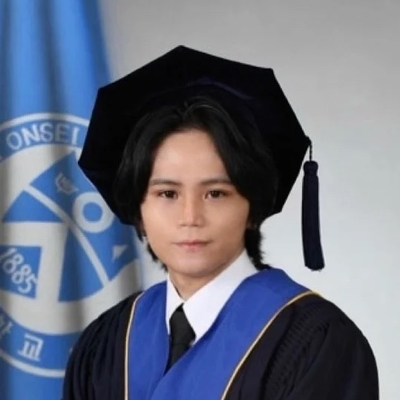 Ace Apolonio
 One of the most common questions we get from GKS applicants is: “Should I include my [X] certificate?”
The honest answer is: it depends on what [X] is — and most of the time, no.
The GKS scoring system evaluates your documents on quality, not quantity. Reviewers are experienced enough to tell the difference between a meaningful achievement and a padded résumé. Including low-value certificates doesn’t make you look more qualified. It makes you look like you don’t know the difference between what matters and what doesn’t.
Here is a practical framework for deciding what to include.
Tier 1: High-Value — Always Include
These are the certificates and awards that carry real weight with GKS reviewers.
Nationally or Internationally Recognized Scholarships
If you’ve previously won a competitive scholarship — at the national or international level — include it. This signals that other credible organizations have already evaluated and endorsed your potential.
Examples: national merit scholarships, government fellowships, competitive academic awards from your home country.
Academic Excellence Awards
Dean’s List recognition, departmental awards, graduation with distinction (magna cum laude, summa cum laude, equivalent honors in your system), or university-wide academic prizes.
These have clear institutional credibility and directly demonstrate academic ability — which is central to what GKS is evaluating.
Research Awards and Conference Recognition
If you’ve published research, presented at a recognized conference, or received a research grant or award — include it. This signals that you are not just a student, but someone already contributing to your field.
Even undergraduate research awards from your university department are relevant, especially if they relate to your proposed area of study in Korea.
Professional Licenses and Certifications
Field-specific certifications with real professional weight — board certifications, engineering licenses, medical certifications, bar passage — are strong additions when they are directly relevant to your study plan.
Language Proficiency
TOPIK (Test of Proficiency in Korean) certificates are highly valued and can differentiate you significantly. Any score above TOPIK II Level 1 signals genuine interest in Korean academic culture and readiness to integrate.
International language certifications — IELTS, TOEFL, DELF, DELE, Goethe — are also relevant depending on your field and instruction language.
Tier 2: Moderate Value — Include Selectively
These can strengthen your application if they are relevant to your field and are from credible sources. Include them if they directly support your academic narrative.
Workshops and Training Programs at Recognized Institutions
If you attended a summer research program, intensive training, or professional workshop at a recognized university or research institution — and it’s relevant to your field — it’s worth including.
The key question is: would someone outside your country recognize the institution or program? If yes, include it. If no, omit it.
Community Leadership Roles
Relevant leadership experience — especially in areas connected to your field of study or your home country’s development — can support your application narrative.
Student government, academic club leadership, or civic organization roles can all be relevant depending on how you contextualize them in your essays.
Volunteer Work and Social Impact
The GKS values applicants who demonstrate a commitment to contributing to their communities and countries. Significant volunteer experience — especially sustained, impactful work in your field — is worth including.
Brief or generic volunteering is not.
Tier 3: Low Value — Leave Out
These are the categories that many applicants include thinking they’ll help. They don’t — and in some cases, they actively signal poor judgment about what matters.
Generic Online Course Certificates
Coursera, Udemy, edX certificates for general courses are nearly worthless in a GKS application context. The exception: if you completed a highly specialized course from a top institution (MIT OpenCourseWare, a Harvard extension course in your exact research area) and it’s directly relevant to your study plan, it might be worth a mention.
But a certificate for “Introduction to Python” or “Digital Marketing Fundamentals” will not impress reviewers.
Participation Awards
“Certificate of Participation” from an event, conference, or competition does not demonstrate achievement. It demonstrates attendance.
Only include competition results if you placed — and only if the competition was competitive and credibly organized.
Unrelated Professional Certifications
A certificate in graphic design when you’re applying for a degree in environmental science is irrelevant. Reviewers will not give it positive weight — they’ll wonder why you included it.
Every document in your application should tell a consistent story. Irrelevant certificates break that story.
Expired or Outdated Credentials
Some certifications expire or become outdated. Including old credentials — especially technical ones — can raise questions rather than add value.
The Underlying Principle
The GKS is looking for scholars — people who are academically excellent, intellectually driven, and positioned to make a meaningful contribution to both their home country and Korea-country relations.
Every document you include should support that picture.
Ask this question about every certificate: Does this make me look more like a serious, focused scholar? Or does it just make my application thicker?
If the answer is the latter, leave it out.
A clean, selective, coherent application from someone who clearly knows what matters will consistently outperform a padded one from someone who threw in everything hoping something would stick.
Practical Tip: Organize Your Documents Clearly
If you are submitting multiple certificates, organize them logically:
- Academic awards (highest to most recent)
- Language certifications
- Research or conference participation
- Professional certifications (if relevant)
- Leadership and community roles (briefly)
This makes the reviewer’s job easier — and it signals that you are organized, thoughtful, and professional. These are qualities reviewers look for in future scholars.
Unsure what to include in your GKS application? We review your full application in our mentorship program. Start your free 7-day trial →
Written by
Ace Apolonio
2016 GKS awardee, Chemical Engineering graduate from Yonsei University, and founder of Scholars Academie. Since 2019, he has helped thousands of students win prestigious scholarships in South Korea and Europe.
Apply What You've Learned
Get your documents reviewed
by a scholarship winner.
Reading guides is one thing. Having a verified awardee read your actual application — line by line — is another.
Free to start · No credit card required