College Scholarship Essay Help: Write One That Wins
 Ace Apolonio
 Most students don’t lose scholarships because their grades weren’t good enough — they lose them because their essay didn’t make the committee feel anything. If you’re searching for college scholarship essay help, you’re already ahead of the students who assume a decent GPA will carry them through.
Why College Scholarship Essay Help Actually Matters
Let me be direct: scholarship committees are tired. They read hundreds of essays that all start with “From a young age, I have always been passionate about…” and they disengage before reaching the second paragraph. Your essay isn’t just a writing exercise — it’s the one place in the application where you control the narrative completely. And most students squander it by being vague, overly formal, or worse, trying to sound impressive instead of trying to sound real.
Getting targeted help with your scholarship essay isn’t about having someone write it for you. It’s about understanding what works, what doesn’t, and why. The structure matters. The opening line matters. The way you connect your story to the scholarship’s mission matters enormously. Without that understanding, you can revise an essay fifty times and still miss the mark.
The stakes are especially high for major funding programs. Whether you’re applying for a domestic merit award or an international scholarship like GKS or Erasmus Mundus, the essay component often carries more weight than applicants realize. If you’re building toward those kinds of applications, our guide on Scholarship Essay Writing Tips That Actually Win Funding is a strong place to start alongside this one.
How to Find Your Real Story (Not the One You Think They Want)
Here’s what I’ve seen again and again working with scholarship applicants: students have genuinely compelling stories, but they bury them under safe, sanitized language because they’re afraid of sounding too personal or too specific.
Start by asking yourself three questions:
- What is one moment — not a period, but a specific moment — that changed how I see my field of study or my future?
- What is the most uncomfortable truth I’ve had to accept on my academic journey?
- What would I work on even if no one was funding it?
Your answers to these questions are almost always the foundation of a winning essay. The scholarship committee doesn’t need a summary of your CV — they need to believe you are exactly the kind of person this scholarship was designed for. That belief only comes from specificity. “I volunteered at a clinic” tells them nothing. “I watched a 60-year-old man cry because he couldn’t afford insulin, and I realized the gap between medical knowledge and medical access was the problem I wanted to spend my life closing” — that lands.
Once you have your story, check your structure. A well-formatted essay is easier to read and harder to dismiss. Our detailed walkthrough on how to format a scholarship essay will help you make sure the presentation matches the quality of your content.
The Common Essay Mistakes That Cost Students Funding
Even strong writers make these errors under pressure. Watch for them:
Starting with a cliché. “I have always wanted to make a difference” is not an opening — it’s a placeholder. Start with action, tension, or a concrete image.
Writing what you think they want to hear. Committees can feel inauthenticity immediately. If your “passion” for a subject doesn’t show up anywhere in your actual life, don’t make it the centerpiece of your essay.
Over-explaining your accomplishments. Your resume handles the facts. The essay should handle the meaning behind those facts. Don’t retell your transcript — interpret it.
Ignoring the prompt. This sounds obvious, but many students write a great general essay and force it onto a specific prompt. If the question asks “how will this scholarship support your long-term goals,” your entire essay needs to answer that — not just the final paragraph.
Ending weakly. The last sentence of your essay is the last thing the reader carries with them. Make it deliberate. Make it specific. Make it yours.
For a deeper dive into avoiding these pitfalls, Scholarship Essay Writing Help: Win With Every Word breaks down the language-level decisions that separate funded essays from forgettable ones.
How to Revise Like a Pro (Not Just Fix Typos)
First drafts are for getting ideas out. Revision is where the essay actually gets written. Here’s a revision process that works:
Round 1 — Read it aloud. Every awkward sentence, every place you stumble, is a sentence the reader will stumble over too. Fix it.
Round 2 — Cut by 15%. Almost every first draft is longer than it needs to be. Cutting forces you to keep only what’s essential, which makes the essay tighter and more powerful.
Round 3 — Check the opening and closing independently. Do they work together? Does your closing echo or resolve something from your opening? If not, revise until they do.
Round 4 — Get feedback from someone who will be honest. Not a parent who loves everything you write. A mentor, a professor, or someone who has read scholarship essays before. If you don’t have that person in your life, that’s exactly what a mentorship program is for.
Give yourself at least one full day between each round. Distance is part of the revision process — your brain needs time to stop reading what you meant to write and start reading what you actually wrote.
Tailoring Your Essay for Different Scholarship Types
Not all scholarship essays serve the same purpose, and a generic approach will cost you. Here’s how to think about it:
Merit-based scholarships want to see achievement contextualized by ambition. Don’t just list what you’ve done — show where it’s taking you and why this award is the next logical step.
Need-based scholarships often ask you to discuss financial circumstances. Be honest and specific without being performatively vulnerable. State the facts, show how the award would change your trajectory, and keep the focus on your goals rather than your hardship.
Field-specific scholarships expect you to demonstrate genuine depth in your discipline. Name researchers you follow. Reference real debates in your field. Show that you live in this subject, not just that you’re enrolled in it.
International scholarships (like GKS or Erasmus Mundus) often have additional components — study plans, motivation letters — that work in tandem with your personal statement. The essay rarely stands alone, which means consistency across all documents matters as much as the quality of any single piece.
Frequently Asked Questions
Q: How long should a college scholarship essay be? A: Most scholarship essays fall between 250 and 650 words, though some programs ask for up to 1,000. Always follow the specific word limit given — going significantly over or under signals poor attention to detail. If no limit is specified, aim for 500–650 words: enough to develop your story, short enough to stay sharp.
Q: Can I reuse the same essay for multiple scholarships? A: You can use the same story, but never the same essay without revision. Each prompt is different, each organization has a different mission, and a copy-pasted essay almost always reads like one. Customize at minimum the opening, the prompt response, and the closing for every application you submit.
Q: What makes a scholarship essay stand out to a committee? A: Specificity, authenticity, and a clear connection between your story and the scholarship’s purpose. Committees remember essays where they felt they genuinely met someone — where a specific detail, a particular moment, or an honest observation made the applicant real to them. Generic ambition statements are forgettable. Specific, grounded stories are not.
If you’ve read this far, you’re serious about getting your essay right — and that’s exactly the kind of student we work with at Scholars Academie. Our mentors have helped students craft essays that won GKS scholarships, Erasmus Mundus placements, and competitive domestic awards, and they’ll work with you one-on-one to do the same. Start your free 7-day mentorship and get real feedback on your essay before you submit it.
Written by
Ace Apolonio
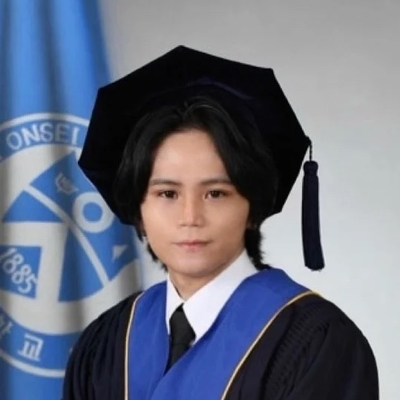
2016 GKS awardee, Chemical Engineering graduate from Yonsei University, and founder of Scholars Academie. Since 2019, he has helped thousands of students win prestigious scholarships in South Korea and Europe.
Apply What You've Learned
Get your documents reviewed
by a scholarship winner.
Reading guides is one thing. Having a verified awardee read your actual application — line by line — is another.
Free to start · No credit card required