Scholarship Essay Writing Help: Win With Every Word
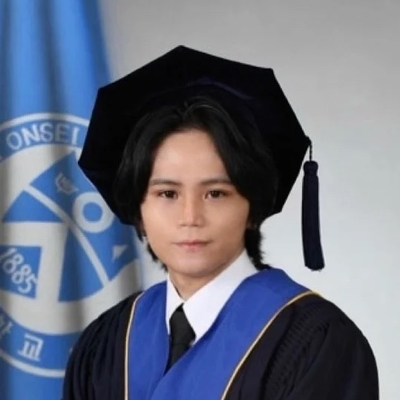 Ace Apolonio
 Most students who don’t win scholarships aren’t less qualified — they just don’t know how to write about themselves in a way that lands. If you’ve been searching for scholarship essay writing help, you’re already asking the right question; the next step is getting the right answers. This guide walks you through every layer of the process — from structure and tone to tailoring and feedback — so you can walk into your next application with a real competitive edge.
Why Most Scholarship Essays Get Ignored (And What to Do Instead)
Reviewers read hundreds of essays. Sometimes thousands. They can spot a generic, template-driven response within the first two sentences — and once that impression forms, it rarely changes.
The most common mistake I see is students writing about themselves instead of writing for the reader. There’s a difference. Writing about yourself sounds like: “I have always been passionate about environmental science and community development.” Writing for the reader sounds like: “In my village, the well ran dry every August. That was the year I decided to study water resource management.”
One opens a story. The other recites a CV.
Scholarship committees aren’t just evaluating your achievements. They’re deciding whether you’re the kind of person their funding will amplify. Your essay is the only place in the application where they get to hear your actual voice — don’t waste it on vague claims and buzzwords.
Start with a concrete moment. Something real, specific, and grounded in your own experience. Then let the rest of the essay explain why that moment matters and where it’s taking you.
Scholarship Essay Writing Help: Structure That Actually Works
A lot of advice about essay structure focuses on the five-paragraph format you learned in secondary school. That format won’t win you a scholarship. Here’s what actually does.
Opening (Hook + Context): Your first paragraph should establish a specific scene or tension. Put the reader somewhere. Don’t introduce yourself — you’re not giving a speech. You’re starting a story.
Middle (Evidence + Insight): This is where most students go wrong. They list accomplishments. Instead, pick two or three experiences and go deep. What did you learn? How did it change how you think? What did you do with that change? Committees want intellectual maturity and self-awareness, not a biography.
Bridge to Goals: Your past needs to connect logically to your future. If you’re applying for a research scholarship, there should be a visible line between your background and the specific work you want to do. Be specific here — vague goals like “contributing to my country’s development” carry almost no weight.
Closing (Forward-looking, not sentimental): End with clarity, not a bow. Tell them what you’ll do with this opportunity. Make them feel that funding you is the obvious next step.
Here’s a practical way to stress-test your structure before you submit: print your essay and underline every sentence that could have been written by any other applicant. If more than two or three sentences are underlined, you haven’t gone specific enough. Every paragraph should contain at least one detail — a name, a place, a number, a decision — that only you could have written.
Another technique worth using is the “so what” test. After every major claim or accomplishment you mention, ask yourself: so what does this tell the reader about how I think, what I value, or where I’m going? If you can’t answer that in one sentence, the paragraph isn’t doing its job yet. Strong scholarship essays answer “so what” without the reader ever having to ask.
A word on transitions: the movement between your background, your insight, and your goals should feel inevitable, not mechanical. Avoid phrases like “In conclusion” or “This experience taught me that.” Instead, let the logic do the work — if your paragraphs are ordered correctly, the reader should feel the connection without you announcing it.
For more tactical guidance on this, Scholarship Essay Writing Tips That Actually Win Funding breaks down each section with annotated examples worth studying.
Tone, Voice, and the One Thing Reviewers Remember
Here’s something nobody tells you: scholarship committees remember how an essay made them feel more than what it said. Tone is everything.
The right tone is confident without being arrogant, personal without being melodramatic, and professional without being stiff. It’s the voice of someone who has thought seriously about their work and knows why it matters.
Avoid these tone killers:
- Over-humility: “I am not the most qualified candidate, but…” — Stop. If you believe that, why should they?
- Grandiosity: “I will single-handedly transform the education system…” — Ambition is good. Megalomania isn’t.
- Flattery: “Your prestigious institution is renowned worldwide…” — They know. It reads as hollow.
- Passive constructions: “It was decided that I would pursue…” — Own your choices. Active voice signals agency.
Read your essay out loud before you submit it. If it sounds like a press release, rewrite it. If it sounds like you — specific, grounded, clear — you’re close.
Common Mistakes That Sink Strong Candidates
Even students with genuinely impressive backgrounds write weak essays. Here are the patterns I see most often.
Trying to impress instead of connect. Committees aren’t impressed by name-dropping institutions or awards. They’re moved by honesty and specificity. A student who explains a failure and what they learned from it is more compelling than one who lists prizes.
Ignoring the prompt. This sounds obvious, but it happens constantly. If the prompt asks “how will this scholarship advance your career goals,” every paragraph should connect back to that. Don’t answer a different question you wish they had asked.
One draft, no feedback. The first draft of a scholarship essay is almost never good enough. It takes multiple revisions, external readers, and the willingness to cut things you love if they don’t serve the essay.
Neglecting length and formatting. Word limits exist for a reason. Going over signals you can’t edit yourself. Going significantly under signals you have nothing to say. Hit the range they give you, and format cleanly — no walls of text.
If you’re building toward a full application, it’s also worth reading How to Write a Good Scholarship Essay That Wins for a complete walkthrough alongside your essay drafting process.
Tailoring Your Essay for Specific Scholarships
A generic essay won’t win a specific scholarship. Full stop.
The GKS (Korean Government Scholarship) and Erasmus Mundus programs are worlds apart in what they’re looking for. GKS reviewers want to see academic excellence, a clear study plan, and cultural curiosity about Korea. Erasmus Mundus panels want interdisciplinary thinkers who can articulate why a multi-country program fits their exact research or professional trajectory.
Before you write a single sentence, do this:
- Read the scholarship’s official values and mission statement.
- Read the profiles of past awardees if available.
- Identify the two or three qualities they clearly prioritize.
- Make sure those qualities are demonstrated — not just mentioned — in your essay.
Tailoring isn’t about flattering the program. It’s about showing genuine alignment. If you can’t find a real connection between who you are and what they fund, that’s useful information too.
Getting Feedback That Actually Improves Your Essay
Most feedback students receive is either too vague (“this is good, keep going”) or too harsh without being constructive. Neither helps.
When you ask someone to review your essay, give them specific questions: Does the opening hook you? Is there a moment where you lost interest? Does my goal come across as specific and credible? Structured feedback is far more actionable than general impressions.
Seek out reviewers who know what scholarship committees look for — former awardees, mentors with application experience, or structured mentorship programs. Someone who has personally read winning and losing essays will see things a well-meaning friend simply cannot.
Also: don’t accept every suggestion. Your voice is an asset. If feedback turns your essay into something that doesn’t sound like you, it’s made the essay worse, not better.
Frequently Asked Questions
Q: How long should a scholarship essay be? A: Follow the program’s specified word limit exactly. If no limit is given, 500–800 words is a safe range for most scholarship essays. Prioritize quality over length — a focused 600-word essay almost always outperforms a bloated 1,000-word one.
Q: Can I reuse the same essay for multiple scholarships? A: You can reuse your core narrative and structure, but never submit the same essay word-for-word to different programs. Each scholarship has distinct values and prompts. Adapt your opening, your goals section, and any program-specific references to reflect the specific opportunity you’re applying for.
Q: What’s the biggest mistake to avoid in scholarship essay writing? A: Being vague. Statements like “I am passionate about helping my community” or “I want to make a difference” say almost nothing. Replace every vague claim with a specific moment, result, or decision. Specificity is what makes reviewers believe you — and remember you.
Q: How do I start a scholarship essay if I don’t know what story to tell? A: Work backwards from the prompt. Ask yourself: what is the committee ultimately trying to understand about me by asking this question? Then think of two or three moments from your life — not your biggest achievements, but the ones that changed how you see something. The right story usually isn’t the most dramatic one; it’s the one where you can most clearly explain what shifted and why it matters to your future. Start there, write a rough version without editing yourself, and refine once you can see the shape of it.
Q: Should I mention financial need in my scholarship essay? A: Only if the scholarship explicitly asks for it or if financial hardship is directly connected to your story in a meaningful way. Even then, the focus should be on what you’ve done despite the challenge — not on the hardship itself. Committees funding merit-based awards want to see what you’ll do with the opportunity, not primarily why you need it. If the program is need-based, be honest and specific, but still anchor the essay in your goals and character rather than making financial need the central argument.
If you’re working on a scholarship application and want expert eyes on your essay before you submit, that kind of targeted feedback is exactly what we provide. Start your free 7-day mentorship at Scholars Academie and get personalized guidance on your essay, your documents, and your full application strategy — from mentors who’ve been through this process and come out the other side with offers.
Written by
Ace Apolonio
2016 GKS awardee, Chemical Engineering graduate from Yonsei University, and founder of Scholars Academie. Since 2019, he has helped thousands of students win prestigious scholarships in South Korea and Europe.
Apply What You've Learned
Get your documents reviewed
by a scholarship winner.
Reading guides is one thing. Having a verified awardee read your actual application — line by line — is another.
Free to start · No credit card required