College Scholarship Essay Tips That Actually Win Money
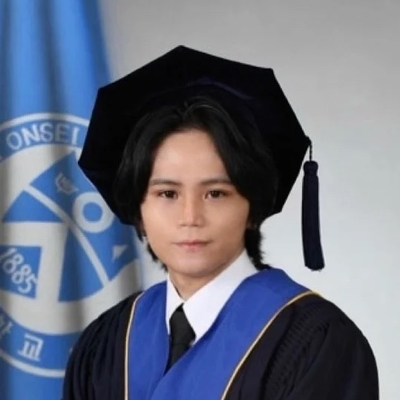 Ace Apolonio
 Most students lose scholarship competitions not because they lack merit — but because their essays sound exactly like everyone else’s. After reviewing hundreds of scholarship applications across GKS, Erasmus Mundus, and dozens of private foundations, I can tell you the difference between a winning essay and a forgettable one almost always comes down to the same handful of mistakes. These college scholarship essay tips aren’t recycled advice from a generic blog — they’re the specific strategies that actually move applications from the “maybe” pile to the “yes” pile.
Why Most College Scholarship Essays Fail Before the Second Paragraph
Evaluators are human. They read dozens — sometimes hundreds — of essays in a single sitting, and they make snap judgments fast. If your opening sentence is “Ever since I was a child, I dreamed of making a difference,” you’ve already lost them.
The most common failure I see is what I call the “resume in paragraph form” problem. Students list achievements, mention their GPA, and summarize their extracurriculars as if the evaluator hasn’t already read their application file. The essay isn’t your second résumé. It’s your chance to show who you are when no one’s grading you.
Here’s what failing essays have in common:
- They open with a cliché or a broad statement about the world
- They summarize achievements instead of revealing character
- They don’t connect the applicant’s story to the specific scholarship’s mission
- They end weakly — usually with something like “I hope to be considered”
Fix those four things, and you’re already ahead of 70% of applicants.
Start With a Scene, Not a Statement
The single most effective college scholarship essay tip I give every student I mentor: open with a specific moment, not a general claim. Not “I am passionate about education.” Instead: “I was standing in a classroom with no electricity, trying to explain photosynthesis using a hand-drawn diagram on the back of a cardboard box.”
That’s a scene. It puts the reader somewhere. It makes them curious. And it opens the door for you to explain why that moment shaped your path — which is exactly what evaluators want to understand.
Specificity is the engine of a compelling essay. The more precise your details — real places, real conversations, real turning points — the more credible and human you become on the page. Vague language signals a vague thinker. Concrete language signals someone who pays attention to the world around them.
Practice this: for every claim you make in your essay, ask yourself, “What’s the specific moment that proves this?” Then write that moment, not the claim.
Align Every Paragraph With the Scholarship’s Mission
This is where I see even strong writers stumble. They write a genuinely good personal essay — and then submit it to every scholarship on their list without changing a word. That approach rarely works.
Every scholarship has a mission. GKS wants future leaders who will strengthen Korea’s global academic network. Erasmus Mundus wants scholars who will contribute to international academic exchange. A community foundation might want someone who will return to serve their home region. Your essay needs to speak directly to that mission — not just your own story.
This doesn’t mean you write a different essay from scratch each time. It means you have a strong core narrative that you adapt. The opening scene might stay the same. But your framing, your conclusion, and the specific values you highlight should mirror what the selection committee is actually selecting for.
For a deeper look at this alignment strategy, read our guide on what scholarship evaluators look for (and how to deliver it).
Show Growth, Not Just Achievement
Scholarship committees aren’t just investing in who you are right now — they’re betting on who you’re going to become. That’s why essays that only celebrate accomplishments tend to fall flat. What evaluators actually want to see is evidence that you can learn, adapt, and grow from difficulty.
This means you should include at least one moment of failure, confusion, or challenge — and then show what you did with it. Not in a self-pitying way. In a way that reveals your character under pressure.
The structure I recommend to every student I mentor looks like this:
- The moment — a specific scene that grounds the reader
- The tension — what was difficult, unclear, or at stake
- The shift — what changed in how you thought or acted
- The direction — where that shift is taking you, and why this scholarship matters to that journey
This isn’t a formula that produces cookie-cutter essays. It’s a skeleton that ensures your essay actually goes somewhere — which most don’t.
Edit Like a Surgeon, Not a Student
First drafts are for getting your thoughts out. Final drafts are for making every sentence earn its place. Here’s how I approach editing with students:
Read it aloud. Every awkward sentence, every bloated phrase, every moment where you’re telling instead of showing — you’ll catch it faster by hearing it than by reading it.
Cut the first paragraph. Seriously. Try deleting your opening paragraph entirely and see if the essay still makes sense. Surprisingly often, the second paragraph is where the essay actually begins.
Flag every passive sentence. “I was inspired by my teacher” is weaker than “My teacher’s question stopped me cold.” Active, direct language reads as confidence. Passive language reads as hesitation.
Get a second reader who doesn’t know you. Not your mom, not your best friend — someone who will tell you where they got bored or confused. That feedback is gold.
If you want more structural guidance on how your essay should look on the page, our post on formatting a scholarship essay: what actually works covers exactly that.
The Closing Paragraph Is Not an Afterthought
Most essays end by trailing off — a vague sentence about “looking forward to contributing” or “hoping to make an impact.” That’s a missed opportunity. Your closing is the last thing the evaluator reads before they make a decision. Make it land.
A strong closing does two things: it brings your opening image or idea back full circle, and it leaves the reader with a clear, confident sense of who you are and where you’re going. You’re not begging for the scholarship. You’re showing them why selecting you is the smart, obvious choice.
End with forward motion. End with specificity. End with the version of yourself that already belongs in that program.
Frequently Asked Questions
Q: How long should a college scholarship essay be? A: Most scholarship essays ask for 500–650 words, though some request up to 1,000. Always follow the stated word limit exactly — going significantly over or under signals poor attention to detail. Within that range, prioritize depth over breadth. One well-developed story beats three shallow ones every time.
Q: Can I reuse the same essay for multiple scholarships? A: You can reuse your core narrative, but you should never submit an identical essay to different scholarships without adapting it. Each scholarship has a distinct mission and values. At minimum, revise your introduction, your framing of goals, and your conclusion to reflect what that specific program is looking for. Even small, targeted changes significantly increase your relevance to each committee.
Q: What’s the biggest mistake students make in scholarship essays? A: Writing about what they’ve done instead of who they are. A list of achievements tells the evaluator nothing they can’t find in your application form. The essay is your one chance to show your thinking, your values, and your voice. Students who write honestly about a moment of struggle or genuine curiosity almost always outperform those who write polished but impersonal success stories.
If you’re serious about turning these college scholarship essay tips into a winning application, you don’t have to figure it all out alone. At Scholars Academie, our mentors have helped students win GKS, Erasmus Mundus, and other competitive scholarships by working through exactly these details — from first draft to final submission. Start your free 7-day mentorship and get personalized feedback on your essay before it costs you the scholarship.
Written by
Ace Apolonio
2016 GKS awardee, Chemical Engineering graduate from Yonsei University, and founder of Scholars Academie. Since 2019, he has helped thousands of students win prestigious scholarships in South Korea and Europe.
Apply What You've Learned
Get your documents reviewed
by a scholarship winner.
Reading guides is one thing. Having a verified awardee read your actual application — line by line — is another.
Free to start · No credit card required