Essay Writing Scholarships: How to Win Funding
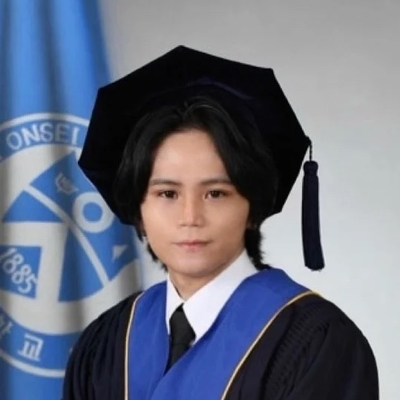 Ace Apolonio
 Most students lose essay writing scholarships not because they lack qualifications — but because they write essays that sound exactly like everyone else’s. The gap between a funded application and a rejected one is rarely about grades; it’s almost always about the essay. Here’s how to close that gap.
What “Essay Writing Scholarships” Actually Means (And Why It Matters)
When people search for essay writing scholarships, they usually mean one of two things: scholarships where the essay is the primary selection criterion, or competitive funding programs where a strong written statement is what separates finalists from winners. Both categories demand the same thing — an essay that feels personal, purposeful, and impossible to ignore.
Programs like the Global Korea Scholarship (GKS) and Erasmus Mundus Joint Master Degrees are prime examples. On paper, thousands of applicants meet the academic requirements. In practice, the essay is where committees make their decisions. I’ve reviewed enough applications to know that most essays fail at the same points: vague motivation, no clear narrative arc, and a conclusion that says nothing memorable.
Understanding this early saves you weeks of wasted effort. Your essay isn’t a summary of your CV. It’s a carefully constructed argument for why you, specifically, deserve this opportunity — and what you’ll do with it.
How to Identify the Right Essay-Based Scholarships for Your Profile
Before you write a single word, you need to be applying to the right programs. Not every scholarship is a strong fit, and spreading yourself thin across twenty applications produces twenty mediocre essays.
Here’s how to narrow your list intelligently:
Match your academic trajectory. Merit-based essay scholarships like Erasmus Mundus expect you to demonstrate clear intellectual direction. If your undergraduate degree and proposed field of study feel disconnected, your essay will feel disconnected too.
Look at the selection criteria. Some programs weight leadership above academic achievement. Others prioritize research potential or community impact. Read the official evaluation rubric if one is published — it tells you exactly what to emphasize.
Check acceptance rates and essay prompts. A scholarship with a 2% acceptance rate and a broad prompt (“Tell us about yourself”) is brutally competitive. A program with a 12% rate and a specific prompt (“Describe a challenge you overcame”) gives you a clearer target.
Once you’ve built a shortlist of three to five programs, you can craft essays that genuinely respond to each one — rather than recycling the same generic draft.
The Structure That Makes Essay Writing Scholarships Winnable
Strong scholarship essays follow a recognizable architecture, even when the prompt varies. I call it the Problem-Journey-Vision framework:
Problem — What issue, gap, or challenge in your field or community have you witnessed firsthand? Open with something concrete and real. Not “education is important in developing countries” but “In my hometown, only 3 of the 40 students in my graduating class went on to university.”
Journey — How has your academic and personal path equipped you to address that problem? This is where your experiences, skills, and choices become evidence, not just biography.
Vision — What specifically will you do with this scholarship? Where does it lead in five years? The more precise your answer, the more credible you sound.
This framework works across GKS personal statements, Erasmus Mundus motivation letters, and most other competitive essay formats. For a deeper breakdown of how to apply this in practice, read How to Write a Good Scholarship Essay That Wins — it covers each section with annotated examples.
Common Mistakes That Kill Otherwise Strong Applications
I’ve seen applicants with 3.9 GPAs and published research get rejected because their essays made avoidable errors. Here are the ones I see most frequently:
Writing for approval instead of authenticity. Scholarship committees read hundreds of essays where applicants describe themselves as “passionate, hardworking, and dedicated to making a difference.” These phrases register as noise. What evaluators remember is a specific story — the research project that failed and what you learned, the moment you changed your career direction and why.
Ignoring the prompt. This sounds obvious, but it happens constantly. A prompt that asks “How will this scholarship contribute to your long-term goals?” is not an invitation to write your life story. It’s asking about future impact and program fit. Answer what’s asked.
Weak conclusions. Most essays end with a variation of “I would be honored to be selected.” That’s not a conclusion — it’s a formality. End with your vision, a callback to your opening, or a single sentence that crystallizes your purpose.
Overloading with credentials. Your essay is not a second CV. Mention achievements only when they serve the narrative. If your exchange semester in Germany is relevant to why you’re applying to a European master’s program, include it. If it’s just a credential, leave it out.
For a full breakdown of what evaluators actually score, What Scholarship Evaluators Look For (And How to Deliver It) is worth reading before you finalize any draft.
Editing Your Essay Until It’s Actually Ready
First drafts of scholarship essays are almost never ready to submit — and that’s fine. The editing phase is where essays are won.
Read it aloud. If you stumble over a sentence, the evaluator will too. Clarity comes before sophistication.
Cut by 20%. Most essays are 20% longer than they need to be. Tighter prose signals sharper thinking.
Get feedback from someone who doesn’t know your story. If a reader can’t follow your narrative without asking questions, your essay has gaps.
Check alignment. Does your essay directly reflect the scholarship’s stated values and objectives? If the program prioritizes research, your essay should demonstrate research potential — not just general ambition.
Give yourself at least two full editing rounds with a day of rest between each. Fatigue makes you miss things that fresh eyes catch immediately.
Building the Habit: How Consistent Writers Win More Scholarships
The students who consistently win essay writing scholarships aren’t necessarily better writers — they’re more systematic. They treat each application as a project with defined milestones: research phase, outline phase, drafting, editing, and final review.
They also build a portfolio of reusable essay components — a strong opening about their background, a paragraph describing their research interests, a vision statement for their field. These components get adapted for each prompt rather than written from scratch. This approach is exactly what we cover in Scholarship Essay Writing Tips That Actually Win Funding.
If you’re managing several applications at once, building this system early saves significant time and protects the quality of each submission.
Frequently Asked Questions
Q: How long should a scholarship essay be? A: Most scholarship essays have a specified word limit — typically between 500 and 1,000 words. Always write to the limit, not under it. Using 600 words on a 1,000-word prompt signals that you didn’t have enough to say. If no limit is given, aim for 600–800 words and prioritize clarity over length.
Q: Can I reuse the same essay for multiple scholarships? A: You can reuse core sections — your background narrative, your field of interest, your long-term vision — but the essay must be re-shaped to directly address each program’s specific prompt and values. Submitting a copy-pasted essay to a different program almost always shows. Evaluators can tell when an essay wasn’t written for them.
Q: What’s the single biggest difference between winning and losing scholarship essays? A: Specificity. Winning essays are full of concrete details — real places, real moments, real goals. Losing essays are vague. “I want to contribute to sustainable development” loses to “I want to develop low-cost water filtration systems for rural communities in Northern Ghana, building on the research I began in my undergraduate thesis.” The second version tells a story. The first tells nothing.
Winning essay writing scholarships is a learnable skill — but most students try to learn it alone, under deadline pressure, without expert feedback. At Scholars Academie, we’ve helped students secure GKS and Erasmus Mundus funding by working directly on their essays with mentors who know exactly what selection committees want. If you’re serious about your next application, start your free 7-day mentorship and get real feedback on your essay before it’s too late to improve it.
Written by
Ace Apolonio
2016 GKS awardee, Chemical Engineering graduate from Yonsei University, and founder of Scholars Academie. Since 2019, he has helped thousands of students win prestigious scholarships in South Korea and Europe.
Apply What You've Learned
Get your documents reviewed
by a scholarship winner.
Reading guides is one thing. Having a verified awardee read your actual application — line by line — is another.
Free to start · No credit card required