Help Me Write My Scholarship Essay: A Real Guide
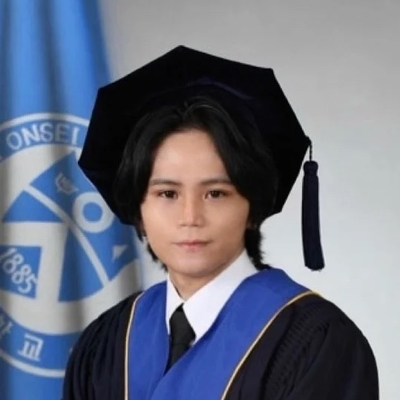 Ace Apolonio
 Every year, thousands of genuinely deserving students miss out on scholarships — not because their grades were weak or their goals were unclear, but because their essay didn’t do them justice. If you’ve been searching “help me write my scholarship essay,” you’re already doing the right thing by recognizing that this part matters enormously.
Why “Help Me Write My Scholarship Essay” Is the Right Question to Ask
There’s a particular kind of student who asks for help with their scholarship essay early. They’re not the ones who wait until the night before the deadline. They’re the ones who understand that a scholarship essay isn’t just a formality — it’s the committee’s only window into who you are as a person beyond your transcripts and test scores.
Asking for help isn’t a sign of weakness. It’s a sign that you take this seriously. And taking it seriously is already half the battle.
That said, “getting help” doesn’t mean handing your story to someone else to write. It means understanding the craft well enough to communicate your authentic voice with precision and purpose. That’s exactly what this guide is designed to help you do.
Start With the Prompt — Not With Your Life Story
The most common mistake I see students make is opening a blank document and immediately starting to write about themselves. Don’t do that. Start by dissecting the prompt.
Every scholarship essay prompt is designed with specific evaluation criteria in mind. When a committee asks “Describe a challenge you’ve overcome,” they’re not just asking for a sob story — they want evidence of resilience, self-awareness, and forward momentum. When they ask “Why do you deserve this scholarship?”, they’re actually asking you to prove alignment between your goals and their mission.
Before you write a single sentence, answer these questions:
- What is this scholarship’s core mission or value?
- What specific quality or experience is this prompt designed to surface?
- What would a committee member remember about your answer three days later?
Once you know what they’re really asking, your writing becomes dramatically more focused. For a deeper look at structure and layout, check out this guide on how to format a scholarship essay — it covers everything from margins to section flow.
Build Your Essay Around One Clear, Honest Narrative
Here’s the thing about scholarship essays that most students miss: committees read hundreds of them. Possibly thousands. They develop a sharp eye for essays that are built to impress versus essays that are built to communicate. The latter wins almost every time.
Your job is not to present the most dramatic version of your life. Your job is to pick one specific, honest narrative thread and follow it with clarity and conviction.
Think of it this way: if your essay were a short film, what would be the single scene that the audience leaves talking about? That’s your anchor. Everything else — your background, your goals, your values — should orbit around that anchor.
Practical steps to build your narrative:
- Brainstorm 3–5 pivotal moments in your life related to your field of study or personal growth
- Pick the one that most directly connects to this scholarship’s purpose
- Map the arc: what was the situation, what did you do, what did you learn, where are you going because of it?
- Write a rough first draft without editing — just get it out
- Then cut ruthlessly: every sentence that doesn’t serve the narrative goes
This process sounds simple, but it’s where most students get stuck. If you want hands-on guidance through exactly this kind of work, our scholarship essay writing help resource is a good next stop.
Avoid the Five Phrases That Kill Good Essays
After reviewing hundreds of scholarship essays across GKS, Erasmus Mundus, and other competitive programs, I can tell you there are specific phrases that appear constantly in rejected essays. They’re not bad because they’re wrong — they’re bad because they’re empty.
Watch out for:
- “I have always been passionate about…” — Show the passion, don’t announce it
- “This scholarship will help me achieve my dreams…” — Too vague; what specific dream, by what specific path?
- “I am a hard worker and a team player…” — These are claims without evidence; replace with a story
- “Growing up in a developing country…” — Context is fine, but don’t let it become your whole identity
- “I believe I am the ideal candidate because…” — Let the committee reach that conclusion; don’t tell them what to think
Every time you find one of these in your draft, ask yourself: what’s the actual experience behind this claim? Then write that instead.
Edit Like a Reader, Not Like the Writer
Once your first draft is done, the real work begins. Most students treat editing as proofreading — fixing typos and grammar. That’s the last step, not the main one.
Real editing means reading your essay the way a committee member would: quickly, skeptically, and looking for a reason to be impressed. Read it out loud. If you stumble over a sentence, rewrite it. If a paragraph sounds like it could belong in anyone’s essay, it probably should be cut or made more specific.
Specifically look for:
- Vague transitions (“Furthermore,” “In conclusion,” “Additionally”) — replace with logical flow
- Passive constructions — “I was inspired by” becomes “I walked into that lab and immediately understood”
- Overlong sentences — if you need to re-read it twice, shorten it
- Weak endings — your final sentence should land with intention, not trail off
Getting feedback from someone who hasn’t read your drafts is invaluable at this stage. A fresh reader catches what you can’t see anymore because you’re too close to it.
The Final Polish: Specificity Over Everything
If there’s one editorial principle that separates winning scholarship essays from the rest, it’s specificity. Vague writing signals vague thinking. Specific writing signals clarity of purpose — and that’s exactly what scholarship committees are funding.
Compare these two sentences:
Vague: “I want to study environmental science to help my community.”
Specific: “I want to study environmental science because the groundwater contamination in my home district of Sindh is directly linked to unregulated textile runoff — and after three years of documenting it, I want the technical training to fix it.”
The second version doesn’t just tell the committee what you want to do. It tells them why you specifically — not anyone else — need to be in that program.
Go through your essay one final time and ask of every claim: can I make this more specific? More grounded? More undeniably mine?
Frequently Asked Questions
Q: How do I start a scholarship essay when I don’t know what to write about? A: Start with the prompt, not with yourself. Ask what quality or experience the committee is trying to uncover, then brainstorm 3–5 real moments from your life that reflect that quality. Pick the most specific, honest one — and build from there. Specificity beats impressiveness every time.
Q: How long should my scholarship essay be? A: Always follow the word limit stated in the application. If none is given, aim for 500–700 words. Committees value concise, well-structured writing over length. A tight 550-word essay will outperform a rambling 900-word one almost every time.
Q: Can someone else write my scholarship essay for me? A: No — and not just for ethical reasons. Scholarship committees are trained to detect essays that don’t match an applicant’s voice, and they cross-reference your essay with your other application materials. More importantly, your real story is genuinely compelling. You just need the tools to tell it well. That’s what good mentorship provides.
Writing a strong scholarship essay is a skill — and like every skill, it gets sharper with the right guidance. If you’re ready to move beyond generic advice and work directly on your essays with mentors who’ve helped students win GKS, Erasmus Mundus, and other major scholarships, we’d love to work with you. Start your free 7-day mentorship and get personalized feedback on your scholarship essay before your next deadline.
Written by
Ace Apolonio
2016 GKS awardee, Chemical Engineering graduate from Yonsei University, and founder of Scholars Academie. Since 2019, he has helped thousands of students win prestigious scholarships in South Korea and Europe.
Apply What You've Learned
Get your documents reviewed
by a scholarship winner.
Reading guides is one thing. Having a verified awardee read your actual application — line by line — is another.
Free to start · No credit card required