GKS Scholarship 2025 Deadline: Everything You Need to Know
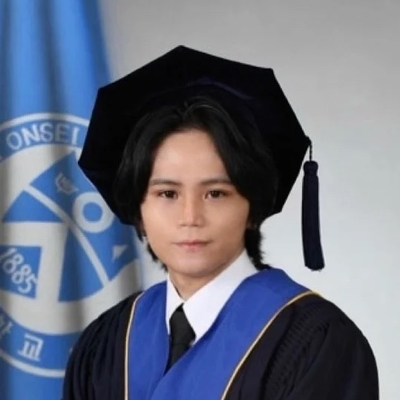 Ace Apolonio
 Missing the GKS scholarship 2025 deadline isn’t just an inconvenience — it means waiting an entire year to try again while your peers are already studying in Seoul. The Global Korea Scholarship (GKS) is one of the most fully-funded opportunities available to international students, covering tuition, living allowances, airfare, and even Korean language training. But NIIED runs a strict calendar, and if you’re not tracking the right dates right now, you’ll find yourself scrambling — or simply too late.
Understanding the GKS Scholarship 2025 Deadline Structure
Here’s the first thing most applicants get wrong: there isn’t a single GKS scholarship 2025 deadline. There are two distinct tracks — the Embassy Track and the University Track — and they operate on completely different timelines.
Embassy Track applications are submitted through your home country’s Korean Embassy. Most embassies accept applications between February and March 2025, with NIIED’s internal processing running through April to May. Selection results are typically announced by June or July.
University Track applications go directly to your chosen Korean university. These deadlines vary by institution, but most fall between September and November 2025 for the following academic year’s intake (March 2026). Some universities open their GKS portals as early as late August.
The practical implication: if you’re targeting the Embassy Track for a September 2025 start, you should already be building your application in January at the latest. If you’re reading this in late spring or summer, the University Track is likely your path — and several top schools still have their windows open.
Key dates to track right now:
- Check your home country’s Korean Embassy website for the exact Embassy Track opening date (usually January–February 2025)
- Shortlist 3–5 Korean universities and note each one’s GKS University Track portal opening
- Set calendar reminders 4 weeks before each deadline — not one week
- Download NIIED’s official application guidelines from the GKS website the moment they’re published
What the GKS 2025 Package Actually Covers (So You Know What’s at Stake)
Before we go deeper into deadlines and preparation, let’s be precise about what you’re applying for — because understanding the full value of this scholarship sharpens your motivation to get the timing right.
For the 2025 intake, NIIED’s GKS package includes:
- Monthly living allowance: ₩900,000 for master’s students, ₩1,000,000 for doctoral students
- Full tuition: Paid directly to your university — no cap
- Airfare: Round-trip economy class ticket at the start and end of your program
- Medical insurance: Covered throughout your stay
- Korean language training: One year of intensive Korean at a designated institution (₩800,000/month during this period)
- Settlement allowance: ₩200,000 one-time payment upon arrival
- Dissertation research allowance: ₩210,000–₩240,000/month during your research period (for graduate students)
For a two-year master’s program, the total package value easily exceeds ₩30,000,000 (roughly $22,000 USD) — and that’s before factoring in tuition at universities like Yonsei, KAIST, or Seoul National University, where annual fees can reach ₩8,000,000–₩15,000,000.
This is not a partial scholarship. Missing the GKS scholarship 2025 deadline means deferring that entire package by 12 months.
How to Build a Competitive GKS Application Before the Deadline
Knowing the deadline is only useful if you’re using the lead time well. Here’s exactly what a strong GKS application requires — and what separates the candidates who get selected from those who don’t.
Documents every applicant needs:
- NIIED’s official application form (downloaded from gks.go.kr)
- Personal statement (self-introduction) — 1–2 pages
- Study plan — 2–3 pages
- Two letters of recommendation (academic or professional)
- Official transcripts (must be apostilled or notarized in most cases)
- Proof of nationality (birth certificate or passport)
- Copies of language certificates (TOPIK, IELTS, TOEFL, or equivalent)
The documents that most applicants underestimate are the personal statement and study plan. These two essays determine whether a reviewer puts your file in the “recommend” pile or the “decline” pile. A weak study plan says something like: “I want to study AI at a Korean university because Korea has advanced technology.” A strong study plan names a specific professor — say, Professor Kim Joo-han at KAIST’s School of Computing — explains why their current research on federated learning aligns with your master’s thesis work, and outlines what you plan to produce in years one and two. Specificity is the difference.
For detailed guidance on crafting essays that pass this bar, read our post on how to write a good scholarship essay that wins.
The Most Costly GKS Application Mistakes (And How to Avoid Them)
I’ve reviewed hundreds of GKS application files, and the same errors appear again and again. These aren’t typos — they’re structural mistakes that result in immediate disqualification or low scoring.
Mistake 1: Applying to more than 3 universities on the University Track NIIED allows a maximum of three university choices. Listing universities with mismatched research focus — just to fill the slots — signals that you haven’t done your homework. Choose fewer universities that genuinely fit your academic profile.
Mistake 2: Missing the apostille or notarization requirement Your transcripts and graduation certificate must be officially authenticated. This process takes 2–6 weeks depending on your country. Applicants who discover this requirement five days before the GKS scholarship 2025 deadline cannot fix it in time. Start the legalization process the same week you decide to apply.
Mistake 3: A personal statement that reads like a biography NIIED reviewers are not interested in a chronological account of your life. They want to see: who you are academically, why Korea specifically (not just “Korean culture is interesting”), and what your research trajectory looks like. The self-introduction should open with your most relevant intellectual identity, not with “My name is [X] and I was born in [country].”
Mistake 4: Generic recommendation letters A letter that says “This student is hardworking and has good grades” is a liability, not an asset. Your recommenders need specific prompts from you. Give them a one-page brief explaining your GKS application, the program you’re targeting, and two or three academic moments where you demonstrated the qualities you want highlighted.
Mistake 5: Ignoring the GPA eligibility threshold NIIED requires a minimum GPA of 2.64 out of 4.0 (or equivalent). Applicants below this threshold are disqualified regardless of essay quality. If you’re near this borderline, address it directly in your personal statement rather than hoping reviewers won’t notice.
For help understanding what evaluators are actually scoring, see our breakdown of what scholarship evaluators look for — and how to deliver it.
The GKS Interview: What Happens After the Deadline Passes
Embassy Track applicants who pass the document screening are invited to an interview, typically conducted at the Korean Embassy in their home country. This is a critical stage that many applicants discover too late to prepare for adequately.
Here’s what the GKS interview actually looks like:
- Duration: 15–30 minutes
- Format: Panel of 2–4 interviewers (often Korean Embassy staff and an academic reviewer)
- Language: English, or Korean if you have TOPIK certification
- Common questions: “Why Korea specifically for this field?”, “Describe your thesis research plan”, “How will this scholarship benefit your home country?”, “What will you do if your preferred supervisor is unavailable?”
The “benefit to home country” question is consistently the one that exposes underprepared candidates. NIIED’s program philosophy is rooted in developing global human capital that returns value to recipient nations. Your answer should not be vague altruism. It should describe a specific sector in your home country, a specific problem you’ll address, and how your Korean degree positions you to address it.
Prepare for the interview as rigorously as you prepare the written application — ideally with mock sessions that simulate real panel pressure.
Building Your Application Portfolio Well Before the 2025 Deadline
The strongest GKS applicants don’t start building their profile in January of application year. They start 12–18 months out — accumulating research experience, securing strong academic relationships with recommenders, and developing a coherent intellectual narrative.
If you’re reading this in 2024 or early 2025, here’s how to use your remaining lead time:
- Contact your target Korean professor now — Email 2–3 faculty members at your shortlisted universities, introduce your research interests, and ask about their current projects. A professor who knows your name before your application arrives is a significant advantage on the University Track.
- Take TOPIK if you haven’t — Having even a TOPIK Level 1 or 2 demonstrates genuine commitment to Korean language learning, which reviewers notice. It’s not required, but it differentiates you.
- Get your transcripts evaluated — Use WES or an equivalent credential evaluation service if your home institution’s grading system differs significantly from the Korean standard.
- Draft your study plan early — Writing it early forces you to identify gaps in your academic narrative. Most applicants who start the week before the deadline produce generic, unfocused plans. Give yourself at least six weeks of drafting and revision.
Key Takeaways
- There are two GKS tracks with different 2025 deadlines: Embassy Track (February–March 2025) and University Track (September–November 2025). Know which one applies to you before anything else.
- The scholarship value exceeds ₩30,000,000 for a master’s program — the monthly allowance alone is ₩900,000 for master’s and ₩1,000,000 for PhD students. Missing the deadline means forfeiting this for a full year.
- Document authentication (apostille/notarization) takes weeks — begin this process immediately after deciding to apply, not after you’ve finished your essays.
- Specificity wins: Name professors, describe research outputs, connect your degree to a concrete home-country contribution. Vague applications are declined, regardless of GPA.
- The interview is eliminatory — prepare answers to the “home country impact” question with the same rigour you apply to your written materials.
Frequently Asked Questions
Q: What is the GKS scholarship 2025 deadline for the Embassy Track? A: Most embassies accept GKS Embassy Track applications between February and March 2025, though the exact date varies by country. You should check your home country’s Korean Embassy website in January 2025 for the confirmed opening and closing dates, as some embassies close applications within 3–4 weeks of opening them.
Q: Can I apply to both the Embassy Track and University Track in the same year? A: No — NIIED explicitly prohibits applying through both tracks in the same application cycle. You must choose one track and commit to it. Most applicants choose the Embassy Track if their country participates, as it tends to have a more structured support process, but the University Track offers more direct control over your university placement.
Q: What GPA do I need to be eligible for GKS 2025? A: NIIED requires a minimum cumulative GPA of 2.64 on a 4.0 scale, or the equivalent on your institution’s grading system. Applicants who fall below this threshold are disqualified at the document screening stage, regardless of the strength of their essays or recommendations.
Q: How many universities can I list on the GKS University Track application? A: You may list a maximum of three Korean universities in order of preference on the University Track. It is strongly recommended that you apply to universities where your target research field aligns with an active faculty member’s current work — generic university selections without clear academic fit significantly weaken your application.
Q: Is Korean language proficiency required to apply for GKS 2025? A: Korean language proficiency is not mandatory for most GKS programs taught in English, but it is an asset. NIIED includes one year of Korean language training as part of the scholarship package for all recipients. However, submitting a TOPIK certificate — even at a lower level — demonstrates genuine commitment to integrating into Korean academic life and can positively influence evaluators.
If you’re serious about meeting the GKS scholarship 2025 deadline with an application that actually competes, you don’t have to navigate the process alone. Scholars Academie offers a 7-day free mentorship trial where you’ll work directly with coaches who have guided applicants through successful GKS selections — from study plan structure to interview simulation. Explore our scholarship mentorship programs and start building your application with the kind of specific, expert feedback that generic guides simply can’t provide.
Written by
Ace Apolonio
2016 GKS awardee, Chemical Engineering graduate from Yonsei University, and founder of Scholars Academie. Since 2019, he has helped thousands of students win prestigious scholarships in South Korea and Europe.
Apply What You've Learned
Get your documents reviewed
by a scholarship winner.
Reading guides is one thing. Having a verified awardee read your actual application — line by line — is another.
Free to start · No credit card required