GKS Scholarship Eligibility Requirements: Full Guide
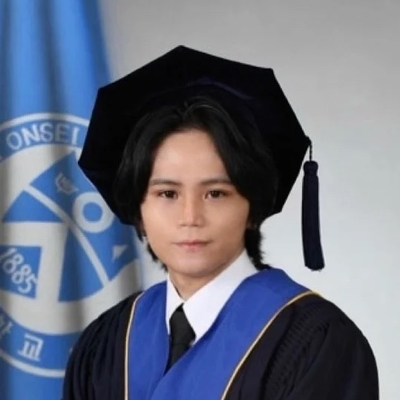 Ace Apolonio
 You’ve found the GKS scholarship, you’re genuinely excited about studying in Korea, and now you’re staring at a 40-page NIIED guideline document wondering if you actually qualify. That uncertainty — am I even eligible? — is the first thing we need to resolve, because applying without meeting the baseline requirements doesn’t just waste your time; it can affect how future applications are reviewed. Let’s go through every GKS scholarship eligibility requirement with precision so you know exactly where you stand before you invest a single hour in your application.
Who Can Apply: The Core GKS Scholarship Eligibility Requirements
The Global Korea Scholarship (GKS), administered by the National Institute for International Education (NIIED), operates two tracks: the Embassy Track and the University Track. Your eligibility conditions are largely the same across both, but the application route and competition pool differ significantly. Here’s what NIIED requires at the foundational level:
Nationality: You must be a citizen of a country other than South Korea. Critically, you must not hold Korean citizenship or be in the process of acquiring it. Dual nationals where one nationality is Korean are explicitly disqualified. This is non-negotiable and verified during document authentication.
Age: For the graduate program (master’s and PhD), you must be under 40 years old as of the date your scholarship period begins (typically September 1st of the intake year). For undergraduates, the limit is under 25. These aren’t soft guidelines — NIIED enforces them strictly during eligibility screening.
Health: You must be in good physical and mental health. NIIED requires a physical examination form completed by a licensed physician. Applicants with conditions that could affect your ability to complete a full degree program may face issues, though NIIED evaluates these case by case.
Previous GKS Award: If you have previously received a GKS scholarship, you are ineligible to apply again. This includes partial or incomplete scholarship tenures.
Academic Eligibility: GPA Thresholds and What They Actually Mean
This is where many applicants stumble — not because they don’t qualify, but because they misread the requirement.
NIIED requires a cumulative GPA of at least 2.64 on a 4.0 scale, or its equivalent. Converted, this is roughly a B-minus average. On a percentage scale, this typically translates to around 80% cumulative. NIIED provides a conversion formula, and your host university or Korean embassy will apply it to your transcripts.
Here’s what applicants frequently get wrong:
- They calculate their major GPA instead of their cumulative GPA. NIIED wants your overall academic record, not just your performance in your field of interest. If you had weak elective grades, they count.
- They assume a high GPA compensates for missing documents. It doesn’t. A 4.0 with incomplete transcripts is an automatic disqualification at the screening stage.
- They overlook the graduation requirement. You must have completed (or be expected to complete before the scholarship start date) your previous degree. For master’s applicants, that means your bachelor’s degree must be finished. Applying while still enrolled is permitted, but you must provide proof of expected graduation.
A concrete example: An applicant from Nigeria with a 3.7 GPA who submits transcripts in a language other than English or Korean without a certified translation will be screened out before reviewers even see their grades. Document compliance is as important as academic performance.
Language Requirements: English vs. Korean and What’s Really Expected
The GKS does not require Korean language proficiency at the time of application. This surprises many applicants. NIIED provides a one-year Korean language training program at a designated institution before your academic program begins. This is included in your scholarship package — you don’t pay for it.
However, if you plan to study in English, you may need to demonstrate English proficiency depending on your chosen university’s requirements. NIIED itself doesn’t mandate a minimum TOEFL or IELTS score, but individual Korean universities often do. Check your target university’s admissions requirements directly — some require TOEFL iBT 80+, others accept a letter of instruction in English from your previous institution.
If you already have Korean language proficiency (TOPIK Level 3 or above), some universities will allow you to skip the language training year and begin your degree program immediately. This is worth pursuing if you have the proficiency, because it shortens your overall scholarship duration and signals strong commitment to Korean academic culture.
Financial and Citizenship Status: The Overlooked Disqualifiers
NIIED is explicit about two conditions that disqualify applicants regardless of academic strength:
1. Current enrollment in a Korean institution: If you are already studying at a Korean university at the time of application, you are ineligible. This applies even if you’re on a separate scholarship.
2. Receiving another Korean government scholarship simultaneously: You cannot hold a GKS award alongside other NIIED-funded programs.
What applicants often miss is the family connection clause. If either of your parents is a Korean citizen, you are ineligible — even if you hold only foreign citizenship yourself. NIIED considers this a conflict with the scholarship’s purpose of promoting international exchange.
One practical note: if you’re applying through the Embassy Track, your country must have a Korean embassy or consulate that participates in GKS recruitment. Not every country has an active embassy track quota each year. Check with the Korean embassy in your country well before the application deadline — typically in September to November for the following academic year’s intake.
What the Scholarship Covers: Understanding the Full Package
Eligibility isn’t just about whether you can apply — it’s about understanding what you’re committing to and ensuring you meet the conditions to maintain your award throughout your studies.
If selected, NIIED provides:
- Monthly living allowance: ₩900,000 for master’s students, ₩1,000,000 for PhD students, ₩800,000 during the Korean language training year
- Tuition: Covered in full, paid directly to the university
- Airfare: Round-trip economy ticket at the start and end of your scholarship period
- Medical insurance: Covered under a group insurance plan arranged by NIIED
- Settlement allowance: ₩200,000 one-time payment upon arrival
- Dissertation research allowance: ₩500,000 one-time payment for master’s students, ₩800,000 for PhD students
To maintain these benefits, you must maintain satisfactory academic progress as defined by your university (typically equivalent to a B average or above), comply with NIIED conduct requirements, and not transfer to an unapproved program or institution without prior NIIED authorization.
The University Track vs. Embassy Track: Eligibility Differences That Matter
Both tracks share the same baseline eligibility requirements, but they differ in one important way: who recommends you.
In the Embassy Track, the Korean embassy in your home country nominates candidates. You apply to the embassy, and if nominated, your application goes to NIIED. Your country may have a fixed quota — sometimes as few as two spots per degree level. Competition is fierce and highly localized.
In the University Track, you apply directly to a Korean university that has a GKS quota. The university nominates you to NIIED. This track gives you more agency — you can apply to multiple universities simultaneously — but it requires you to meet both NIIED’s eligibility requirements and the individual university’s admissions criteria.
The strategic implication: applicants with strong academic profiles but from countries with small embassy quotas often have better odds through the University Track. This is where research into specific Korean universities and their GKS quota history becomes valuable. Build your scholarship portfolio with both tracks in mind, because the documents you need overlap significantly.
Common Eligibility Mistakes and Their Consequences
I’ve reviewed hundreds of GKS applications through Scholars Academie, and these are the mistakes that cost applicants their shot:
-
Submitting documents without apostille or notarization. NIIED requires authenticated copies of your degree certificates and transcripts. “Certified copies” from your university registrar are often not sufficient without additional authentication through your country’s Ministry of Foreign Affairs.
-
Missing the health examination deadline. The medical examination must be completed within a specified window before submission. A form dated outside this window will be rejected.
-
“Assumed” eligibility based on a friend’s experience. NIIED updates its guidelines annually. What applied to a 2022 applicant may not apply to a 2025 applicant. Always read the current year’s guidelines directly from the NIIED website.
-
Applying to a non-NIIED-approved university. Not every Korean university participates in GKS. Check the official list of approved institutions before building your application around a specific school.
-
Weak personal statement that treats eligibility as a formality. Meeting the baseline requirements gets you through screening. What wins the scholarship is a compelling research plan and personal narrative. Review our guide on how to write a good scholarship essay that wins before you draft a single line.
Key Takeaways
- Age and nationality are hard limits. Under 40 for graduate applicants, non-Korean citizenship with no Korean parent — no exceptions.
- GPA threshold is 2.64/4.0, but document compliance (translations, authentication, notarization) is equally critical to pass initial screening.
- Korean language proficiency is not required upfront — NIIED provides a funded one-year language training program, but existing TOPIK Level 3+ can accelerate your degree start.
- Embassy Track and University Track have the same eligibility rules but different strategic advantages depending on your country’s quota and your academic profile.
- Maintaining the scholarship requires ongoing academic performance — selection is not a one-time hurdle but a commitment that spans your entire degree.
Frequently Asked Questions
Q: What is the minimum GPA required for the GKS scholarship? A: NIIED requires a minimum cumulative GPA of 2.64 on a 4.0 scale, which is approximately equivalent to a B-minus or 80% average. This is calculated from your entire academic record at your most recent degree level, not just your major-specific coursework.
Q: Can I apply for GKS if one of my parents is Korean? A: No. NIIED explicitly disqualifies applicants whose parent holds Korean citizenship, even if the applicant themselves holds only a foreign passport. This rule exists to preserve the scholarship’s purpose of supporting genuine international exchange, and it is verified through submitted documents.
Q: Is there an age limit for the GKS graduate scholarship? A: Yes. Graduate applicants (master’s and PhD) must be under 40 years of age as of September 1st of the year the scholarship period begins. Undergraduate applicants must be under 25. These limits are enforced strictly and cannot be waived.
Q: Do I need to speak Korean to apply for GKS? A: No Korean language proficiency is required at the time of application. NIIED includes a fully funded one-year Korean language training program before your academic degree begins. However, if you hold TOPIK Level 3 or higher, some universities will allow you to bypass this training and begin your degree immediately.
Q: What happens if I’m currently studying at a Korean university? A: You are ineligible to apply for GKS if you are currently enrolled at a Korean institution at the time of application. This applies regardless of your current visa status or funding source. You would need to complete or formally withdraw from your current program before applying.
If you’re serious about winning a GKS scholarship — not just submitting an application, but actually receiving an offer — the difference almost always comes down to preparation quality, not eligibility. At Scholars Academie, we offer a 7-day free mentorship program designed specifically for GKS and Erasmus Mundus applicants. You’ll work directly with coaches who have guided applicants through every stage of this process, from document authentication to personal statement strategy. Explore our scholarship mentorship programs and start your 7-day free trial before your application window closes.
Written by
Ace Apolonio
2016 GKS awardee, Chemical Engineering graduate from Yonsei University, and founder of Scholars Academie. Since 2019, he has helped thousands of students win prestigious scholarships in South Korea and Europe.
Apply What You've Learned
Get your documents reviewed
by a scholarship winner.
Reading guides is one thing. Having a verified awardee read your actual application — line by line — is another.
Free to start · No credit card required