GKS Scholarship Language Requirements: Full 2025 Guide
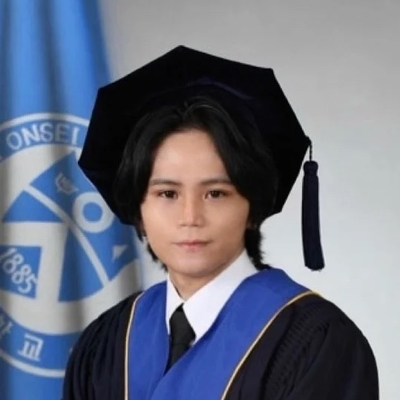 Ace Apolonio
 Most GKS applicants assume their English score is enough. It isn’t — and discovering that too late has cost qualified students an entire application cycle. Understanding the GKS scholarship language requirements before you assemble your documents is not optional; it’s the difference between a complete application and a disqualified one.
What the GKS Language Requirements Actually Say (And Where Most People Misread Them)
Let’s start with the official framework, because NIIED’s language policy is more nuanced than most scholarship guides acknowledge.
The GKS (Global Korea Scholarship), administered by NIIED, accepts applications for programs taught in either Korean or English. Your language requirement depends entirely on the medium of instruction you select — and this choice has downstream consequences for your visa, your coursework, and your daily life in Korea.
Here’s the exact breakdown:
For English-taught programs:
- TOEFL iBT: minimum score varies by university (typically 80–100)
- IELTS Academic: typically 6.0–6.5 minimum
- TOEIC: accepted at some institutions (usually 700+)
- Cambridge English: accepted at select universities
For Korean-taught programs:
- TOPIK (Test of Proficiency in Korean): Level 3 minimum for graduate applicants at most institutions; some universities require Level 4 or above
- No English score required if TOPIK meets the threshold
The critical nuance: you are not choosing one or the other freely. If your target university only offers your department in Korean, they will expect a TOPIK score regardless of your English fluency. Many applicants waste months preparing TOEFL scores for programs that have no English-medium option in their field.
Action step: Before you finalize your university shortlist, download the specific department’s course catalog and confirm the medium of instruction. Do this for all three universities you’re allowed to list on your GKS application.
The TOPIK Score Breakdown: What Level You Actually Need
TOPIK is where most non-Korean applicants either underestimate the timeline or misunderstand the levels. Here’s the reality:
TOPIK has two tiers:
- TOPIK I covers Levels 1–2 (beginner)
- TOPIK II covers Levels 3–6 (intermediate to advanced)
For graduate-level GKS applicants applying to Korean-taught programs, Level 3 is the functional minimum — but universities in the Seoul National University or KAIST tier regularly expect Level 4. For undergraduate GKS applicants, Level 2 (TOPIK I) is sometimes accepted with the understanding that a one-year Korean language course is mandatory upon arrival.
What does that one-year language program mean in practice? NIIED provides a mandatory Korean language training period for GKS scholars who don’t meet Korean proficiency thresholds. During this year, you receive your full stipend (₩900,000/month for master’s students, ₩1,000,000/month for PhD students) but you are not yet enrolled in your actual degree program. This delays your graduation timeline by one full year.
If you already hold TOPIK Level 5 or 6, some universities will waive this requirement and allow you to begin your graduate program immediately. That’s a significant advantage — one year of research time you don’t lose.
TOPIK exam schedule: Tests are held approximately 6 times per year in Korea and 3–4 times internationally. Results take about 4–5 weeks. Given that GKS applications typically open in September (for the university track) and February (for the embassy track), you need to plan your test date at least 3 months before the application deadline.
English Score Requirements: University-by-University Reality
The frustrating truth about the English language requirements for GKS is that NIIED sets a framework, but universities set the actual cutoffs. NIIED does not publish a single universal English score requirement. What they do is allow participating universities to define their own thresholds within the program.
Here’s how this plays out in practice:
- Korea University (English-medium programs): TOEFL iBT 88 or IELTS 6.5
- Yonsei University: TOEFL iBT 83 or IELTS 6.0 for most graduate programs
- Seoul National University: varies by department; some require TOEFL iBT 100+
- POSTECH: TOEFL iBT 80 or IELTS 6.0 for most programs
- Sungkyunkwan University: TOEFL iBT 71 or IELTS 5.5 for some graduate programs
These numbers shift slightly year to year, so always verify directly on the university’s graduate admissions page — not a third-party blog.
One thing that catches applicants off guard: some universities accept institutional TOEFL (ITP), and some explicitly reject it. The ITP is a paper-based test administered internally by institutions. If a university’s requirements say “TOEFL” without specifying, always email the international office and get written confirmation of which version they accept. A rejected score at document submission is not recoverable.
What If You Don’t Have a Language Score Yet? Timing Strategy
This is one of the most common situations I encounter with new applicants, and the solution is almost always a timeline problem, not a qualification problem.
Here’s a realistic planning sequence:
- Identify your target universities and programs (confirm medium of instruction)
- Register for the relevant exam — TOEFL/IELTS for English programs, TOPIK for Korean programs — at least 3–4 months before your application deadline
- Build in one retake window — if you’re targeting an embassy track deadline of March, take your first attempt in October and your second in January if needed
- Confirm score reporting timelines — TOEFL scores take 6–10 days to reach institutions; IELTS takes 13 days for paper-based; TOPIK results take about 30–35 days
- Check score validity — TOEFL and IELTS scores are valid for 2 years; TOPIK scores are valid for 2 years from the date of issue
One frequently overlooked issue: GKS applications require you to submit your score certificate as a physical or scanned document, not just an institutional score report. Keep your official score report from the testing body. Do not discard it.
If you’re building out your broader application alongside your language prep, reviewing our guide on scholarship portfolio building tips that get results will help you structure everything that surrounds your language score — because a strong score in a weak application still doesn’t win.
Language Waivers: When You Don’t Need a Test Score
NIIED and individual universities do recognize exemptions in specific circumstances. These are not loopholes — they are documented policies, and claiming one without proper documentation will result in disqualification.
Common valid waivers include:
- Native speakers of English applying to English-medium programs — you’ll typically need a passport from a recognized English-speaking country (US, UK, Canada, Australia, New Zealand, Ireland) or proof that your entire prior education was conducted in English
- Graduates of Korean universities — if you completed a full degree program in Korean, many universities will accept this as evidence of Korean proficiency without a TOPIK score
- Current TOPIK holders with valid certificates — no re-examination needed if your score hasn’t expired
The most common mistake here is assuming that “education in English” means your country’s official language is English. NIIED and universities want proof that your actual degree was taught in English — official transcripts with language-of-instruction statements are required.
For applicants navigating the personal statement alongside their language documentation, our post on how to write a good scholarship essay that wins walks through how to position your language background as a strength in your written materials.
Common Language Requirement Mistakes — And Their Consequences
These are the errors I see consistently. Each one is avoidable.
Mistake 1: Submitting an expired score TOEFL and IELTS scores expire after two years. An expired score is treated as no score. Your application is either returned or disqualified depending on the screening stage.
Mistake 2: Confusing TOPIK levels for the wrong program level Applying for a PhD with a TOPIK Level 2 score — even if your university’s website says “minimum Level 2” — signals to evaluators that you will struggle in seminars and dissertation defenses. It’s technically compliant but practically damaging.
Mistake 3: Listing a language score not accepted by your chosen university TOEIC is not universally accepted for graduate programs. Duolingo English Test is not accepted by any GKS-affiliated university as of 2025. Submitting one signals that you haven’t done your research.
Mistake 4: Not including the score in your document checklist GKS applications have a strict document checklist. Your language certificate must appear exactly as specified — some universities want it as a standalone PDF, others as part of your application package. Follow the format precisely.
Mistake 5: Waiting to take the TOPIK until after applying Some applicants believe they can apply to Korean-taught programs without a TOPIK score if they promise to pass before enrollment. This is not how it works. Your score must be valid and submitted with your application.
How Language Proficiency Affects Your Scholarship Evaluation Score
Here’s something most guides skip entirely: language proficiency is not just a checkbox — it is factored into your evaluated score.
NIIED’s GKS evaluation rubric (used at the embassy track stage) awards points across multiple categories. While the exact weights are not fully public, language proficiency contributes to the overall academic and communication competency score. An applicant with TOPIK Level 6 applying to a Korean-taught program is demonstrably stronger than one with Level 3 — not just administratively, but in evaluation points.
At the university track stage, this matters even more. Professors reviewing potential GKS candidates are assessing whether you can contribute to their lab or seminar immediately. A high TOPIK or TOEFL score is direct evidence of that capacity. Treat your language score as a competitive document, not just a qualifying one.
Key Takeaways
- Medium of instruction determines your required language: English-taught programs require TOEFL or IELTS; Korean-taught programs require TOPIK (usually Level 3+ for graduate applicants)
- There is no single universal GKS English score cutoff — each university sets its own threshold; always verify directly with the institution
- TOPIK Level 5 or 6 can waive the mandatory one-year Korean language program, saving you a full year of your degree timeline
- Score validity matters: both TOEFL/IELTS and TOPIK scores expire after two years — an expired score is treated as no score
- Language proficiency is an evaluated criterion, not just an administrative hurdle — a higher score improves your competitive position with evaluators
Frequently Asked Questions
Q: What is the minimum TOPIK score required for GKS? A: For graduate-level GKS applicants applying to Korean-taught programs, TOPIK Level 3 is the general minimum, though many competitive universities require Level 4 or higher. Undergraduate GKS applicants may be accepted with TOPIK Level 2, but they will be required to complete a one-year Korean language course before beginning their degree program.
Q: Can I apply for GKS without a TOEFL or IELTS score? A: Yes — if you are applying to a Korean-taught program and submit a valid TOPIK score instead, most universities will not require an English proficiency test. Additionally, native English speakers from recognized English-speaking countries may be exempt from English testing for English-medium programs, provided they submit proper documentation confirming their language background.
Q: Is the Duolingo English Test accepted for GKS applications? A: No. As of 2025, the Duolingo English Test is not accepted by GKS-affiliated universities for scholarship applications. Accepted English proficiency tests include TOEFL iBT, IELTS Academic, and in some cases TOEIC — though TOEIC is not universally accepted for graduate programs and must be confirmed with your target university.
Q: How long are TOPIK scores valid for GKS applications? A: TOPIK scores are valid for two years from the date of the test. If your score expires before your application is submitted or before your enrollment date, it will not be accepted. Plan your test date carefully to ensure your score remains valid through the entire application and admission process.
Q: What happens if I don’t meet the Korean language requirement at the time of application? A: If you are accepted into a GKS-funded Korean-taught program without meeting the Korean proficiency threshold, NIIED requires you to complete a one-year Korean language training program before beginning your degree. You will still receive your full monthly stipend during this period (₩900,000 for master’s, ₩1,000,000 for PhD), but your overall degree timeline will be extended by one year.
If you’re serious about getting your GKS application right — language documents, personal statement, study plan, and all — our mentors at Scholars Academie work with applicants exactly like you every week. We offer a 7-day free mentorship trial where you can get real feedback on your document checklist, your score positioning, and your overall application strategy. Explore our GKS and Erasmus Mundus mentorship programs and start your trial before your next deadline closes.
Written by
Ace Apolonio
2016 GKS awardee, Chemical Engineering graduate from Yonsei University, and founder of Scholars Academie. Since 2019, he has helped thousands of students win prestigious scholarships in South Korea and Europe.
Apply What You've Learned
Get your documents reviewed
by a scholarship winner.
Reading guides is one thing. Having a verified awardee read your actual application — line by line — is another.
Free to start · No credit card required