GKS Scholarship Selection Criteria: What Actually Wins
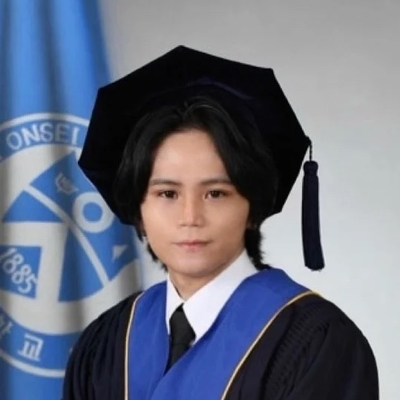 Ace Apolonio
 Most GKS applicants spend weeks polishing their documents without ever understanding how those documents are actually scored. That’s the real reason qualified candidates get rejected — not weak academics, but a fundamental misread of what NIIED and Korean universities are looking for. If you want to compete seriously for the Global Korea Scholarship, you need to understand the selection criteria from the inside out.
What the GKS Selection Criteria Actually Measure
NIIED doesn’t evaluate your application the way a university admissions office does. They’re running a government-funded cultural diplomacy program, and their criteria reflect that. The GKS selection process has two distinct phases — the embassy track (where your home country nominates you) and the university track (where you apply directly to Korean institutions) — and the weighting of criteria differs between them.
Across both tracks, the core evaluation dimensions are:
- Academic performance — Your undergraduate GPA (for graduate applicants) converted to a 100-point scale. NIIED’s minimum is a 2.64 GPA on a 4.0 scale, but competitive applicants typically present 3.2 and above. Below 3.0, you’re fighting uphill.
- Language proficiency — Korean or English, depending on your intended program. TOPIK Level 3 minimum is required for Korean-taught programs; IELTS 5.5 or TOEFL iBT 71 for English-taught ones. Higher scores don’t automatically mean a better ranking, but they remove red flags.
- Research and study plan — This is where most applicants lose points they didn’t know were available. Evaluators assess whether your proposed research is feasible, specific, and genuinely connected to your academic background.
- Personal statement — NIIED’s own guidelines describe this as an evaluation of your “motivation, personality, and future plans.” In practice, evaluators are checking for clarity, coherence, and cultural fit with Korea’s academic environment.
- Recommendation letters — Assessed for relevance and specificity, not prestige. A letter from a Nobel laureate that says generic things outperforms nothing. A letter from your direct thesis supervisor that speaks to your research capacity wins.
- Interview performance (university track) — Not all programs conduct interviews, but when they do, cultural awareness and academic maturity matter significantly.
How NIIED Scores Academic Records — and Where Applicants Miscalculate
The GPA conversion formula NIIED uses is specific, and misapplying it has disqualified applicants before they even reach the review stage. NIIED converts your GPA to a percentage using a standardized table. A 3.0/4.0 converts to approximately 83.3%. A 3.5/4.0 converts to approximately 91.7%.
What catches people off guard: if your institution uses a 4.5-point scale (common in South Korea and some African universities), the conversion is different. A 3.5/4.5 converts to roughly 77.8% — not competitive. Always verify which scale your transcript uses before self-assessing your eligibility.
Additionally, NIIED gives extra weight to the last two years of undergraduate performance for graduate applicants. If your grades improved significantly in your junior and senior years, your personal statement should address your academic trajectory explicitly. Don’t leave evaluators to find that pattern themselves.
The Study Plan: The Most Underestimated Document in Your GKS Application
In over five years of coaching GKS applicants, I’ve seen more strong candidates eliminated by weak study plans than by any other single document. This is the one area where you have complete creative control — and most applicants waste it.
A winning GKS study plan does four specific things:
- Names the Korean professor whose work aligns with yours. Not just the university — the actual faculty member. “Professor Kim Jae-won at Seoul National University, whose 2021 paper on urban heat island mitigation in East Asian cities directly intersects with my master’s thesis” is infinitely stronger than “SNU has excellent environmental engineering faculty.”
- Defines a research question, not a topic. “I plan to study climate change” is a topic. “I will investigate how green roof adoption rates in Seoul’s Gangnam district compare to low-income neighborhoods under the same policy framework” is a research question. Evaluators know the difference immediately.
- Accounts for the Korean language requirement. All GKS recipients must achieve TOPIK Level 3 by the end of their first year. Your study plan should acknowledge this and briefly note your strategy for meeting it — whether you’re starting from zero or already at Level 2.
- Connects your post-graduation plans to Korea. GKS exists to build long-term relationships between Korea and partner countries. Applicants who articulate how their Korean education will benefit their home country — through specific professional roles, policy work, or research dissemination — score measurably higher on the “future contribution” dimension.
For a deeper look at how to write essays that carry this kind of specificity, read our guide on how to write a good scholarship essay that wins.
Personal Statement: What Evaluators Actually Reward (With Real Examples)
NIIED’s personal statement prompt asks for your motivation for studying in Korea, your academic background, and your future plans. Most applicants write all three — but write them in a way that connects nothing to nothing.
Weak example:
“I have always been passionate about Korean culture since I was young. I watched Korean dramas and became interested in the language. I believe studying in Korea will help me achieve my goals.”
This statement fails on every evaluable dimension. It’s generic, culturally superficial, and gives the evaluator no information about academic fit.
Strong example:
“My undergraduate research on informal housing policy in Lagos hit a wall when I couldn’t access comparable datasets from East Asian cities undergoing similar rapid urbanization. Korea’s urban transformation from 1970 to 2000 — among the most documented in urban studies — is the missing comparative case in my work. Studying under Professor Park Sung-hoon at Yonsei, whose lab maintains the Korean Urban Longitudinal Dataset, would let me complete a genuinely comparative analysis with direct policy implications for West African municipalities.”
This works because it’s specific, it names a professor, it establishes academic need, and it frames Korea as the solution to a real intellectual problem — not a destination chosen for cultural affection.
For structured help with this kind of writing, see our guide on what scholarship evaluators look for — and how to deliver it.
Recommendation Letters Under the GKS Selection Criteria
NIIED requires two recommendation letters. The guidance says they should come from professors or employers — but the selection criteria reward letters that speak to research capacity, intellectual rigor, and professional maturity in specific terms.
Here’s what a high-scoring recommendation letter includes:
- A defined relationship (how long, in what context — thesis supervision beats “I taught her in class”)
- A specific academic or professional achievement the recommender witnessed directly
- An assessment of the applicant’s readiness for graduate-level research in Korea
- A sentence connecting the applicant’s goals to their demonstrated strengths
What kills an otherwise strong application: letters that were clearly written by the applicant and rubber-stamped by a professor. Evaluators read hundreds of letters per cycle. They recognize template language. If your letter uses phrases like “I wholeheartedly recommend” as its most specific endorsement, it’s doing you no favors.
Common Mistakes That Eliminate GKS Applicants Before Review
These aren’t edge cases. I see these mistakes in the majority of first-draft applications:
- Submitting a health certificate older than three months. NIIED is explicit about this. Certificates dated outside the valid window cause automatic disqualification — not a request for revision.
- Misidentifying degree type. Applicants who hold a four-year degree but apply under the “associate degree” category because they misread the form lose their application entirely.
- Choosing a university outside the approved partner list. NIIED publishes the list of designated GKS universities annually. Applying to an institution not on the current year’s list wastes your entire application cycle.
- A personal statement that exceeds the page limit. The GKS personal statement has a strict page and font-size requirement. Submitting even half a page over the limit signals to evaluators that you don’t follow instructions — a significant soft mark-down.
- No TOPIK score when applying to Korean-taught programs. Even a low TOPIK score is better than no score. “I am currently studying Korean” without documentation reads as unpreparedness.
The Financial Package — and Why Understanding It Strengthens Your Application
Understanding what GKS actually funds isn’t just useful for budgeting — it’s a signal to evaluators that you’ve researched the program seriously. Applicants who demonstrate program literacy come across as more credible.
Here’s what GKS covers for graduate students in 2024:
- Monthly stipend: ₩900,000 for master’s students; ₩1,000,000 for PhD students
- Tuition: Covered in full, paid directly to the university
- Korean language training allowance: ₩200,000/month during the one-year language course
- Arrival allowance: ₩200,000 one-time payment
- Settlement allowance: ₩200,000 upon completion and departure
- Medical insurance: Provided through a NIIED group plan
- Round-trip airfare: Economy class, covered
When you write your personal statement or study plan, you don’t need to itemize these. But knowing them lets you write with the confidence of someone who has done genuine due diligence — and evaluators notice the difference.
Key Takeaways
- GKS selection criteria evaluate academic record, language proficiency, study plan quality, personal statement coherence, and recommendation letter specificity — with different weights depending on embassy vs. university track.
- Your study plan is the highest-leverage document in your application. Naming specific professors and defining a research question (not just a topic) separates competitive applicants from the rest.
- NIIED’s GPA conversion formula is strict — a 3.5 on a 4.5-point scale is not the same as a 3.5 on a 4.0 scale, and misreading this has disqualified strong candidates.
- Recommendation letters are evaluated for specificity and observed evidence, not prestige. A direct supervisor who describes your thesis methodology beats a department head who praises your character.
- Document errors (expired health certificates, wrong degree classification, out-of-limit page count) eliminate applicants before substantive review even begins. Compliance is part of the selection criteria.
Frequently Asked Questions
Q: What is the minimum GPA required for the GKS scholarship? A: NIIED’s stated minimum GPA is 2.64 on a 4.0 scale, which converts to approximately 80% under their formula. However, competitive applicants in most partner countries typically present GPAs of 3.2 or above, as embassy selection committees often set internal cutoffs higher than NIIED’s baseline.
Q: Does the GKS scholarship cover full tuition? A: Yes. GKS covers 100% of tuition fees, paid directly to the host university. Graduate recipients also receive a monthly stipend of ₩900,000 (master’s) or ₩1,000,000 (PhD), plus arrival allowance, medical insurance, and round-trip airfare.
Q: How important is Korean language proficiency in the GKS selection criteria? A: For Korean-taught programs, TOPIK Level 3 is the minimum requirement and the absence of any score is a significant weakness. For English-taught programs, Korean proficiency isn’t required at admission, but all GKS recipients must reach TOPIK Level 3 by the end of their mandatory language training year — so demonstrating awareness of this requirement in your study plan is strategically valuable.
Q: Can I apply to more than one Korean university through GKS? A: Under the university track, you may apply to up to three universities, ranking them in order of preference. Under the embassy track, your home country’s embassy submits your nomination to NIIED with a preferred university already designated. Applying to multiple institutions does not increase your scholarship — only one award is given.
Q: What makes a GKS personal statement competitive under the selection criteria? A: A competitive GKS personal statement is specific, not aspirational. It names a faculty member at your target university, defines a research question tied to your academic background, and explains why Korea — not just any country — is the right place for your work. Vague statements about cultural interest or general academic ambition consistently score in the lower tier.
If you’re serious about building an application that holds up under NIIED’s actual scoring criteria, don’t do it alone. Scholars Academie offers a 7-day free mentorship program where our coaches — many of them former GKS recipients — review your study plan, personal statement, and document checklist line by line. You get real feedback on what’s working and exactly what needs to change before you submit. Start your free trial and find out where your application actually stands.
Written by
Ace Apolonio
2016 GKS awardee, Chemical Engineering graduate from Yonsei University, and founder of Scholars Academie. Since 2019, he has helped thousands of students win prestigious scholarships in South Korea and Europe.
Apply What You've Learned
Get your documents reviewed
by a scholarship winner.
Reading guides is one thing. Having a verified awardee read your actual application — line by line — is another.
Free to start · No credit card required