Study Plan for Korean University: Win GKS in 2025
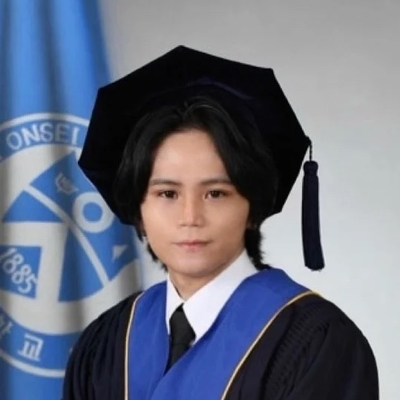 Ace Apolonio
 Your study plan for Korean university could be the single document that decides whether NIIED selects you — or passes you over for someone who understood the assignment. Most applicants treat it like a formality. The ones who win treat it like a research proposal, a career blueprint, and a statement of academic intent rolled into one.
What the GKS Study Plan Is Actually Asking You to Do
Before you type a single word, you need to understand what NIIED is evaluating. The study plan for Korean university is not a to-do list of courses you want to take. It is your answer to one core question: Why should the Korean government invest approximately ₩43 million in you over the course of a master’s program?
That number isn’t abstract. GKS master’s students receive ₩900,000 per month in living allowances, plus full tuition coverage, a settlement allowance of ₩200,000 on arrival, and a return airfare grant. For doctoral students, the monthly allowance rises to ₩1,000,000. When you frame your study plan in that context — as a case for investment — your writing immediately becomes more specific and more compelling.
NIIED evaluators read thousands of these documents. They are looking for three things: academic clarity (do you know your field?), institutional fit (why this Korean university?), and post-graduation intent (will this scholarship produce a real-world outcome?). A vague paragraph about “advancing your knowledge” fails all three tests simultaneously.
How to Structure a Study Plan for Korean University That Evaluators Notice
The most effective study plans follow a four-part architecture. This isn’t a rigid template — it’s a logical sequence that mirrors how evaluators think.
-
Academic background and problem statement — In 1–2 paragraphs, establish what you’ve already studied and identify the specific gap or problem your graduate research will address. Name your undergraduate institution, your thesis topic if applicable, and one concrete finding or limitation from your prior work.
-
Research objectives and methodology — State your primary research question. Be precise. “I want to study Korean culture” is not a research question. “I aim to investigate the efficacy of community-based mental health interventions in post-COVID urban Korea, using mixed-methods analysis of longitudinal survey data from Seoul and Busan” is a research question.
-
Why this university, why this professor — This section is where most applicants lose points. Name the specific faculty member whose work aligns with yours. Reference their published research by title or theme. Explain what their lab, center, or methodology offers that you cannot access at home.
-
Post-graduation contribution — Close with a concrete, country-specific plan. If you’re returning home, name the institution, organization, or policy area you intend to contribute to. NIIED’s mandate includes strengthening international academic networks and producing alumni who serve as Korea-connected professionals in their home countries.
The Most Common Study Plan Mistakes (And Their Real Consequences)
In my experience coaching GKS applicants, the same errors appear in roughly 70% of study plans that don’t advance past the document screening stage.
Mistake 1: Writing for a general audience. Phrases like “Korea is a technologically advanced country” or “I have always been passionate about this field” signal that you haven’t done serious research. Evaluators interpret this as a lack of academic maturity.
Mistake 2: Ignoring the university-specific requirement. GKS applicants must either apply through the Korean Embassy track (no university pre-selection required) or the University track (where you apply directly to an institution). On the University track especially, a study plan that doesn’t mention your target department, degree program, or faculty supervisor is an immediate red flag.
Mistake 3: Overloading on future plans while underdelivering on research substance. Your vision for the next twenty years means nothing if you can’t demonstrate you understand what you’ll be doing in year one of your program.
Mistake 4: Exceeding page limits or ignoring formatting. NIIED specifies document format requirements in its annual guidelines. Submitting a ten-page narrative when two to three pages are expected doesn’t signal dedication — it signals you don’t follow instructions.
Consequence: Applications that fail document screening don’t receive feedback. You simply don’t advance. Taking the time to get this right the first time isn’t optional.
Writing the Research Section: Strong vs. Weak Examples
The difference between a competitive study plan and a forgettable one is almost always visible in the research section. Here’s what that looks like in practice.
Weak version: “I plan to study environmental science at a Korean university because Korea has made great progress in green energy. I hope to learn from professors and apply what I learn when I return home.”
This tells the evaluator nothing about your research, your methodology, your target faculty, or your home-country context.
Strong version: “My proposed research examines the scalability of offshore wind energy policy frameworks in Southeast Asia, drawing on Korea’s Renewable Energy 3020 implementation as a comparative case. I intend to work under Professor Kim Jae-won of Yonsei University’s Graduate School of Environmental Studies, whose 2021 paper on grid integration challenges in coastal energy systems directly informs my research design. My methodology will combine policy document analysis with semi-structured interviews conducted in both Korean and English.”
The second version demonstrates subject-matter knowledge, institutional specificity, methodological awareness, and professional-level preparation. It also implicitly answers why Korea — the country’s own policy experience is the research site.
For further guidance on translating this kind of specificity into your broader application narrative, the post on What Scholarship Evaluators Look For (And How to Deliver It) breaks down exactly how selection committees weigh each component.
Aligning Your Study Plan With Your Personal Statement
Your study plan and personal statement are two separate documents, but they must tell a coherent story. Think of it this way: the personal statement explains who you are and why you want to study in Korea. The study plan explains what you will do once you get there and what will be different in the world when you leave.
A common failure mode is when an applicant’s personal statement mentions a passion for public health policy, but the study plan describes a lab-based immunology research project. Evaluators notice these contradictions. NIIED readers are academics — inconsistency within an application reads as intellectual unclarity.
To align the two documents:
- Write your study plan first. It forces precision.
- Let your personal statement build toward your study plan as its logical conclusion.
- Use one or two specific phrases or themes from your study plan as callbacks in your personal statement to create thematic unity.
If you’re still developing your personal statement alongside your study plan, the guide on How to Write a Good Scholarship Essay That Wins walks through the drafting process in a way that complements the study plan work you’re doing here.
Language, Length, and Formatting: The Practical Essentials
NIIED does not prescribe a specific word count for the study plan, but successful applications typically fall in the range of 800 to 1,200 words (approximately two to three pages in standard 12-point font with normal margins). Going significantly under this range suggests superficiality. Going over it suggests poor editing — which is itself a research skill.
Key formatting decisions that matter:
- Use headers or numbered sections. Evaluators reviewing dozens of documents in a single session appreciate structure. Walls of unbroken text are fatiguing and easy to skim past.
- Write in formal academic English. Contractions, colloquialisms, and casual phrasing undercut your credibility as a prospective graduate researcher.
- Cite or reference specific academic works where relevant. Even a brief mention of a professor’s research or a specific academic debate signals that your interest is real, not constructed.
- Proofread for Korean-specific terminology. If you’re referencing Korean institutions, programs, or policies, verify the correct English translations. Misspelling a university’s official name or misidentifying a government ministry damages your credibility immediately.
Timeline: When to Start Writing Your Study Plan
The GKS application window typically opens in February or March for the Embassy track, with submission deadlines falling in late March or April. University track timelines vary by institution, with many Korean universities setting their own deadlines in the same window.
That sounds like enough time. It isn’t, if you’re starting from zero.
A realistic production timeline for a competitive study plan looks like this:
- 8–10 weeks before deadline: Identify your target universities, departments, and potential supervisors. Read at least two recent publications from your preferred faculty member.
- 6–8 weeks before deadline: Draft your research question and methodology. Run it by a mentor, academic advisor, or someone with field expertise.
- 4–6 weeks before deadline: Write the full first draft of your study plan. Set it aside for at least 72 hours before revising.
- 2–4 weeks before deadline: Revise for clarity, alignment with your personal statement, and compliance with NIIED formatting requirements.
- 1 week before deadline: Final proofread. Have one other person read it cold — they will catch errors your eyes have stopped seeing.
Starting this process the week before the deadline produces the kind of study plan that reads like it was written the week before the deadline.
Key Takeaways
- A study plan for Korean university must answer one core question: why should NIIED invest in you specifically — name your research question, your target faculty, and your post-graduation plan.
- GKS benefits (₩900,000/month for master’s, ₩1,000,000/month for PhD, plus tuition and settlement allowance) represent a major national investment — your study plan needs to justify that investment with specificity.
- The most damaging mistakes are vagueness, missing faculty alignment, and inconsistency between the study plan and personal statement.
- Strong study plans name specific professors, cite their work or methodology, and connect the research to a concrete home-country outcome.
- Start your study plan 8–10 weeks before your application deadline, not 8–10 days.
Frequently Asked Questions
Q: How long should a study plan for Korean university be? A: Most competitive GKS study plans run between 800 and 1,200 words, or roughly two to three pages in standard formatting. This length allows enough depth to demonstrate academic seriousness without exceeding a readable scope for evaluators reviewing multiple applications.
Q: Does the GKS study plan need to name a specific professor? A: On the University track, naming a specific faculty supervisor is strongly advisable and in some departments effectively required. On the Embassy track, while it isn’t always mandatory, referencing a target professor significantly strengthens your institutional fit argument and shows genuine preparation.
Q: What’s the difference between a GKS study plan and a research proposal? A: A research proposal is typically a standalone academic document with extensive literature review and methodological detail. A GKS study plan is more concise — it should contain a clear research question and methodology, but it also needs to address your background, your reasons for choosing Korea, and your post-graduation plans, which a formal research proposal usually doesn’t cover.
Q: Can I apply to multiple Korean universities with the same study plan? A: On the Embassy track, you may list up to three universities in order of preference, but your study plan should ideally reference your first-choice institution and supervisor specifically. A generic study plan that names no institution tends to read as lower-commitment and scores accordingly.
Q: What happens if my study plan doesn’t match my personal statement? A: NIIED evaluators read both documents together, and contradictions between them are a genuine red flag. Inconsistent application materials suggest either poor preparation or a lack of clear academic direction — both of which work against you in a competitive selection process.
If you want expert eyes on your study plan before you submit, Scholars Academie’s GKS and Erasmus mentorship programs include a 7-day free mentorship trial where our coaches — many of them GKS alumni themselves — will review your study plan draft, flag alignment issues with your personal statement, and help you produce the kind of application that advances past document screening. The window to get this right is shorter than it feels. Start today.
Written by
Ace Apolonio
2016 GKS awardee, Chemical Engineering graduate from Yonsei University, and founder of Scholars Academie. Since 2019, he has helped thousands of students win prestigious scholarships in South Korea and Europe.
Apply What You've Learned
Get your documents reviewed
by a scholarship winner.
Reading guides is one thing. Having a verified awardee read your actual application — line by line — is another.
Free to start · No credit card required