What It Really Takes to Become a GKS Awardee
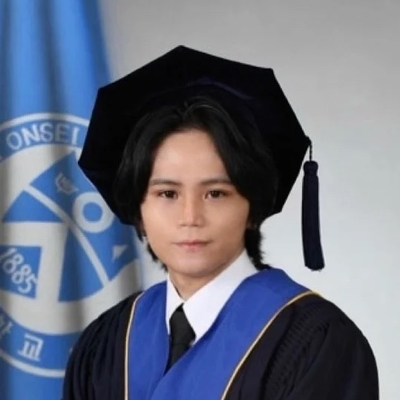 Ace Apolonio
 Every year, thousands of students apply for the Global Korea Scholarship — and only a fraction walk away as a GKS awardee. The gap between those who make it and those who don’t is rarely about GPA. It’s about how well you understand what the scholarship is actually selecting for.
I’ve worked with students from over 30 countries who went through this process, and the patterns are impossible to ignore. The successful ones didn’t just have stronger credentials — they told clearer stories, built tighter applications, and avoided the quiet mistakes that sink otherwise good candidates. This post breaks down exactly what that looks like in practice.
What Panels Actually Look for in a GKS Awardee
Let’s be direct: GKS selection panels are not just evaluating your academic record. They are asking a much harder question — why Korea, why this program, and why you?
A GKS awardee typically demonstrates three things simultaneously:
- Academic readiness — You have the foundation to succeed in a Korean graduate or undergraduate program, often in a technical or research-heavy field.
- Clear academic purpose — Your research interest or field of study connects logically to what Korean universities actually offer. Vague “I want to broaden my horizons” statements are the fastest way to get filtered out.
- Cultural and professional intentionality — You have a credible reason for choosing Korea specifically, not just any scholarship abroad.
This last point is where many applicants stumble. Korea has a distinct academic culture, and panels can tell when an applicant has genuinely engaged with that — and when they’ve just swapped “Korea” in for “Japan” in an old application draft.
Building an Application That Holds Together
The GKS application is not a collection of separate documents. It’s a single argument made across multiple formats. Your personal statement, study plan, recommendation letters, and interview answers should all reinforce the same core narrative.
Start with your study plan. This is your academic spine. It should name specific professors or labs at your target university whose work intersects with yours. If you can’t name at least two faculty members whose research genuinely interests you, you haven’t done enough preparation yet.
Your personal statement comes next, and it should flow naturally from the study plan — not repeat it, but contextualize it. What experiences shaped the research direction you’re describing? Read how to write a winning GKS personal statement before you draft a single word of yours.
Then come your recommendation letters. These are often treated as an afterthought, and it shows. A letter that says “this student was hardworking and punctual” will hurt you more than no letter at all. Your recommenders need specific guidance on what to address — your research capacity, your intellectual curiosity, and your readiness for independent study. Don’t just ask and hope for the best. Guide them.
The Documents Most Applicants Get Wrong
Let’s talk about recommendation letters specifically, because this is where more applications quietly fall apart than anywhere else.
First, many applicants don’t know how to handle the physical submission requirements. If you’re applying through the embassy track, there are specific envelope and sealing protocols that must be followed. Getting this wrong can disqualify an otherwise strong application — review the guidance on the GKS recommendation letter envelope process so you’re not blindsided by something administrative.
Second, the language proficiency certificates. If you’re applying to an English-taught program, your IELTS or TOEFL score matters — but it also needs to be current. Check the validity window carefully. I’ve seen applicants submit scores that expired two months before their application deadline.
Third, the self-introduction and study plan are often too generic. “I am passionate about contributing to bilateral relations between Korea and my home country” is in approximately 40% of all GKS applications. If your draft contains a sentence like that, rewrite it with something specific to your field, your country’s context, and your actual plans.
How to Prepare for the GKS Interview
Not every track requires an interview, but embassy-track applicants almost always face one. University-track applicants may also be interviewed depending on the institution.
The GKS interview is not a conversation. It’s a structured evaluation, and the panel is working through a mental checklist: Is this person academically serious? Do they understand Korean academic culture? Can they communicate clearly under mild pressure?
Three things to prepare specifically:
- Your research topic in plain language. Can you explain your study plan in 90 seconds to someone who doesn’t share your academic background? Practice this until it feels natural, not rehearsed.
- Your Korea-specific rationale. Why this university, this program, this country? Be specific enough that your answer couldn’t apply to any other destination.
- Questions about post-graduation plans. GKS panels care about what you’ll do with this education. Have a coherent answer that connects your degree to a real professional or research trajectory.
Common Mistakes That Reject Strong Candidates
Candidly, many of the rejections I’ve seen had nothing to do with the quality of the applicant — they were process errors and strategic missteps.
The most common:
- Applying to too many universities without tailoring anything. Spreading thin and submitting generic materials to five institutions is worse than submitting one carefully crafted application. If you’re managing multiple applications at once, read this guide on managing multiple scholarship applications without burnout — it covers prioritization strategies that actually work.
- Mistaking length for depth in the study plan. A three-page study plan full of background information and no concrete methodology is not impressive. It signals that you don’t yet know what you want to research.
- Ignoring the NIIED guidelines. The National Institute for International Education updates its requirements periodically. Always download the current year’s application guidelines directly from the official GKS website, not from a blog post (including this one) or a YouTube video from two years ago.
What Life as a GKS Awardee Actually Looks Like
This part matters for your application too, because understanding what you’re walking into helps you write about it more authentically.
A GKS awardee typically begins with one year of Korean language training, regardless of their program language. This is not optional. Factor it into your timeline and your motivations — panels respond well to applicants who show awareness of this and frame it as an opportunity rather than an inconvenience.
The scholarship covers tuition, a monthly living stipend, airfare, settlement allowance, and health insurance. It’s genuinely comprehensive — but it does come with academic performance requirements you’ll need to maintain to keep the funding.
Many awardees describe their first year as the hardest. Living in a new country, navigating a new academic system, and learning a new language simultaneously is demanding. The students who thrive are generally the ones who came in with realistic expectations and strong intrinsic motivation — not just a desire to hold the scholarship, but a genuine reason for being in Korea doing that specific work.
Frequently Asked Questions
Q: What GPA do you need to become a GKS awardee? A: There’s no single cutoff, but most successful applicants have a GPA equivalent to 80% or above (roughly 3.0 on a 4.0 scale). That said, GPA is just one factor. Applicants with lower GPAs who demonstrate strong research focus and a compelling narrative have been awarded — while applicants with near-perfect GPAs get rejected for lack of specificity in their study plans.
Q: Can I apply for GKS and other scholarships at the same time? A: Yes, you can apply simultaneously — but if you’re awarded GKS, you’ll need to decline other government-funded scholarships. There’s no rule against applying to multiple scholarships during the process. Just make sure each application is appropriately tailored. Using one generic application across multiple programs is one of the most common reasons otherwise strong candidates don’t advance.
Q: How competitive is the GKS scholarship really? A: Acceptance rates vary by country and track, but most embassy tracks receive far more applications than available slots. In some countries, fewer than 5–10% of applicants receive an award. That said, “competitive” doesn’t mean arbitrary. The selection criteria are clear, and applications that directly address those criteria — with specificity and coherence — consistently outperform stronger-on-paper applications that miss the brief.
Becoming a GKS awardee is absolutely achievable — but it requires more than good grades and good intentions. It requires a strategic, coherent application built around a specific academic purpose. If you want expert eyes on your materials before you submit, that’s exactly what we do at Scholars Academie. Start your free 7-day mentorship and work directly with a mentor who has navigated this process — so you can stop guessing and start building an application that actually lands.
Written by
Ace Apolonio
2016 GKS awardee, Chemical Engineering graduate from Yonsei University, and founder of Scholars Academie. Since 2019, he has helped thousands of students win prestigious scholarships in South Korea and Europe.
Apply What You've Learned
Get your documents reviewed
by a scholarship winner.
Reading guides is one thing. Having a verified awardee read your actual application — line by line — is another.
Free to start · No credit card required